I blogged before about video games and desire paths, but I wanted to add something from my own work experience as well.
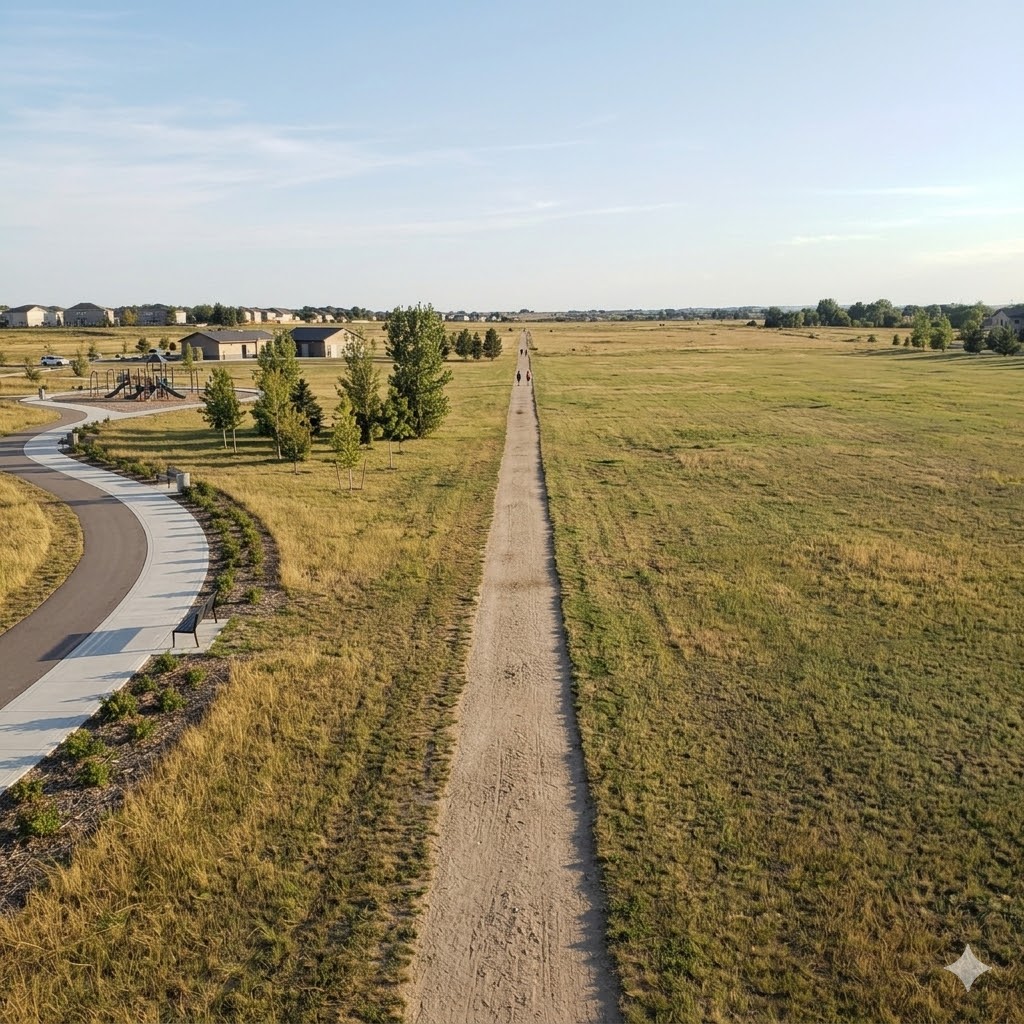
To reiterate, a desire path is a dirt path worn down by people trying to get from A to B in the quickest way possible. There may be a concrete path that gets from A to B, but if it winds around and is inefficient, people will make their own path instead.
I teach science, and I like to say that “students, like molecules, seek the lowest energy state.” A good teacher of wants to set up their class so that the students learn something, and then are asked to demonstrate their knowledge, with the grade being given for how well they do at demonstrating. Students aren’t necessarily there to learn however, they are often grade-focused. So they seek any way to improve their grade at no cost in energy.
When a student writes a lab report, it takes them time and effort to actually study the material, learn the chemistry behind their experiment, and explain what they did and what their results entail. It takes a lot less energy to instead laser-focus on the rubric and attempt to game the system by answering only the questions presented in the rubric without ever understanding the actual experiment.
Here’s an example: the rubric asks the students to “explain the 2-stage design of the experiment, and doing the first stage was necessary to complete the second stage.” A student may try to answer: “the experiment had a two-stage design, and doing the first stage was necessary to complete the second stage.” But they aren’t actually explaining anything, they’re just repeating the question as a statement and hoping a bored grader will let them slide on through.
This is actually made worse by the grading system my department has implemented for labs. In a classical class, lab reports are graded for accuracy and the average of all lab report grades is the grade you get for the lab class. In this new system however, labs are graded on a pass/fail system, with a 70% being all that’s necessary for a “pass.” Then the student’s grade at the end of the semester is based on how many labs they passed, and any labs they don’t pass can be resubmitted at a later date.
This 70% + pass/fail system incentivized many students to try to game the system and answer just enough so they can get a “pass,” without actually trying to do well on the entire lab report. Because what’s the incentive to put effort in when a 70% and a 100% get you the same result? Students will very clearly just give up on doing one of the 5 rubric items, because they know doing the other 4 items well gets them a pass. This often leads to students completely the class with high grades but with gaping holes in their knowledge, as they just ignored parts of the material because it was too hard and focused on acing the easier parts instead.
I’ve spoken to the department that this is a bad incentive system if we want students to learn. Student’s won’t really try to learn all the material if learning just 70% gives them the same grade as learning 100%. The department is right now *only* focused on how many students pass, and this easier system is indeed increasing student scores.
I said before that a desire path should make you rethink how your system is set up, and try to incentivize people to go in the directions they should be going, without just putting road blocks on the desire path. You can pave a newer, quicker path, or you can change where things are located so people are incentivized to walk the paved path.
The same is true for student learning, if your system incentives students to half-ass it, change the incentives. Don’t just clap that more are passing and then wonder why people are having a harder time with upper level courses later.
 Streams of Consciousness