Pointless prognosticating, what is the “Next Big Thing”

If you follow the Tech industry, you know that everyone’s always searching for the Next Big Thing, and if you remember my series on The American Challenge, you might remember that I talked about how that book badly missed on some of its predictions of what The Next Big Thing would actually be. This got me thinking, what do I think the Next Big Thing is? What do I think will be the next trillion-dollar industry, the type of thing countries will want to focus on and people will want to invest in, things like semiconductors and computers in the 80s, mass-built automobiles in the 1910s, or trains in the 1800s. The kind of thing that will change the way we do everything, and if you have a chance to get in at the ground floor you’ll be kicking yourself in 20 years if you don’t take it.

To start with, I’ll talk about others’ predictions.

I’ve heard some people talk about Cloud Computing as the Next Big Thing, but it’s hard to tell if it’s truly Next or if it’s more of a continuation of the Current Big Thing. Like, would it make sense to separate the internet revolution from the computer revolution? Both happened concurrently, the first couldn’t have happened without the second and the second was truly skyrocketted by the first. So how does Cloud Computing fit into all this, it’s already a trillion dollar industry with the largest tech companies in the world all throwing money into it, and even if I can’t explain how it works personally I can definitely see that others are talking about it as a revolution. But again it feels hard to tease it apart from computers and internet as a whole, and it doesn’t seem like we’re on the ground floor anymore. Microsoft, Google, Amazon and Meta have all put so much money into their cloud infrastructure that I don’t see any small fries really taking pieces off of them. I’d say Cloud Computing is the current Big Thing.

But that’s mostly semantics, I’ve also heard people say 3D printing is the Next Big Thing. The University of Nottingham for instance has a department that wants to be able to 3D print a smartphone, circuitry and all, using just metal and plastics as inputs. The ability to mass-produce using 3D printing has long been a holy grail of the field, and the ability to custom manufacture pretty much anything by just fiddling with a computer model would certainly be a game-changer. But 3D printing has so many technological limitations that I still wonder if it will truly take off, most glaringly, 3D printed items tend to not work well out of the printer, and fall apart quickly even if they do, which is a big barrier for mass-production. Ultimately I just wonder if 3D printing will be something more like Supersonic Travel was in the 70s, something that was seen as the mass-market future but was in fact relegated to only specialized roles while more boring “old fashioned” things kept their market share.

The Internet of Things is something I’ve never really gotten the hype for. There are certain applications where having a device always connected to the wifi seems like it could be value added, but most of the hype seems to be marketers trying to see a subscription service for a device that used be be a one-time purchase, or from unrealistic promises that don’t fix the Oracle Problem (ie suppose you give you machine a wifi connection so it can always tell you when certain conditions are met, but will you necessarily trust that your machine is giving you good data or will you have to double check each time anyway, negating the benefits of having the wifi in your machine). Frankly, I don’t want anything in my house to be connected to the wifi unless I expect or need to play Youtube on it.

Another Next Big Thing could be the DNA/protein revolution. The Human Genome Project was a massive success, as was the development of modern Mass spectrometry, and a huge amount of modern biochemistry couldn’t exist without these techniques. Our ability to read the sequence of any protein or piece of DNA we want to, and to alter them in any way we please, have definitely given us a leg up in fighting genetic diseases and engineering proteins for a number of different purposes. In theory, biochemistry can let us create proteins to do just about any job that ordinary chemistry does, only faster and better. This includes highly speculative roles like uranium enrichment and carbon capture to even humdrum every day roles like plastic production. The ability to use genetics and proteomics to both cure our diseases and for industrial purposes is certainly enticing, but I’m still not sure the technology is there or will be there soon. Without getting too jargon-y, proteins can only do their job if they have the correct shape, and our ability to create any shape we want is not fully developed. When you change a single piece of a protein, it can have enormous effects on the protein’s structure and function, and it’s often difficult to even test these effects. Some people have told me that “genes and proteins are the next coding language” but until it’s as easy to test a protein as it is to test a program, I’m not sure that’s true.

Finally, outer space. Will the next trillion dollar company be a space company and not a tech company? I’d love that to be true, but I’m not sure. The best argument I’ve heard for the economic viability of space colonies was actually a really dumb and technical one. If you assume that there is already people living on both the Moon and on Earth, then in theory it is cheaper to ship anything from the Moon to the Earth, versus shipping something from the Earth to the Moon (due to differing gravity and atmospheric drag effects). If we then assume that economies of scale can be harnessed to make producing things on the Moon and producing things on Earth cost almost the same amount, then any company that moves its production from the Earth to the Moon has a comparative advantage that cannot be taken away, and it can service both the population on the Moon and the population on Earth more cheaply. Thus a Moon colony should be (economically) self-sustaining once it reaches a certain size. There are of course a hell of a lot of assumptions with this plan, and some of them are even bad assumptions, but this is genuinely the only compelling argument I’ve heard for colonizing space other than the Tsiolkovsky argument, which isn’t much more of an argument than but I WANT it to happen.

So what is the Next Big Thing? Honestly I don’t know, and I don’t think anyone does at this point. That was one thing I kept thinking about while reading The American Challenge. JJSS and people like him seemed to think that the best way to run a country was to foresee what would be the “Next Big Thing” and then invest in it. But JJSS’s predictions on The Next Big Thing were 1/3 or 1/4 depending on how you wanted to score him, and frankly redirecting national budgets into government projects with all the bureaucratic inertia and election-cycle-thinking that comes with them just seems like a terrible idea. Better to let the free market create a virtuous cycle where the good ideas win and the bad ideas lose, rather than create a government system that can be handcuffed by political or interest-group concerns to throw good money after bad and ignore successes in favor of prestigious failures. I don’t know what the Next Big Thing is, but what do you think? Feel free to comment below.

The End of Growth part 5: How much more improvement is possible?

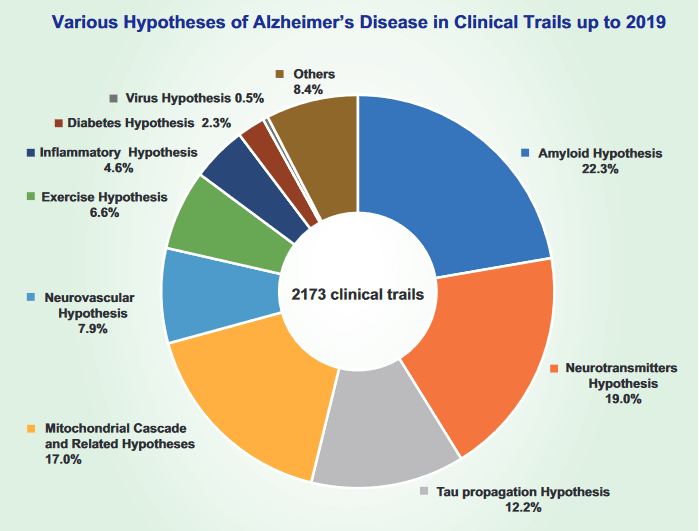
As I continue The End of Growth by Richard Heinberg, I’m struck most of all by his lack of creativity. When thinking about the future, most of us should be able to conjure up some ideas of how the world could be a modestly better place to live. Cars will become electric so no more filling up with gas, telework will get more common and we can all work from home, over 400 clinical trials are currently trials are currently studying Alzheimer’s disease, maybe one of them will cure it. These are all things that could change our society for the better and would contribute to economic growth. More efficient cars mean transportation is cheaper and so people can partake in more of it, in a very real way the supply of transportation will be increased, leading to an increase in GDP and a decrease in prices. And this is true of pretty much all technological advancements, technology is supposed to be deflationary, growing our economy while reducing prices. Yet Richard Heinberg doesn’t really see how technology could ever improve our lives from his lofty vantage point of 2011

We may be able to further improve the functionality of the Microsoft Office software package, the speed of transactions on the computer, computer storage capacity, or the number of sites available on the internet. Yet on many of these development trajectories we will face a point when the value of yet another improvement will be lower than its cost to the consumer

Yeah let me stop you right there Rick. If the cost is greater than the utility, then the product is unprofitable and it fails. Like the Nimslo Camera or the Quibi streaming platform, the world of tech is littered with big fails where product designers make something that consumers don’t buy. Yet here’s the secret Rick, if people do buy it then it is adding value to their lives greater than the price they pay for it. Richard Heinberg wants to paint a picture where our ever improving technology isn’t actually bringing any net good to consumers, yet by definition it IS otherwise the consumers just wouldn’t buy it. Consumers aren’t brainwashed automatons (as much as marketers wish they were) you can’t force them to buy something they don’t want. And consumers over the years have proven very willing to turn up their nose at goods and services which bring them less value than what they cost.

He continues:

At this point, further product “improvements” will be driven almost solely by aesthetic considerations […] for many consumer products this stage was reached decades ago.

Damn Rick, you’re right, the only reason people buy iPhones instead of old rotary-dialers is because of the aesthetics, not because you can access the whole world at the touch of a screen. And TVs, who needs a big plasma TV? Hell life was better in black and white anyway! And don’t get me started on ovens, pots, and dishware, sure these modern fancy kitchen appliances are less likely to burn your house down or leach carcinogens into your food, but is that really worth the cost?

If it sounds like I’m mocking Richard Heinberg it’s because I am. I diagnose him with a terminal lack of creativity, and an inability to see the improvements in life happening all around him. Every year consumer products, not just our electronics but our cookware, our houseware, our vehicles, they all continue to improve and become more safe, more efficient, and more useful. But Rick can’t understand why Microsoft Office became a subscription service and so questions whether technological improvement is even possible. Here’s a thought Rick: maybe you aren’t the target market for improving technology? Maybe you’d be happier with a typewriter and a sundial and thus don’t represent the average consumer? I can tell you that as a scientist, modern Microsoft Office is WAY better for me than what we had a decade ago. Since all my programs and files are on the cloud, I can sit down at any computer anywhere in the world and do my work. I don’t need to lug a PC everywhere I go, I can sit down at any PC and get to work. I can also collaborate easily with people anywhere on earth because all our files are in the cloud so we can work on them together instead of editing on our local machines and then sending versions back and forth through email.

My job has become immeasurably easier since Richard Heinberg wrote his book in 2011, the increased utility from technological advances like computer software, computer hardware, and internet communication have made me more productive and a hell of a lot more happy. Technology has worked great for me and I’m glad to pay for the privilege of it. Rick can stick to his sundials if he really thinks technology peaked in the past.

The best way to learn something is to just use it

Short post today, but as I’ve tried to teach things to people I’ve found the best way for them to learn is to just use the knowledge. We work with amino acids in our lab (the 20 building blocks of all proteins), and many new lab members have come up to me asking how I know so much about amino acids and how they can learn. What class did I take, what class should they take, is there a book I studied? The honest question is I learned by doing. When I studied the amino acids I was told to learn their shapes by drawing a protein which would spell out my name, but since half the letters in my name don’t have a corresponding amino acid I dropped that idea pretty quickly. For the rest of the semester I vaguely knew just enough to do well on the test but couldn’t exactly list the amino acids off with any fluency. Once I began working in a biochemistry lab though, it all fell into place. Suddenly, having to remember every day that Lysine and Arginine are positively charged helped me remember their structures, and eventually I could remember the side chains of most amino acids with little difficulty. This never would have happened if I had only studied them in a class, I had to learn by using.

Liquid-liquid phase separation

I don’t have a deep topic to write about today because I’m busy at work, but I thought I’d write on a subject that I’ve been studying myself, partly in order to make sure I understand it.

Phase separation is a common and easily understood way that matter segregates: when water boils the gaseous vapor and the liquid water are separated from each other due to differences in their density. A liquid-liquid phase separation is the same thing, only it’s two liquids separating and not two different states of matter. One example of this is oil and water, as everyone knows oil and water will separate from each other when placed in a glass. This is in part due to their preference to aggregate with each other, water is hydrophilic and so interacts strongly with water and not well with hydrophobic things, while oil is hydrophobic and interacts strongly with itself and not well with hydrophilic things. What’s less understood is how liquid-liquid phase separation is also important in cell biology.

If you remember what a cell looks like from a high school textbook, you can probably remember that it has things like a nucleus, a mitochondria (the powerhouse of the cell!), and some weirder things like an endoplasmic reticulum. These are all examples of membrane-bound organelles. Just like our organs all perform special duties within the body, so too do organelles perform special duties in the cell. The membranes that surround these organelles spatially separate their inside contents from the outside cell, and so allow them to more efficiently perform their functions. But there are also specialized parts of a cell that do not have a surrounding membrane. The nucleolus in particular is a specialized area of the nucleus that has its own special functions, but it is not separated from the nucleus by any membrane whatsoever. So how does the nucleolus prevent all its contents from diffusing into the nucleus and ruining whatever process it is performing? It does so through a liquid-liquid phase separation.

It’s a bit too technical to explain here, but just as oil and water have chemical properties that separate them in a glass, so too does the nucleolus have chemical properties that separate it from the wider nucleus. And it turns out that a large number of cellular functional areas segregate from the cell through liquid-liquid phase separations, all segregated not by a membrane-defined boundary, but by the physical properties of the medium in which their reside. These phase separations allow many different areas of the cell to undergo their own specialized functions without needing to constantly make and remove cell membranes around them, and thus allow for more efficient activity inside the cell.

So that’s an overview of liquid-liquid phase separation, I’m still learning it myself so I hope I got everything correct. But if I miswrote anything, cell biologists out their feel free to correct me.

In science, be willing to say something’s wrong

This is a short one today, it’s been a busy week. I just wanted to share an anecdote from my work:

We’ve been operating under a certain hypothesis for as long as I’ve worked here. We think if we do a certain experiment a certain way we’ll get certain results. We haven’t managed to get those results yet but we are tweeking and revising the experiments in an attempt to do so. Yesterday I randomly ran into a professor who shared with me a paper he had just published, a paper which seemed to indicate that the results we were searching for my not be possible, or at least might not be possible using the experiment we were doing. Now why had we believed our experiment would work? Well we read a different paper that seemed to indicate it would.

So now I have a conundrum, I have this old paper that says what we’re doing will definitely work, and this new paper saying maybe it won’t. What do I do? I start by re-reading both papers to make sure I’m not misunderstanding them, and I come upon something I never realized: the old paper may not have proven what it thought it proved. Maybe the results from the old paper are actually closer to the results from the new paper, but were just interpreted wrong. If that’s the case then the new paper is correct and our experiment won’t work. We read the old paper and believed it’s interpretation, but we didn’t put enough effort into validating that it’s interpretation was correct based on its data, we assumed the paper had done that well enough. But with the benefit of the new paper we can see that maybe its interpretation was wrong.

This is a very heavy conclusion: the paper we have been basing our research on might have a wrong conclusion. It’s a harsh accusation but in science it’s sometimes necessary to speak out and make these accusations. You can’t keep going down the wrong path or you’ll never go anywhere.

You shouldn’t go too far down a scientific rabbit hole

Sometimes when you get scientific data that doesn’t make sense, the best use of your time is to say “well that’s weird,” and just redo the experiment. I’ve been in many labs where strange data, be it unknown proteins in a mass spectrometry sample or unknown shapes under an electron microscope, have gotten people’s minds aflutter as they try to figure out what it all means. Is it contamination, is it scientifically interesting, is it something that should be expected but we just don’t know about it? Humans are innately curious, scientists most of all, so when presented with a mystery it’s natural to want to solve it. And a scientific mystery should be easier to solve than most because not only are the experiments set up with numerous controls that can be checked against, but there is a wealth of data in the literature that might point to an answer. When you see something you don’t recognize, it’s easy to dive deep into the literature searching for some paper or clue which might tell you what you’re looking at.

But this isn’t always the best use of your time. Sometimes stuff is just weird for dumb reasons and if you spend weeks trying to figure out why then that’s weeks you’re not spending working on your actual projects. Chasing false leads can also blind you to the more important (if less mysterious) true leads that you should be following. All this to say, my lab is currently in the midst of a mystery that I don’t think is very important and I wish we could all just agree it’s mysterious and get back to more mundane but solvable problems.

Teaching isn’t easy

I’m going to come right out and say that I don’t know if I’m a good teacher.  I’m a passionate teacher, I like to see students learning and growing, but I don’t know if I’m a good one.  And honestly, in my position I don’t know if I can be a good one.

I’m a researcher at a major research institution.  One of the first rungs of the “science-as-a-career” ladder is usually for students to join a lab as unpaid volunteers, either for course credit or just for fun.  They will get trained and learn to help out with some of the duties performed by the lab, they may even do some actual science.  Eventually they may move into a semi-paid position in which their work in the lab pays for some of their tuition, before finally moving to a paid position around their graduation.  From there, the scientific world is their oyster.  But this first rung, with untrained students, is to me the hardest.  Nobody really knows what work in a lab is like until they do it, I know when I was a kid I had a picture in my mind that scientists spent all their time sitting and thinking.  But it’s actually a job that requires moving, doing, skillful techniques, and a lot of hand-eye coordination.  These are all skills that a student needs to learn to progress as a researcher, and I don’t know if I’m doing good as a teacher.

When I work with these students, the biggest issue is imparting on them the necessary knowledge.  This starts with “what is the work we are doing and why,” student may have just learned about DNA replication for instance, but that doesn’t necessary give them the background necessary to understand why DNA-intercalating-molecules are known carcinogens.  And it definitely doesn’t give them the knowledge of all the previous research that has been done in this field that brought us to that conclusion.  So you need to get them up to speed on some of the facts of the field, “here’s what these molecules are, this is why they’re important, this is how we are studying them.”  

Furthermore, a lab is nothing like a classroom, there is no textbook filled with the One Holy Truth that they can study, textbooks only get written about the settled science that is decades old.  Instead there are papers and literature of all kinds that they need to read, scattered throughout many areas and each focusing on a different area.  These scattered papers don’t even make a coherent story unless you know how to read and understand them and draw your own conclusions.  So additionally we must teach them the skills necessary for them to gain knowledge on their own.

Finally, there’s teaching them the things we actually do in lab.  The techniques, the protocols, and even the proper methods for safety and cleaning, teaching them all there is to know about working and being in a lab is probably the most important part of keeping them safe, but it’s also difficult to teach this in any way but by rote.  You just tell them what to do and tell them to keep trying until they do it right, I don’t really have the skills necessary to teach physical activities in any way but that.

So with all that said, there’s a lot of teaching that needs to go on between senior lab members and junior lab members, and personally I don’t know if I’m up to the task.  I try to help them learn on their own, but I seem to always just give them the answer when they can’t figure it out.  I try to help them do things in lab, but only by doing it myself and letting them watch how I do it.  I just don’t know if what I’m doing is the best or most helpful way to teach them, but teaching is just such a small part of my job that I don’t have the headspace to “get good” at it either.  I hope I’m teaching them and I hope they can leave this lab with good memories of their time here, but I just don’t know.

Biotech update: Vertex Pharmaceuticals and CTX001

I’ve said before that I don’t feel like I can reasonably invest in any biotech company since they all feel like a gamble, but for the gamblers out there I took a look at the science behind Vertex Pharmaceuticals (VRTX).

Vertex has a drug called CTX001 which has been in the news as it seeks FDA approval to treat sickle cell anemia and beta thalassemia.  Sickle cell anemia happens when the hemoglobin in your blood has a mutation that makes it fold into the wrong shape, this makes red blood cells become sickle shaped instead of their usual donut shape, and these sickle-shaped red blood cells get caught in the tiny capillaries of your body.  This causes damage and a lack of energy as blood isn’t able to efficiently transfer nutrients and waste into and out of your cells.  Sickle cell anemia reduces one’s life expectancy to around 40-60 years.  Beta thalassemia is another hemoglobin disease this time caused by reduced production of hemoglobin itself.  Less hemoglobin means less nutrients and waste can be transferred by the blood, meaning the body can’t work as efficiently.  Beta thalassemia in its major form has a life expectancy of around 20-30 years.  

Despite the fact that both diseases are caused by mutations in hemoglobin, the mutations are very different from each other and so it surprised me that both were being treated by a single CRISPR drug.  How CRISPR works is that a protein uses a piece of DNA to very specifically target itself towards an area on a gene of interest.  The protein can then cut into that gene of interest and if another piece of DNA is on the protein, then that other piece of DNA can be incorporated into the gene by the cell’s DNA repair machinery.  This process is somewhat random in nature, it’s hard to ensure that your other piece of DNA gets incorporated and even harder to ensure that it is incorporated in just the right orientation, just the right position, and just the right way so as not to cause problems down the line.  Since sickle cell and beta thalassemia are caused by mutations in very different places within the hemoglobin gene, a CRISPR drug that is targeted towards the sickle cell mutation site should not be able to also hit the beta thalassemia mutation site.

But the trick is that CTX001 isn’t targeting hemoglobin, it’s targeting fetal hemoglobin.  When a baby is in the womb, it needs to take oxygen from its mother’s blood stream to survive.  If a baby’s hemoglobin were the same as its mother’s, this process would be inefficient because both the baby’s and mother’s hemoglobin would bind to the oxygen equally well and there would not be enough oxygen flowing from the mother’s blood into the baby’s.  It would be like a tug of war where both sides are of equal strength.  However, fetal hemoglobin binds to oxygen more strongly than adult hemoglobin, and this ensures that a baby can take the oxygen it needs from its mother’s blood stream.  Fetal hemoglobin usually stops being produced around the time the baby is born, and after the body switches over to purely adult hemoglobin by around 6-months after birth.  What CTX001 does is it tries to switch on the production of fetal hemoglobin in people suffering from sickle cell anemia and beta thalassemia.  If they can produce fetal hemoglobin instead then it can compensate for the fact that their normal hemoglobin isn’t working properly, and should reduce their symptoms and prolong their lives.

How CTX001 does this is by altering the promotion of the fetal hemoglobin gene.  The promoter regions of genes are the segments of a gene that help the gene get transcribed into new mRNA.  That mRNA will then get translated into a new protein.  The promoter of fetal hemoglobin does not usually allow the gene to get transcribed into adulthood, so no fetal hemoglobin gets made.  But altering the promotion of the gene would allow it to be transcribed, and thus translated, and so fetal hemoglobin would be produced in the body.  Now here’s where it gets a bit tricky: they aren’t actually altering the promoter region of fetal hemoglobin, but rather the promoter region of another gene called BCL11A.  I wanted to explain how promoters work, but there’s more to explain now because biology is complicated so bear with me:

The reason the promoter region of fetal hemoglobin doesn’t normally allow transcription (and thus production of the gene) is because of a repressor called BCL11A.  BCL11A is a protein that sits on the promoter of fetal hemoglobin and refuses to budge, this prevents any other protein from accessing the fetal hemoglobin gene and thus prevents fetal hemoglobin from being transcribed.  Now BCL11A is produced by its own gene, and CTX001 alters the promoter region of BCL11A in such a way that no BCL11A can be produced.  Without BCL11A, there is nothing to repress the promotion of fetal hemoglobin.  Without the repression of fetal hemoglobin, its promoter region is accessible and it can be transcribed.  With the transcription of fetal hemoglobin, the fetal hemoglobin protein will be produced in the body.  And with the production of fetal hemoglobin, the diseases caused by malformed adult hemoglobin (sickle cell anemia and beta thalassemia) should be reduced.

But it’s still not over!  How the hell would CTX001 find every red blood cell in the body and do its thing?  It doesn’t have to!  Hematopoietic stem cells are the stem cells which produce red blood cells (and it’s red blood cells which will carry the hemoglobin or fetal hemoglobin in the blood).  Hematopoietic stem cells can be extracted from the patient’s blood and then altered with CTX001 so that they will produce fetal hemoglobin.  The cells which are successfully altered can then be transferred back into the patient.  Before the altered cells are given back to the patient, the patient is given busulfan to kill off stem cells.  This is necessary to kill off some of the stem cells which are producing the malformed hemoglobin so that the new stem cells producing fetal hemoglobin can reproduce and become the majority.  The patient is then monitored for improvements in their sickle cell anemia or beta thalassemia condition.

So this process is long, involved and complicated.  Just to list all the things that could go wrong: when altering the promoter the DNA could accidentally be mutated towards being cancerous, killing of so many stem cells using busulfan could have harsh side effects, the infused hematopoietic stem cells might not reproduce and become the majority, and even then the DNA of the promoter might not be altered enough so that fetal hemoglobin becomes the majority of the hemoglobin in the body.  But I’m sure every step is heavily monitored by Vertex during the treatment process.  So is Vertex Pharmaceuticals a buy?  I have no idea, if you believe the Efficient Market Hypothesis then all their upside is already priced in, but they’re in phase 3 of clinical trials and if you’re a gambling man I see nothing wrong with their scientific thesis.  So idk, go ahead?

Biotech seems far more speculative than other tech

There’s a mantra that gets repeated by everyone around me: biotech is the next big thing.  I’m willing to believe that on average the biotech industry will probably grow faster than the market, maybe even faster than the tech industry over the next 20 or 30 years.  What I’m less enthused by is the prospect of trying to pick and invest in the winners of that market and not get stuck holding the losers.  I feel like biotech in general will have a much larger standard deviation on its returns, a small number of companies will make out like bandits and a very very large number of companies will make nothing.  This is generally true in most markets, but in biotech you have the added barrier of the government to think about.

When a tech company brings a new product to market, they will design it, test it, then try to sell it to consumers.  But when a biotech company brings a new product to market, they often have an added hurdle of the government.  They need to design a product, test it, ask the government for permission to sell it, and then sell it to consumers.  These consumers are usually healthcare patients because the product is usually a drug or medical device.  The government in this case is protecting us from bad products in healthcare, but in turn this puts up a barrier to entry that ensures that only a few products get through and get all the money in the market.  There’s a large market for crappy but cheap smartphones that retail for far less than an iPhone or an Android, there isn’t any market for crap drugs that only “sort of” cure your disease. 

50 years ago biotech’s second biggest area was agribusiness, but today all the biggest movers and shakers are all related to medical in some way.  Everyone is working in an industry where money only comes in if you can improve the health of a patient.  Even the non-medical companies, the “shovel salesmen” in the biotech gold rush, the products they sell will only get bought by companies which are themselves trying to make a drug or a device that will prolong the life of a patient.  So I feel like any biotech giant I wanted to invest in, be it Pfizer or Merck or Johnson and Johnson, investing in any one of them is like playing a crap shoot with the FDA.  If Pfizer’s next biggest drugs don’t get approval, Pfizer’s stock will go way down.  And if the FDA approves a “better Tylenol” for mass market, then Johnson and Johnson could drop.  So biotech feels like I’m investing in the future of the FDA more than I am the future of the market.

And then there’s Thermo Fisher, the biggest shovel salesman of the biotech gold rush.  They make the products used in labs all over the world,I know even my lab uses a lot of Thermo Fisher brand products.  Even here the future seems less certain than it is for say Amazon or Google because all the labs which buy Thermo Fisher products are still at the whims of the FDA.  Everyone buys polypropylene tubes from Thermo Fisher, but what if the FDA decides polypropylene leaves behind microplastics which harm patients and mandates that polypropylene never be used in medical devices or drug manufacturing?  Then Thermo and every company like them would be scrambling for a substitute, and there’s no way of predicting that Thermo would come out of that mess the victor.  So shovel salesmen make for safer but by no means safe bets.

And finally there’s the small players in biotech, the startups and mid-sized companies which hope to build the products of the future.  They are the most speculative companies of then all because they’re often pre-revenue companies which are hoping that whatever drug or device they own the IP for can get through the FDA’s hurdles and reach the mass market.  These hurdles are very high and there’s no money in only getting past the first few just to fall at the last one.  So when you invest in a company like that you’re investing in a business of hope and hype, and since even the greatest experts in biotechnology can’t predict which drug or device will work for patients there’s little chance of someone like me making all the right predictions.

So I guess biotech might be the future, but the future is too murky to invest in.  I’d keep my money in biotech ETFs and hope for the best.

Don’t just mindlessly avoid things that are dangerous

This post may be a little weird, but I didn’t know how to title it. I want to talk about hazards in science and how they need to be handled. The key point I want to make is that science by its nature requires us to work with obscure and sometimes dangerous chemicals, but they shouldn’t be feared or avoided rather we should be aware of the dangers and use those chemicals with the proper precautions.

At a previous lab I worked at we had to wear special gloves when handling one of the chemicals we used. This chemical was toxic enough to seep through your skin, into your bones and begin leeching the calcium out of your bones, and because of its formulation it would also seep through normal lab gloves. So we wore special safety gloves when handling it and took special precautions: we always wore two pairs of gloves over each other and if we ever noticed we had spilled any we would immediately remove our gloves and start washing our hands. These precautions were the ones endorsed by the National Science Foundation and pretty much anyone who had ever worked with this chemical, and in all my time working with it we never had anyone harmed by it due to our safety precautions.

At one point a visiting scientist was working in our lab alongside me and his experiment required him to use this toxic chemical. I could tell he was nervous and unsure of himself, he was wearing two sets of gloves but didn’t want to touch the bottle in order to pour the chemical into his reaction vessel. He kept saying that he didn’t understand if he was doing it right and wanted to know if we had any special tool or instrument that would pour the chemical for him. Finally I simple took the bottle containing the chemical and poured it myself, saying to him “you don’t lack understanding, you just lack confidence.”

I think the overcautious approach that the visiting scientist had may have come from them misunderstanding the repeated emphasis on safety that we put out. Yes we work with dangerous chemicals and we have to be safe when using them, but overestimating a danger is as inaccurate as underestimating it, and proper lab safety doesn’t mean avoiding the lab work at all costs. We use these chemicals because we have to, they’re the only ones with the right properties to work in our experiments, and so any scientist needs to have the confidence and capability to use them himself. A healthy amount of precaution is good but if it makes you too scared to pick up a bottle then you’ve gone too far, you have to be able to read the scientific literature on a chemical and understand how dangerous it actually is so you can use it when you need it.

I know this post was a bit rambly, but it’s something I’ve been thinking about.