One of the oldest maxims in military strategy is this: know your enemies. Colonel Santiago of the Spartans added “do not forget above all to yourself.” It’s amazing how badly people fail at this most basic maxim when “knowing your enemy” requires understanding their political goals and ideology instead of just guessing how many tanks and artillery pieces they have on hand.
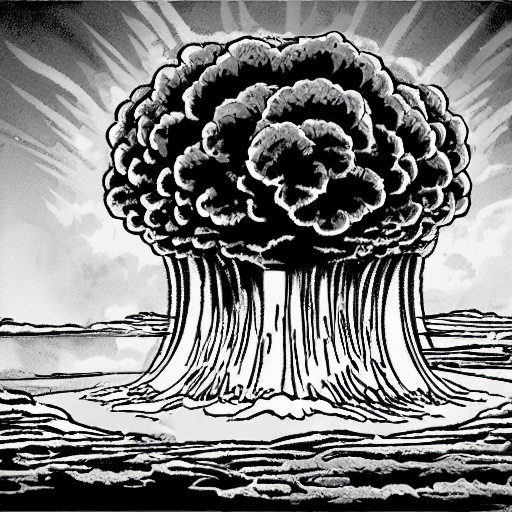
I’ve been watching a lot of Indy Neidell recently. For those who don’t know, he’s a youtube historian who presents a lot of programs where he recounts the history of a conflict in chronological order. He has presented “World War 1: Week by Week,” “The Cuban Missile Crisis: Day by Day,” and “The attack on Pearl Harbor: Minute by Minute.” It’s the Cuban Missile Crisis I’d like to talk about today.
I’m sure you all know the story of the Cuban Missile Crisis: the Soviet Union puts nukes in Cuba and the world sits on the brink of Armageddon as America and the Soviets decide if they want to nuke each other or not. Eventually the Soviets agree to remove the nukes on Cuba in exchange for America removing its nukes in Turkey, and a direct phone line is established between DC and Moscow so the leaders of the two superpowers can try to hash things out more peacefully in the future.
But what’s striking about the crisis is that no one involved understood each other’s motives, and that nearly led to ruin.
Soviet leader Nikita Khrushchev was the first mover. He was upset that America could threaten him with nukes from Turkey while he couldn’t threaten America with a similar first-strike. He placed nukes in Cuba so he could have such a threat in his back pocket.
Castro was mostly a bystander in the crisis, a sad state of affairs since it was his nation that the crisis was about. Castro was sold the idea that the nukes were there to protect Cuba from any future Bay Of Pigs style invasion. He thought the nukes were primarily for his benefit, and urged the Soviets to give him operational control over them.
When America found out about the nukes, they completely misunderstood things. They seemed primarily worried about West Germany, and thought the nukes were there to distract them from an upcoming West Berlin crisis. Or that the nukes were to dissuade them from coming to Germany’s aid if the Soviets invaded there. Throughout the crisis, many American decision-makers remained stuck on the question of “how does this relate to West Berlin?”
It’s somewhat understandable that the American thought this way, since West Berlin was so important to them. It was the shining beacon of freedom in the middle of Soviet Communism. And every East German who escaped to West Berlin was a diplomatic coup, proof positive that the Western system was better, and that Communism was *so bad* that it was the first government in history that needed to build a wall to keep citizens *in*.
But this fixation caused America to dangerously misjudge the USSR during the crisis. They didn’t understand that Khrushchev and Castro had their own motives for doing this, and American policy-makers were constantly looking for a West Berlin connection. America made plans to knock out the nuclear missiles in Cuba either with air strikes or a ground invasion. These ideas were ultimately shelved partly because “what if the Soviets want to tie us down here while they invade West Berlin?”
But what America *should* have realized was that the Soviets weren’t going to install nuclear missiles on Cuba without a *lot* of troops to guard them. The proposed American ground invasion would have been *severely* outnumbered by the USSR Red Army troops that America didn’t know were on the island. And that’s without even mentioning the tactical nukes that were also there to guard the strategic nukes. An American invasion would have been a slaughter, possibly including the use of said tactical nukes against the US Navy, but the Americans assumed Cuba was a small sideshow because that was how they saw it themselves.
And while the USSR was *more* interested in Cuba than the Americans thought, they were *less* interested in Cuba than Castro thought. When the USSR was moving the nukes out, Castro threw a fit and tried in vain to retain control of the tactical nukes. This earned him no favor in Moscow, as the USSR wanted to bring everything home and put the whole thing put behind them. The end of the crisis created a lot of bad blood between Cuba and the USSR, when it could have been a unifying moment instead.
In fact, I saw much the same level of American misunderstanding in Indy Neidell’s series on the Korean War. Yet again the Americans began this war being most worried about Germany, “what if they want us to pull our troops from Europe into this war in Korea?” This hamstrung troop movements and decision-making in the crucial early stages when South Korea was being overrun.
Later on, the Americans showed another failure of understanding that I’ve seen repeated in the modern day: the assumption that their enemies were united and working in lock-step against them.
The idea went like this: the USSR, China, and North Korea were all Communist. Communists were all opposed to America, and thus Communists all moved in lock-step to work against America. It became clear early on that the USSR wasn’t moving its European troops to support North Korea, and that the USSR would *not* join the Korean War with ground forces. That proved (in America’s mind) that the Korean War *was* just a side-show, and that they had to remain focused on protecting West Berlin.
It *also* proved that the “Forces of Communism” were willing to cut North Korea loose and not support them if US troops occupied the North. If the USSR wasn’t supporting them, you could be damn well sure China wasn’t supporting them either, because the two moved in lock-step. And that meant no ground forces would swoop in to aid North Korea, meaning America was free to occupy the whole country.
The USSR certainly treated Korea with less importance than its European commitments. But the Communists were *not* operating in lock-step, and China was willing, even eager to send ground forces to Korea. More than just fighting the Capitalists, China wanted to prove that the “Century of Humiliation” was over, and that the Communists had brought China back to being a super-power on the world’s stage, able to go toe to toe with anyone.
America took the lack of USSR ground troops as proof that the Forces of Communism were in no way prepared to fight them face to face in Korea. American generals and planners ignored the massive amount of Chinese ground troops even as those troops moved into Korea to start fighting. America failed to understand: China was willing to fight even if the Soviets weren’t.
This strange idea, that our enemies are all united and move in lock-step against us, is a common one amongst small-minded jingoists. Jingoists are often too intellectually stunted to understand other people having motives that don’t involve them. In the 50s that meant they didn’t realize how important Korea was to China, because Korea was a sideshow for the jingoists. In the modern day, I’ve seen jingoists propose that Iran, China, and Russia are acting in unison to oppose American interests, rather than each nation acting in its own interests even if their interest sometimes align with each other.
When Iran launched missiles at Israel, it was suggested by morons that this was in part because Russia wanted to take America’s attention and effort away from Ukraine. When the Houthis shut down Red Sea Trade, this was supposedly done because Iran wanted to help Russia by hurting Europe. And the whole war in Ukraine itself is supposedly part of China’s big strategy to put pressure on America and Europe so China can swoop in and take Taiwan.
Let’s get one thing clear: this is nonsense cooked up by morons. Russia, Iran, China, the Houthis, they all have their own beliefs, goals, and strategies. China is no more ordering Russia around than the USSR ordered China around in the Korean War. Iran is supporting the Houthis but the Houthis act mostly on their own initiative.
And this misunderstanding continues on to suggestions of strategy. There is a stupid video-game ideology that goes through the heads of jingoists: if we cut off the command center we end the rest of the war. So they propose war in Iran to stop the Houthis and war in Russia to contain China.
Yet history tells us that we time and time again misunderstand the motives of our enemies. America thought the Cuban missile crisis revolved around Europe, and believed that a resolution to the crisis must be sought there.
They were wrong.
Khrushchev offered to remove his nukes from Cuba in exchange for American nukes from Turkey, because that was what he was focused on all along. This surprised the Americans. In fact Khrushchev announced this “deal” before Kennedy and co had even agreed to it, or even heard of it, they learned it from the newspapers and were obliged to go along with it as the best way to exit the crisis.
Throughout the entire Cuban Missile Crisis and Korean War, America misunderstood its enemies, believed them to be united in opposing America, and was fixated only on what *it* saw as important. This led to failures and near catastrophe, as they didn’t predict China would enter Korea and didn’t think the Soviets would send tens of thousands of troops to guard a strategic “backwater” like Cuba.
If America had understood that China and the USSR were not joined at the hip, they might have stopped their troops half-way up the Korean peninsula and allowed the Republic of Korea to invade north on its own, since China had said that they wouldn’t attack if only Korean forces came north. Maybe Korea would have been unified. And if America had understood that the USSR was more worried about American nukes in Turkey than American bases in Germany, then they wouldn’t have courted disaster with a plan to send a few thousand troops against a vastly superior Red Army garrison in Cuba.
I’d hope that modern jingoists would take these lessons to heart, and understand that our enemies have initiative and agency all their own. Sadly most do not.
 Streams of Consciousness