Why did India have so many blackouts in the first half of 2026?

India is no longer a poor country. With a record-setting services industry and a very large production industry, India can afford to have its cake and eat it just like a rich country.

Yet in 2026, I read reports of rolling blackouts across the whole country, especially difficulty to deal with as temps both day and night can remain above 40 degrees Celsius (104 Fahrenheit).

Most reports (like this one) brush past causes. At best they try to blame the blackouts on surging demand. But rising demand can be predicted, and creates an incentive to increase supply. So we should expect that power companies, if they wanted to make money, could have easily built out their production sector to meet the growing demand.

That is exactly what has happened in America, where power demand continues to grow, but blackouts remain uncommon. And unlike America, India still uses cheap coal for the majority of its energy needs, so what gives?

Well it seems India’s power problems came from a toxic mix of rising energy costs and government incompetence. One or the other would be manageable, but the two together dealt a 1-2 punch to India’s power sector that left customers sweating in the heat of summer. Let’s dig in, shall we?

The first thing to realize is that not all coal is created equal. India still maintains the world’s second largest coal mining operations, after China. So in theory their power plants should never run out of coal, right? Except India’s coal is notorious for being made of almost 50% unburnable rocks, what the industry calls “ash content.” This high ash content means boilers that burn Indian coal need to be larger and have more scrubbers in order to deal with all that ash, making them more expensive.

For this reason, coal power plants on India’s coast have actually transitioned to using foreign coal rather than Indian coal. Australian coal in particular is very low ash, as little as 10%, and so a much smaller boiler and many fewer scrubbers can be used to produce the same amount of power. Some plants will also use a specific mix of Indian and foreign coal, to create an intermediate ash content of perhaps 25%-40%. This lets them save some space compared to using only Indian coal, while also not having to import quite so much expensive foreign coal.

But the Iran war threw all of this for a loop. When the war shut down oil and natural gas flow through the Strait of Hormuz, many poorer nations in Southeast Asia switched on their coal power plants to replace their unusable oil and natural gas power plants. It was that or have no power at all, since there was such a shortage of oil and natural gas. This drove the price of coal skyward.

Now, India itself still produces plenty of coal, no problem there. But the cost of high quality *imported* coal was a problem. All these power plants that relied on buying foreign coal suddenly found themselves with skyrocketing import costs. That would usually be no problem, they would raise prices on consumers to compensate. No one likes expensive power, but expensive power is way the hell better than *no power at all*. But this is where the governments of India’s many states stepped in.

No politician wants to lose election, and so no government wants to be responsible for rising prices. But the money must still be paid for that imported coal, so did the government step in to subsidize the power stations? Did they bollocks. No politician wants to be responsible for skyrocketing public debt either, *nor* increasing public taxes. The governments forbade the power plants from raising prices, but also didn’t give them money to compensate.

So could the power companies take out loans? Again no, India’s state-owned power companies have been oceans of bad debt for years as local governments didn’t want to fund them and so have demanded local banks give them roll-over loans for years. Modi finally stepped in and forbade new loans going to any power company that isn’t somewhat solvent. And that rules out any power plant that is selling power for less than the price of imported coal (as demanded by the politicians).

India’s solar buildout has only worsened this problem, as there are no batteries to store the solar power. See, solar power plants are only responsible for providing power during the day, and when it’s sunny. But they get the gain of still being able to demand full price in competition with the *coal* power plants, which are responsible for power both day and night, sunny or cloudy. Solar plants have all the profit, but none of the responsibility that baseload coal plants have.

This means that when solar power cuts off during the evening, or during a cloudy spell, the coal plants must quickly ramp their power supply up to compensate. An expensive process which would be mitigated if those plants just provided all the power during both day and night. India would normally use natural gas “peakers” for ramping power, but remember that natural gas was expensive and the state governments wouldn’t raise prices to compensate.

So what is a power plant to do, when it cannot afford to import more coal because the state governments won’t let it raise prices to compensate AND it cannot take out loans to bridge the gap? It goes down for “maintenance” or declares “load-shedding.” The former is often used an excuse for “we literally cannot supply power at this time,” and the latter is just a euphemism for a blackout.

Loadshedding increased in India severely during 2026, but is falling back down as energy prices now return to normal.

If governments allowed coal companies to raise prices to compensate, this crisis would not have happened. If solar plants were required to compensate coal plants for taking on all the nighttime/cloud-time sectoral risk, this would not have happened. And of course, if the energy crisis had not happened, this would not have happened.

But it did happen, and the Indian state governments cannot control the world, they can only control themselves and their laws. And their obstinance in the face of high prices meant their states suffered greatly due to a complete *lack* of power, when they could instead have had *expensive* power. Economists agree that the GDP hit is vastly greater in the former case than the latter, and I’m sure anyone sweltering or *dying* in a non-air conditioned room would think so too. A shame the politicians couldn’t see it.

Fusion power: The tritium problem

In my previous post on fusion power, I discussed how fusion power will not be possible on Earth without using tritium. I then discussed how Tritium is exceptionally *rare* on Earth (the entire planet has only enough Tritium to power Chicago for a month or so). Now I will discuss why it won’t be possible to make enough Tritium to solve this pressing issue with fusion power. Thus I hope to answer the question posed in my first post: fusion power is hopeless (within my lifetime at least).

The 25kg of Tritium produced by Canada’s CANDU fission reactors represents the sum total of all the tritium here on Earth. If fusion advocates want to have enough Tritium to start up loads of fusion power plants, they’ll need a lot more than that.

The first method may be to just produce more tritium the way Canada does. The CANDU reactors use heavy water (water with the hydrogen-1 atoms replaced with hydrogen-2 aka deuterium) to moderate free neutrons and cool the system. When the deuterium in the water interacts with a neutron, it may capture it and transform into tritium (aka hydrogen-3). This tritium is highly radioactive with a half-life of just 12ish years, so Canada separates it out and stores it in shielded containers.

To get a tiny bit more technical: a single atom of uranium-235 undergoes fission and releases either 2 or 3 neutrons (average 2.5). 1 neutron is needed to keep the fission reaction going, 1 neutron can hit deuterium and transform it into tritium, and we can estimate that the remaining 0.5 neutrons will be lost due to hitting some other atom in the area that isn’t deuterium or uranium.

But now we have a process to create tritium, so can’t we just scale it up? Unfortunately no, this is unfeasible. Remember that it takes 1 atom of uranium (which weighs 235 atomic units) to create 1 unit of tritium (which weighs 3 atomic units). 235 ÷ 3 is about 78, so it takes 78 kilograms of ultra-enriched uranium to produce a single kilogram of tritium. The CANDU reactors themselves don’t even use highly enriched uranium, their uranium contains only about 1% U-235, so for them it takes 780 kg of uranium for each 1 kg of tritium they produce.

Even if we could ensure that extra 0.5 neutrons wasn’t lost, that doesn’t get us very far. And to be honest, even this math undersells the problem. That 780 kg of uranium to produce 1 kg of tritium *only works if we extract every single possible neutron from the fissile uranium*. In practice, the nature of half-lives means that the uranium produces most of its neutrons quite early and then neutron production quickly decreases, to the point that it’s producing too few neutrons to reliably continue a chain reaction. The actual CANDU reactors replace their uranium regularly to maintain a high enough level of neutrons, and they use about 100,000 kg of uranium to produce about 0.1 kg of tritium each year. That is just too much uranium (all of which needs significant work to keep it safe and secure) to feasibly scale this process up to produce lots and lots of tritium.

Sure there are other neutron source, and other targets for producing tritium. But the math is still the same. You need an extraordinary amount of some very heavy element (the kind that undergoes fission) to create a tiny amount of a very light element (tritium). Those heavy, fissionable elements are very dangerous and pose potential national security threats, so must be treated with high levels of security. The tritium is *also* dangerous, but has the added problem of requiring extra steps to separate it from the heavy-water mix that it’s a part of. Producing tritium with fission is a dead end if we want enough of it for fusion.

But of course no one wants to produce tritium using fission, they want to produce tritium using *fusion*, and here’s where our problem goes from bad to worse.

Most tritium-fusion advocates have a clear picture in their mind of how it will work:

  • Tritium and deuterium will fuse in a reactor, and this fusion will produce neutrons
  • The reactor will be surrounded by a blanket of (usually) lithium
  • The lithium will absorb a neutron and undergo fission, creating a new unit of tritium
  • That tritium will be fed back into the fusion process, continuing the cycle indefinitely

It all seems to simple, but every single step of this has problems, and no one has yet even demonstrated a coherent *plan*, let alone demonstrated a practical *system* for creating and extracting tritium in this way. It’s akin to saying “fusion is easy, just get the atoms close together” without having any plan for how to do that.

First, the high energy neutron created during fusion carries 80% of the reactions heat energy. That means it can’t just be used to create new tritium, if we want this reactor to actually be a *power plant*, we need that neutron to also boil water and drive a steam turbine. That means 1 neutron per fusion reaction isn’t enough.

So we add elements to the lithium blanket that “breed” more neutrons. These elements, when hit by a neutron, create 2 or more neutrons in turn. Great, now we can turn 1 neutron into as many as we want, with some of those neutrons being allowed to produce heat for our steam turbine, and the others creating tritium to go back into the reaction. Mission solved, right?

But this creates our first fundamental problem with the blanket. We have a blanket of solid lithium, plus beryllium and/or lead to act as neutron multipliers, and that blanket is constantly being destroyed by neutrons *as a necessary step to produce more tritium*.

This blanket isn’t *just* there for making neutrons mind you, it will also need to carry away the heat energy from those neutrons to be used to boil water. That means it will need all the steel piping, diagnostic sensors, and other components necessary to safely transfer heat away. That means the blanket needs a lot of non-lithium components in it, and those components *can also be destroyed by the fast neutrons*. Then again, as the lithium in the blanket is already expected to be destroyed by the fast neutrons, that can compromise the precise structural system needed for heat to be transferred and for diagnostic sensors to get an accurate reading. A single microscopic crack in the blanket could through the entire system into chaos, and a crack is inevitable when the whole point of the blanket is to be destroyed.

Not to mention the helium problem. A neutron can pass through a few atoms of lithium before it hits one to create tritium. That tritium can get locked within the structure of the wall and beta-decay into helium-3 before it can be extracted. Helium-3 can build up inside the walls of the reactor, and it aggregates together since it can’t bind to the steel or other elements that make up the wall. These cavities of helium-3 reduce the structural integrity of the whole system, as you suddenly have a section of wall sitting on top of gaseous helium instead of solid steel. This again is catastrophic to structural integrity, and it’s hard to make helium obey you at the best of times, even worse when it’s trapped inside a metal lattice. So it won’t be so easy to just remove the helium from the system.

But even if you magically create a wall that won’t be destroyed through neutron damage, and can breed enough new tritium to continue the reaction, there is no working proposal to extract that tritium and feed it back into the reactor. If the lithium blanket is a solid wall, then new tritium will be trapped inside that blanket, it cannot simply flow out straight through a solid wall. You might try to inject helium purge gas, to purge out all the trapped tritium, but now you have a different problem.

Those high energy neutrons are dumping enormous amounts of heat into this wall as well, there will be violent thermocycling as the walls heat with neutron radiation and are then desperately cooled back down by heat exchange (this heat is needed, remember, to boil the water for the steam turbine). The areas of the wall containing lithium will be crushed or sintered together, blocking any helium from removing the trapped tritium within.

Finally, a solid wall of steel and lithium with have thermal conductivity that is unpredictable and well-nigh impossible to model. The elements will touch as microscopic points, and those points will again move around as the wall expands and contracts from thermal forces. So you won’t have a wall that heats evenly and can be cooled evenly. Some patches will hit thousands of degrees and can warp or melt the wall if they aren’t cooled down fast enough.

So then maybe a solid wall won’t work for us, but how about a liquid wall? Lithium and our neutron multiplier atoms can be heated to hundreds of degrees until they liquify. Then we can surely have a homogenous liquid that heats and cools evenly, where helium cannot get trapped in solid lattices, and we can pass this liquid over chemical filters to extract all of the precious tritium from within. Simple right?

But this is even less probable of a solution. A river of molten lithium is highly conductive, and as it needs to be pumped through and around the high powered magnetic fields of the fusion reactor, it will trigger an unbelievable electromagnetic braking force. Remember the “braking radiation” I discussed in the previous post? We aren’t done with electromagnetics ruining our nuclear party. The conductive liquid metal passing through the magnetic fields will create a massive *secondary* magnetic field that acts to oppose the moving conductive fluid that created it. So our river of molten lithium will suddenly create a powerful force pushing it in the *opposite direction* that we need it to go in, forcing an ungodly amount of pumping power to be spent just to force it to move the correct way.

Then there’s the fact that a river of molten lithium will be highly corrosive, trying to tear down whatever piping infrastructure we’re using to pump it.

And finally, we still aren’t done with tritium problems. Yes it’s easier to remove tritium from a river of molten lithium than a lattice of solid lithium, but we still have a problem. Tritium diffuses through solid metals at high temperatures, meaning it will quickly leak out of our molten lithium, through the plumbing, and into any water we’re using as a coolant for this whole nightmare of a system (remember, we still NEED water coolant to drive our steam turbine if this thing will make any power!). This doesn’t just steal the tritium we need to continue the reaction, it produces tritiated water, highly radioactive and a severe biological safety hazard.

So no, we can’t *just make more tritium* to run our fusion power plants. We can’t just scale up our systems for creating tritium from fission. And any proposal to make tritium from the fusion itself is still an entirely separate unsolved problem, *on top of the unsolved problem of making fusion power in the first place*. The tritium created will try its level best to destroy whatever wall or plumbing infrastructure we use to create it. It will decay into helium-3, which will try even harder to do the same. And the wall itself is an unsolved problem of heat exchange, hydrodynamic forces, gas exchange, and structural integrity, all of which has to be *perfect* so that enough tritium is secured to continue the reaction.

And sure, you can lose a few atoms of tritium here and there, but any lost tritium will have to be repaid by redirecting more of the fusion reactor’s neutrons towards tritium and using fewer neutrons to create actually electrical power. You know, *the actual point of a nuclear reactor*. Even getting a positive production of tritium is an untested problem, *without* trying to create any nuclear power whatsoever.

There are some things that work great in a lab bench but just don’t work when scaled up. This is exactly the problem that sank Amyris, a biotech company I blogged about long ago. They had a good foundation of synthetic biology, and they thought they could easily scale up from a benchtop setting that made micrograms of product to a factory setting making the kilograms needed for industrial use. They just couldn’t do it, and they filed for chapter 11 bankruptcy in 2023. It’s not that what they wanted to do is impossible, it’s that it is difficult, expensive, and there are cheaper options available.

That, I think, is what will ultimately sink nuclear fusion for the remainder of my lifetime, not that it’s impossible, that it just isn’t worth it. Any problem humanity faces might be theoretically possible, we could redirect the entire National Science Foundation funding to making better AIs for Civ VI, for example, and we’d certainly get something better than what Firaxis gave us. But is that value for money, compared to everything else the NSF funds? No.

And so, is fusion power possible? If you feed the entire budget of the NSF into it, maybe. But even if we can heat our homes by burning money, that doesn’t make it a good investment. The NSF and other agencies want to fund areas of research that will create their own positive return on investment, that will enter a virtuous cycle where profits from the technology get reinvested into improving the technology further.

The NSF’s investment into genetic engineering did exactly that. In the 1970s, at the same time fusion was being funded and nuclear fission wasn’t yet politically toxic, the NSF was giving tiny amounts of funding to biologists and chemists to study genetics. To find out how we can read and use genes to our advantage. But unlike fusion power, genetics entered a *virtuous cycle*, where their projects were so successful they could start profitable companies with them, and those profitable companies then reinvested back into genetics technology. The human genome project was completed around the year 2000, and in 1970 knowing the entire genome of an individual would have seemed like *more* of a pipedream then getting power out of nuclear fusion (we already had nuclear fission, remember!).

But fusion never entered a virtuous cycle. There were never fusion successes that could go on and make profits to reinvest. And *that* is why fusion was abandoned, not because of some evil conspiracy, but because of simple failure.

Failure which I believe will continue. Because still today, investing in fusion just isn’t worth it. We can get power in a dozen of other ways, so long as we don’t have NIMBYs blocking every solar array or gas turbine needed to power our modern society. And don’t forget that fusion will have to face those same NIMBYs, you can’t compare a theoretical fusion plant to a currently built gas or solar plant. You have to include the NIMBY factor of convincing the same people who think 5G is giving them cancer that fusion power *won’t* give them cancer. Or the same people who don’t want a new apartment because it’s *ugly* that a fusion plant *won’t* be ugly.

The technological limitations of nuclear fusion power are still unsolved. They are solvable but solving them isn’t worth the amount of money needed considering the extreme amount of known unknown and even unknown unknowns. We don’t know how to do it, and we’re better off spending our money on things we do know.

Sure, let the NSF keep funding the national ignition lab, you can even keep funding ITER if you think it will help. But startups like Commonwealth Energy aren’t going to provide power to the grid within my lifetime, and it isn’t worth spending our entire GDP to solve these problems sooner than that.

Small post: I’ve been scooped

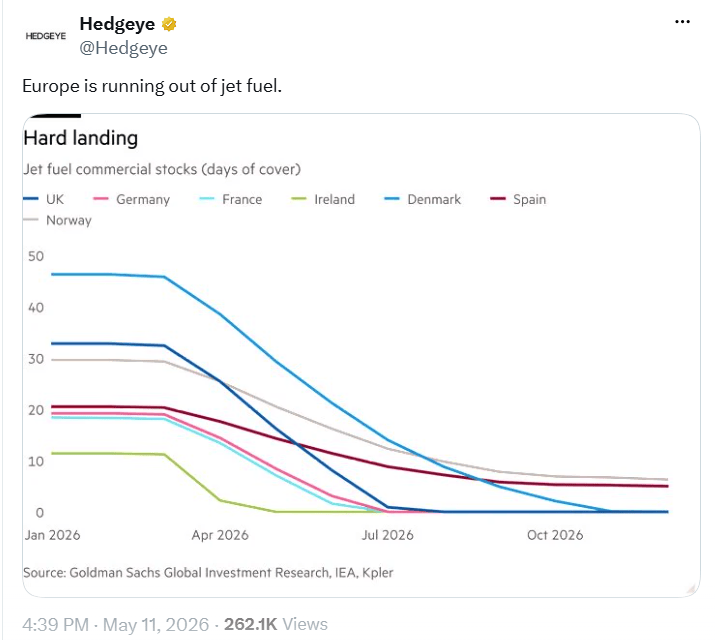
I don’t know if I’ve said this before, but I live near a railroad. Since early 2025, when Trump first announced his tariffs, I’ve taken to observing the railroad traffic with a far keener interest than I used to. I, like many other, expected the tariffs to cause a tradepocolyse. Foreign trade might grind to a halt, America would enter a recession, and I’d get a front row seat to all of that as the trains I had come to expect (and their horns that keep property values down) would stop passing me by.

I was wrong. The tradepocolypse never came, America has continued growing (faster than any other country in the G7), and the train comes right on schedule, loaded with goods that I thought would have been too expensive with the new tariffs.

I’d intended to make a post for *over a year* asking this question: why didn’t Trump’s tariffs harm US trade or even the US economy? But I was lazy and never made the post.

Well my laziness has been rewarded, I’ve been scooped. I had hoped to do a deep dive into this question, but Brookings has answered it better than I ever could. Give them a watch

Why Starmer won’t Rule Britannia, he didn’t take my advice

About a year ago I gave Kier Starmer some unsolicited advice about how he should improve the British economy. This year it seems Kier will lose his premiership, in part because he ignored me.

Now to be fair, Kier Starmer is still Prime Minister. He isn’t (politically) dead *yet*. But most of the British press is writing his political obituary so I might as well get in on the fun myself.

To be clear: the proximal cause of Starmer’s downfall is not the economy directly. His inability to handle the political issue of immigration (leading to the Reform party winning big at the local elections) alongside his bad judgement in the Mandelson scandal are probably the most notable reasons for his current quagmire.

But I sincerely believe that his inability to grow Britain’s economy is behind both of these issues: if wages were rising then immigration alone would not have let Reform win big. And likewise his recent scandal could have been water under the bridge if he was more popular (which would be easier if wages in Britain were rising).

And I believe the reasons he hasn’t been able to grow Britain’s economy is because he didn’t do any of the things I suggested. He hasn’t reformed Britain’s labor market or property market in any pro-growth ways. In fact most of his signature policies of late seem to be tax rises, stealth tax rises, and reforms that make it *harder* for Britain to grow, not easier.

Even Starmer himself admitted during the 2024 election that the property market needed significant reform. He claimed he would fix Britain’s broken planning system, a system designed to stymie anyone who wants to build anything anywhere, not a great system for a country that needs to build more houses and more power plants since they have the some of the worst housing shortages and energy prices in Europe!

But despite constant promises, constant claims that it would *eventually* be done, Starmer has taken 2 years and the 3rd largest majority in Labour’s history and turned it into *nothing at all* on the planning front. In fact, house-building has *gone down* since Starmer has taken office, and energy costs have *gone up* even faster than the rest of Europe.

Starmer can stand next to all the wind farms in the world, plenty of them will still get built even *with* a broken planning system. But the stark truth is that *way less stuff is getting built in Britain* than was being built under his Tory predecessor. And *way way less stuff is getting built* than would be built if he just *reformed the planning system like he promised*.

He just seems to have no mindset for growth. His other big 2024 promise was to not to raise taxes on working people. So as soon as he came into office he raised taxes on *any business that wanted to employ a working person*, which is a stealth tax on working people even if people don’t “see” it. Just because someone doesn’t see an extra few thousand pounds get taken from their paycheque doesn’t mean the tax is really “free.” Companies notice when it costs an extra few thousand pounds to employ any worker, and they respond by lowering their hiring and freezing raises to recouperate.

OK that’s not *actually* how it works. If we want to get technical (and I guess we should) what ACTUALLY happens is marginal, like this:

  • With every worker costing an extra few thousand pounds to employ (because of Starmer’s new tax), some companies will no longer think they can increase their profits by hiring more workers, the costs are just too high.
  • This isn’t every company mind, it’s only a few, it’s only those on the margin between profit and loss
  • But these few companies will pull out of the hiring market because they just don’t think a new worker is worth the cost. Now there’s *the same number of workers chasing fewer jobs*
  • What happens when the same number of dollars chase fewer goods? Dollars are worth less than they were. What happens when the same number of workers chase fewer jobs? Workers are worth less than before.
  • The same number of workers chasing fewer jobs means companies can suddenly be a lot more picky. They won’t need to raise wages to fill positions, or raise wages to ensure retention, and so they just won’t raise those wages since they don’t have to.
  • The companies aren’t making bank off of this mind, the money they save by not raising wages is the money going straight to Starmer through his stealth tax (which is supposed to not harm working people, mind you).
  • The result is the same: some companies stop hiring, many companies freeze wages, workers are harmed even if they don’t get to see the money coming out of their paycheque and going to the government.

Anyway, Starmer isn’t pro-growth enough. He hasn’t reformed any of the awful red tape that has kept Britain from growing, and he’s even added some of his own plus plenty of new taxes to boot. The results are unsurprising: Britain’s growth has flatlined and the voters aren’t happy with the poor economy. This makes more of them willing to listen to other parties (like Reform) and also primes them to already hate Starmer himself, such that a scandal which a more popular PM could weather (the Mandelson Scandal) has become deadly for Sir Kier.

And besides all that, the Mandelson scandal was entirely of Starmer’s own making, and it is a stupid scandal to boot.

Starmer’s brand was predicated on an end to sleaze: no more dirty deals or giving favours to friends. Starmer wasn’t like that (he said), he was upright and by the book.

But then once Starmer was in office, he took a well-known sleazeball (Peter Mandelson) who is ALSO a known affiliate of Epstein, and hands this man an ambassador position for which he is thoroughly unqualified. Britain’s foreign service is *supposed* to be more professional than America’s, political allies don’t just get handed ambassadorships as a thank you for their service. But Starmer did just that.

Mandelson had never worked in the consulates and embassies before, unlike the ambassador he replaced. And his lack of experience made it completely clear that he only got his position simply because Starmer wanted to reward him, as he was one of the (many) Grandees who had helped Starmer’s rise to power.

The whole saga then descended into a he-said she-said about the fact that a sleazeball like Mandelson *obviously* didn’t pass the rigorous vetting an ambassador needs to pass, but Starmer’s people made it clear that they wanted Mandy so he was appointed to the ambassadorship anyway. Starmer has tried to say *he himself* didn’t do anything wrong, but seriously: even a decade before anyone cared about the Epstein scandal, *Mandelson was already a known and tainted player*. Over 20 years ago I remember a comedian joked “who the hell made Mandelson a *lord*? The Sith?” He’s not a clean figure and he never has been. Even if you personally didn’t write a message saying “ignore the vetting red flags, I want Mandy,” no one could possibly say that they thought Sith Lord Mandelson was a clean and appropriate candidate for ambassador.

Anyway that’s my obituary on Kier Starmer. He never had a plan for growth, and he thought taxes were consequence free if people didn’t see them in a paycheque. He rose to power not by his skill at getting things done, but by his skill at convincing people he was a safe pair of hands. Safe indeed, he’ll never drive the car off a cliff, but only because he’s too scared to turn it on in the first place.

NIMBYs in the Farmhouse

Short addendum to my previous tirades on NIMBYs blocking data centers: I mostly focus on these being blocked in the cities because, well, I live in a city and I hear what city-folk say about why they are NIMBY about data centers, houses, etc.

But to be true, NIMBYism is universal. I was visiting my aunt a little while ago on the farm she owns with her daughter. Being bored, I picked up the newspaper on her table. Now, the fact that there was a physical newspaper on the table should let you know just how old, and old-fashioned, my aunt is. But the cover story was interesting to me: a proposal to build a large new solar power plant in the area, one that could power much of the nearby city and beyond.

A new solar power plant is no bad thing: it means jobs for construction, jobs for maintenance, and it lowers power costs making everyone’s lives cheaper. Cheap power also tends to attract other power-intensive jobs, bringing even more jobs and wages to a traditional farming area that has been very stagnant for 50 years.

But the locals were not having it. They didn’t like the glare that the panels might give off, they said microplastics and metals would run off during the rain and pollute their aquifer. They said it would take up too much space and be an eyesore, and that it wouldn’t even help them anyway. In short, they were NIMBYs.

Because that’s the NIMBY playbook on everything from houses, to data centers, to power plants:

  • This thing competes with me for amenities and raises their prices.
    • Houses bring residents who use up space in doctor’s offices, schools, and parks, potentially overcrowding them for current residents.
    • Houses and data centers use water and electricity, competing with local residents.
    • All three of these use up space, which locals may wish to use for other things
  • This thing isn’t something I want
    • If you don’t like the new house, you don’t have to live there. But someone else might want it, why not give them a chance?
    • If you don’t like data centers, well just don’t build one then. This one isn’t being built with your money, so let it be built.
    • If you don’t like solar power, well tough cookie. America needs more power, and you use power, so you’ve no right to complain in my eyes.
  • This thing is ugly
    • This complaint is pernicious because anything looks ugly when you already don’t like it for other reasons. There is no amount of facading or art deco that would make some people accept a data center or a solar farm as “beautiful.”
  • This thing will reduce my quality of life
    • The residents of a new apartment block will likely be noisier than the residents of the surrounding houses. They will stay up late, have parties, and invite over their friends. Those friends will then park on the street, reducing the street parking that current residents have come to enjoy. In fact, noise complaints seem to be *the most common complaint* I see over new developments when I listen in to my local planning meetings.
    • The recent buzz is that data centers also create noise. Whoopdidoo.
    • And of course solar panels are indeed made of plastics and some metals. But while there is no evidence that they leach out and contaminate the aquifers, there is no amount of evidence *against this* that would convince the NIMBYs of my aunt’s local town.

I don’t know if that solar power plant will ever get built. The local farmers seemed firmly against it, although the state and municipality were for it so they could well over-ride local demands. Still, I wanted to just point out that this is a textbook case of NIMBYism, and in my eyes these NIMBYs are all the same.

Long time, no post

Job priorities and health issues have gotten to me of late, but I want to keep my hobby alive so I’m posting again.

The Lib Dems in Britain are again proving that they are complete NIMBYs in all but name. A lot of Liberal spaces like the word “YIMBY” now, and the implications that go along with it. But suddenly once a house needs to be built in “my” backyard, Libs like the Lib Dems are demanding an array of extras get tagged on so that the price of building the new housing skyrockets and the housing doesn’t get built after all.

There’s always a Disney morality that NIMBYs tug on. It’s sad when a new things changes an old thing you grew up with. And it’s inconvenient when your own life has to change to accommodate newcomers. Wouldn’t it be great if everything could stay the same? And if your own life was never affected negatively by anyone around you?

But frankly, this morality is childish. In the real world things change, and each of us changed the world in our own way, so too must we adapt to the coming of those after us. The Lib Dems want to demand that homebuilders build new amenities with each new house, so that locals won’t have to adapt to their area having more people with the same amount of amenities. But if the demand for amenities is there, then someone else will come in and build them. If an area doesn’t have enough doctors, new GPs will open up shop, secure in the knowledge that they’ll have a bustling client base immediately.

But demanding that a homebuilder build doctors offices as well, with no guarantee that the area actually needs new doctors, is ridiculous. And even if the area does need new doctors, let the people who specialize in building those things build new doctors offices. Let the homebuilders build homes.

As I said, we all were a burden on our local amenities when we first came into this world, when we first moved to our current home. So to will those coming after us burden our area. But those who came before us dealt with our presence, we should deal with those who come after. Let people build homes, for God’s sake.

Oil has become a much more elastic good than many commentators believe it to be. To recount, usually when the price of a good goes up, that signals to suppliers to create more of it. For a good with inelastic supply, supply changes little in response to price.

During the height of OPEC’s power, a few countries could hold a cartel on the market, so that no matter how much the price rose, supply stayed relatively constant. The excess price was simply taken by the cartel as economic rents, “free money” so to speak.

But OPEC is no longer at the height of its power. Several of the OPEC nations have been ignoring the cartels demands for years now, the core nations are agreeing to end their own supply constraints, but more importantly than anything else the USA is now the number 1 producer of oil, and its free market does indeed respond to supply and demand. New wells can and have turned on as the price has risen, with more and more land continuing to be explored for more oil.

I’ve seen it written a lot recently that oil supply is simply inelastic, and that this is why demand-side subsidies like Canada pausing its gasoline tax won’t do anything at all to help with affordability. But first, this argument doesn’t follow. And second, oil really isn’t as inelastic as it used to be. More oil will indeed be pumped as wells turn back on and as oil profits incentivize well expansion.

The timeline for this increase may not happen within the short scale of current wars (the current one may already be over when this is published?), but it does happen, and it’s part of why the price for Brent Crude futures remains so low despite the threat of so much oil being barred through Hormuz. Investors know that higher price will bring on more supply to bring the price back down. And of course many are betting that the war will be over soon, but that’s another issue.

Just random streams of consciousness.

Marginal effects are why your economic analysis is wrong

Rent control is like burning money AND apartments

This is going to be disjointed and streamsofconscious-y as usual, but here goes

The economic concept of the “marginal” is a bit difficult to explain in part because our word “margin” already has a number of definitions that people are more familiar with. I’m not an economist, and the dictionary definition doesn’t get across everything I want to say about this, but I want to give you an intuitive reason for why there are so many domino effects with any economic policy change.

Let me start with rent control. It is a truism, even most of the internet knows it, that rent control is Bad. While good “in theory” for helping current tenants make their rent payments, it is bad in theory (and practice) for the housing market as it depressed the supply of new housing leading to higher prices in non-controlled apartments. It’s also bad for non-current tenants (such as teens who need to move out of their parents houses soon) because they have to pay the much higher starting price for an apartment, not the reduced rate their parents pay thanks to decades of rent control.

But socialists still want to make rent control work, and still want to defend it saying that rent control isn’t the problem, greedy landlords are. Nevermind that landlords don’t build the buildings, they rent them out, let’s see why rent control makes builders less likely to build.

Some people have suggested that even in a rent-controlled apartment, the landlord is making a profit, just not “as much” as he could be. Thus rent control isn’t making his business unprofitable, and since it isn’t unprofitable there’s no reason for rent control to be decreasing the supply of housing this way. But let’s look at this:

  • So the landlord is making less profit, that means he has less money to buy a *new* apartment with, and also other investors looking to be landlords know they’ll make less profit and will be less willing to spend their own money on new apartments. This decreases the sale price for new apartment buildings.
  • This also decreases the likelihood of an empty-nester deciding to fix up their nest, rent it out, and move elsewhere, as their rent income is capped. Again this decreases supply, increases cost.
    • But let’s focus on apartment towers for simplicity.
  • So the price of new apartment buildings is down, that means builders know they can’t make as much money as they want.

Now here’s where a socialist might get heated: the builders *can still make a profit building a new apartment complex*, the landlord *can still make a profit buying that complex and renting it out*. They just make *less* profit thanks to rent control, but if they *choose not to make that profit*, they’re just being spiteful and greedy. Rent control isn’t the problem here because apartments are still profitable!

But here’s the thing: nothing ever happens in a vacuum.

  • So the price of an apartment building is down because of rent control, but the price of an office building is unchanged, because no rent control.
  • The builders don’t have infinite money to build with, each building project has to make the choice to build one or the other.
  • More builders will shift towards office buildings instead of apartment buildings because we’ve reduced the price of apartment buildings through rent control.
  • Less apartment buildings means less supply of apartments, meaning higher rent if demand stay the same.

So while rent control kept apartments profitable, it still depressed the building of them. On the margin, every builder is making a choice between building an apartment or an office complex (or a supermarket, or a warehouse, or whatever). And reducing the profit you can make off an apartment building reduces the marginal investment into apartments. You don’t have to make renting *unprofitable* to decrease investment, making it *less profitable* is enough.

Rent control increases the cost of housing for everyone except current tenants who never, ever move. This is true even if it doesn’t reduce profitability to zero.

Let’s talk about another, even more controversial application of margins: taxes. Wealth taxes on the rich, raising income taxes on the rich, these have become popular policy proposals for populist parties preaching the perishment of deficits (I really strained on that alliteration and still couldn’t stick the landing). Populists argue that rising taxes *doesn’t* drive off the wealthy at all, because no one would pack up their whole life and move just because of a measly 2% of their income or wealth. This is especially true when the district raising the tax (such as California or New York City) already has such a phenomenal pull on top-dollar jobs. Silicon Valley and Wall Street aren’t just going to move to Austin or Atlanta, are you crazy!?!

But again, we need to think of the *margins*. Think not about the 20-year Silicon Valley veteran, with 2 kids in middle school and a 30-year mortgage, grumbling about an extra 2% of their paycheck every fortnight. Think instead about the fresh grad juggling jobs offers and trying to find the best one. Silicon Valley pays a lot more than Austin, but this grad plugs the incomes into a tax-and-cost-of-living-calculator (plenty of free online) and finds that the extra 2% bumps Silicon Valley down below Austin in after-tax disposable income. The fresh grad takes the Austin job and California loses a high-income resident to tax.

Or think about the Silicon Valley empty-nester with less ties to the city. Their friends may still be here, but their children and families may be in other states. They may be juggling competitive job offers and wondering about where they’d like to retire too. They may want to live in Austin so they can be near their aging parents, and an extra 2% tax on their income might be enough to push them to make the jump and take the job offer in Texas. Again, California loses a high income resident.

How often do these types of anecdotes happen? How much do these anecdotes outweigh the people who are faced with an extra 2% tax, but still move to California or New York anyway? Well, that’s the whole reason we should be looking at the *data* on these things. The data suggests that rising income taxes really do result in marginally less high earners moving or staying in. Whether that outweighs the benefits is another conversation, but there *is still* an effect. And the data is *clear* that wealth taxes cause the wealthy to move *out*. Europe is littered with nations that instituted and the revoked their wealth taxes due to exactly this, in fact wealth taxes often *reduce* total taxation as so many high earners flee for foreign shores.

But again, the argument online ignores data and builds its own anecdotes. It’s often argued that *no one will ever leave California or New York, Wall Street and Silicon Valley have too much pull, no one would pack up their whole life and move out just for a measly 2% tax*. These arguments completely ignore the marginal tax-payer who is already pulled in two directions, that tax-payer may very well move out.

The final example I want to discuss is the most controversial of all: the marginal voter.

I’ll try to keep this generic: when a politician comes out with a policy that is popular in their party but very unpopular in the country at large, partisans often have an excuse up their sleeve:

“No one is going to change their vote over this, anyone who says they will is a liar was already voting for the other party to begin with.”

The partisans make another crucial mistake, they assume every voter is a strict partisan and aren’t taking the marginal voter into account. The marginal voter does exist, even if the strict partisan is too small-minded to comprehend such a person. There are people in this country who, for their own reasons, are torn each election between voting democrat and voting republican. Or voting for democrat and not voting at all. Or voting republican and not voting at all. Or voting third party vs voting for a main party, or writing in Mickey Mouse vs casting an actual vote.

A partisan may not understand these voters, or worse they may actively refuse to understand and simply throw up their hands saying “these people are all just stupid.” But our own small-mindedness does not change the reality of this world.

Many many voters cast their vote while wishing they had other options. And for many of those voters a controversial policy announcement, one beloved by the partisans but hated by most non-partisan voters, could be enough to make them switch sides or not vote at all. They could decide that that’s the last straw, the final thing they just won’t accept. They already didn’t like the candidate for many of the reasons the partisan loved the candidate, but were willing to vote for them anyway for whatever reason. But one more unpopular policy could just be a bridge too far.

So yes, voters *will* change their vote over this. Marginal voters. People the partisan doesn’t want to believe exist because partisans prefer to group the world into “righteous” and “evil” people, with elections being a game of turning out the righteous and discouraging the evil. Or worse, the partisan believes in a tripartide division of “righteous,” “evil,” and “stupid,” with the “stupid” not worth thinking or talking about, except as targets for advertisement demanding they choose “righteous” over “evil.”

But if you look at the data unemotionally, you will see that many many voters are already marginal, and your favorite policy proposal, if sufficiently unpopular, can turn off a hell of a lot of them and turn a winnable race into a lost one. It’s very hard to be objective about politics since it controls every aspect of our lives. But it was hard for our ancestors to be objective about say World War 2, since its outcome would also decide the lives of millions. Yet objective analysis was still required to defeat emotional flailing, so keep that in mind the next time you try to say that politics is too important to let analysts give their input.

Above: pencil-sketch version of the Downfall meme

RIP Bozo, Paul Ehrlich is dead

For those who didn’t know him, Paul Ehrlich was one of the founding fathers of the degrowth movement. A movement which has, since the time of Malthus and beyond, declared that there are Just Too Many People and they’ll all die out if we don’t kill some of them soon.

Oh the modern degrowthers aren’t quite so bloodthirsty, the recent ones say we’ll all have to have less medicine and amenities instead of food and water, but the trajectory is the same. The idea remains that earth has reached a “carrying capacity” for humanity and we all must cut back on our standard of living for good.

Like all degrowthers, Paul Ehrlich was proven wrong very quickly after he wrote his book. In 1968, he predicted that “hundreds of millions” would die of famine in the 1970s and 1980s. Yet despite the continued presence of famines (Ethiopia for instance), reality never measured up to Paul’s lofty predictions.

Nor did we avoid Paul’s predictions because we accepted his preferred interventions. The international community never sterilized as many Indian women as Paul would have liked, but despite India now being the largest nation in history by population, the people there have never been *less* food insecure.

Paul’s predictions came false for the same reason most degrowthers are wrong, he didn’t believe in markets and technology.

It may seem “lucky” that our species has continued to produce ever-more food thanks to timely inventions. Improved agriculture proved Malthus wrong. The Fritz-Haber process destroyed the expected fertilizer shortage. The Green Revolution was already proving Paul wrong while he wrote his book. But this isn’t luck at all, it’s prices.

Paul Ehrlich and Thomas Malthus aren’t the only people in the world who can see that a growing population will need more food. They aren’t the only ones who can predict this. But in a functioning market economy, prices signal a way out of such a dilemma.

When people predict there won’t be enough food, the future price of food rises, even though supply and demand *today* are unchanged. That’s why (even before the recent kerfuffle), the price of oil would rise with every rise in middle-east tensions. The *threat* of there being not enough oil in the future can raise the price of oil today.

But again, just like oil, this is a market signal that encouraged new technology. When the future price of food rises, farmers can expect to make more money, and the people who sell them their farming equipment can likewise expect a share of the profits. All these people are encouraged to invest in future food-increasing technologies, in the hopes of landing on some solution that will make them very wealthy.

And even though most of these people will be hobbyists tinkering in their backyard, never making anything of substance, some people will invent say the McCormick Reaping Machine, greatly increasing farm productivity. Or some people today will perfect modern fracking, greatly increasing oil well productivity.

In either case, it’s true that without any sort of intervention, ever growing demand will outstrip static supply. But markets provide a proven mechanism for signaling the oncoming shortage and preventing it, through the incentivization of new technology.

I’ve seen modern degrowthers admit that Paul was wrong, he was so badly wrong in 1968 that they’d look stupid if they didn’t admit this. But many ascribe his wrongness to his racialized policy proposals, he wanted Earth to have less Indians and Chinese, but thought there were the right amount of Americans, for instance.

But Paul wasn’t wrong because he was a racist. He was wrong because he was wrong. And modern, non-racially-motivated degrowthers are wrong for the exact same reason, and they cannot escape their wrongness by simply divesting themselves of Paul’s racism.

The degrowth movement is fundamentally wrong about incentives, about prices, about predictions, and about technology. Anything that can be predicted can be planned for, as I have long said. And if it can be planned for, prices create a mechanism that reward people for mitigating it. If the price of food is expected to be high, the man who can make a whole lot of it will reap many rewards. Thus the man who invents the *reaper* will reap many rewards (*chuckle*).

Despite how wrong he was, Paul Ehrlich somehow maintained his status as a professional predictor, to the point that I’ve seen newspapers claim he was “early” and not merely “wrong.” But the famines he predicted never happened, and show no sign of happening now. The modern dilemma is how to get people to stop eating until they’re fat, not how to grow enough food to feed them all. And Paul’s wrongness should serve as a wakeup call for every other half-baked predictor with a book.

Don’t predict the future by infinitely extending the present. That’s the way of fools and bozos.

Why European Capital Markets remain fragmented

Someone on twitter posted this clearly AI-generated image of burning money. See how many mistakes you can spot in the Euros. I think the one on the left is even an upside-down Bennie Franklin, although these are all supposed to be Euros.

I blogged a while ago about how Mario Draghi wants Europe’s capital markets to be more unified to spur growth. I outlined how this was not just a matter of putting ink to paper, unifying the capital markets means unifying EU investment laws. And since those laws involve things like property rights, worker’s rights, bankruptcy rights etc, some people are going to win or lose out if everyone suddenly has to have the same investment laws. Workers whose jobs were once guaranteed even during a bankruptcy won’t appreciate that protection being removed. Companies in jurisdictions which don’t guarantee workers’ jobs like that won’t appreciate the added costs and may even close up shop, leading to no jobs for those workers at all.

But I wanted to write more on this topic as it’s a subject that interests me. And rather than last time where I went deep into the weeds outlining how one specific regulation (bankruptcy) differed across the EU’s many member states, this time I’d like to take a more broad approach to the many ways the EU’s capital markets are fragmented. And I’d like to point out that overcoming this fragmentation and unifying the markets will involve some nations winning or losing out, which is why the markets haven’t unified yet, no one wants to be the loser.

First, let’s talk Central Securities Depositories. A Central Securities Depository (CSD) is responsible for making sure that when a buyer and seller trade a financial asset, whether that’s a stock or a bond or what have you, the buyer gets the asset and the seller gets the money. Ensuring that an agreed-upon trade actually *happens* is fundamental to a working financial market. You wouldn’t go to the store if there was a chance you’d pay your money and the cashier would keep your groceries, same thing with financial markets.

The USA has a single CSD. It’s a private company but with heavy government oversight. The EU has dozens of CSDs, structured very similarly. But with dozens of CSDs to work with rather than just one, buying and selling of assets becomes a hassle. “Settlement” is the term used in finance for when the buyer and seller actually exchange money for assets, and there is a small cost associated with settlement to make sure everything is legal and on-the-level. The EU having dozens of CSDs instead of just one raises those settlement costs substantially, that in turn increases friction in the financial markets and decreases investment.

The EU wants to unify their capital markets and have just one single CSD. But will it be the French CSD, thus bringing more jobs to France? Or the Italian CSD, bringing jobs to Italy? Everyone wants their CSD to be the European CSD, and no one wants their country to lose all the high-paying jobs and high-status institutions that a CSD brings with it.

Now let’s talk about IPOs. European financial leaders have bemoaned that America has way more high-valued startups than Europe, and that European startups often flee to America rather than staying home. IPOs have at least something to do with this.

When a startup IPOs, they sell ownership of their company in exchange for investors’ money. This is a powerful way for the startup to get needed cash, and for investors to get in on the ground floor. But while Europe may have almost as much money floating around as America does, that money is in dozens of different national silos split up by regulation. You need to just adhere to 1 set of regulations to get access to all of America’s investment money, you need to adhere to dozens of sets of European regulations to get access to European money. Is it any wonder then that companies IPO in America?

But say you purchase stock in an IPO, only to lose everything because the executives were overpromising and hiding the company’s problems. Can you sue the company to recover your lost investment? Well, it heavily depends on which country you bought the stock in. Countries with strict investor protections won’t enjoy losing those protections if the EU unifies its capital markets. Countries with more lax protections generally want to prevent frivolous lawsuits from investors, who may have been well aware of the risks of a stock but still want to blame the company for their investment going south. Those countries won’t appreciate new investor protections that encourage ever more investor lawsuits.

Then thinking about IPOs, there are a lot more rules about how the shares must be structured. If you are the CEO and founder of a company, you want to IPO to get money, but you may want to keep holding all the power and control over your company. How can you sell off ownership of your company without losing any of the power and control that ownership brings?

One way is to only sell a small portion of your company’s value. You can sell off 10% or 15% or 25% of it to raise money but keep the rest for yourself. This makes you a huge majority shareholder who can never be outvoted in matters of corporate governance.

This structure poses risks to the minority shareholders, both in terms of shareholder rights and in terms of stock value. This structure, where one person owns a large part of the companies, is part of why the Adani companies collapsed so spectacularly in value back in 2023. Adani owned 75% of his companies outright. Some shareholders though this protected them “Adani will never sell, so the value cannot drop.” But actually it didn’t protect them at all, Adani would never sell, but he could also never buy.

The value of the companies wasn’t based on what Adani himself would do, his 75% ownership was locked in and unchanging. Rather the value was based on what a small minority of investors thought, the other 25% owners. If some of those investors started selling, and if no other participants in the market were willing to buy, then the price would collapse *fast* because there’s a lot less buyers and sellers available than what it may seems. Adani and his 75% ownership could not be a buyer or seller, so the market for Adani shares was 1/4 as large as it seemed to be based on the listed value of his companies.

So anyway, minority shareholders can get washed by a majority shareholder keeping all the shares to himself and ignoring their rights. Different EU companies have different rules about how much of a company a majority shareholder can retain, and what the rights of minority shareholders are. Someone is going to lose out if those rules are unified across the EU. Some companies will find their ownership structure is no longer legal, and their majority shareholders will be forced to sell. Or if majority shareholders end up being able to have a *larger* stake, some market watchers will decry that this keeps too much power in the hands of rich majority shareholders, rather than in the hands of the small minority shareholders (aka “the people”).

Then there’s taxes. Say you are a German living in Germany, but you own shares in France’s Francis Frances (FFF), incorporated in the Netherlands. Your shares in FFF pay a dividend to you, which you receive as income.

Now, the Netherlands wants you to pay tax on that income, so they tax your dividend as the money leaves their country. Germany also wants you to pay tax on that income, so they tax your dividend as the money comes into Germany. You pay dividend taxes twice, while if you’d just invested in a Germany company and ignored the Netherlands entirely, you’d have only been taxes once.

But OK, there are EU rules that are supposed to prevent this double-taxation, which should encourage cross-border investment and help unify the capital markets. But those rules are often a mess of red-tape and delays. In theory, either Germany or the Netherlands or both should give you a tax credit to pay you back for what they took out of their dividend. In practice, they may hold your money for years, or require you to jump through arbitrary hoops to get it back.

And so in the end many investors *don’t invest outside their own country,* not because they are small-minded or don’t want to, but because they’d pay twice as much tax as if they just invested in their own country. This again fragments capital markets, but governments are loath to unify the tax code like this because they still want to maintain full sovereignty over their taxes and budgets. And besides, if they unified the tax code, what would the rate of dividend tax be? 30-40%, like in Denmark and France? Or 0%, like in Slovakia and Slovenia? Everyone has arguments on what the rate should be, and no one wants to budge because there are good reasons for each argument.

In the end, I think a lot of online commentators undersell the difficulty of unifying Europe. Unification of the capital markets isn’t held back by small-minded nationalists, or sclerotic bureaucrats, it’s held back by the need for trade-offs which no government wants to make. No government wants to come to the people and say “we’re changing the laws on stocks and taxes, and we’re moving all the CSD jobs across the border.”

Leftists in France would revolt at any fall in capital gains tax, rightists and investors would do likewise for any rise in such tax in the EU’s many many low-tax jurisdictions. Emerging economies like Slovakia and Slovenia would cry foul at having to remove their competitive advantage in taxes to appease Denmark and the developed economies, Slovakia might think the only way they can attract investment is by having lower taxes than the more advanced economies of Europe.

So once again, trade-offs *exist*, and they are the reason Europe still hasn’t unified its capital markets.

Everyone’s a reactionary in their own backyard

I’ve blogged before about Ezra Klein’s abundance agenda. To recap: Ezra Klein asks the following questions:

  • Why are so many people moving out of blue states and into red states?
  • Why do red states grow faster than blue states?
  • Why do blue states have so many problems with homelessness?
  • Why can’t blue states build train lines and green infrastructure on time and on budget?

Klein concludes that liberals being maligned as “bad on the economy,” is not entirely unfair, and that Blue State policies have in many cases reduced growth and made people’s lives materially worse off. A fixation on bureaucracy is a hamstring to business. For liberals to win, Ezra wants them to not just be “not as bad” as conservatives, but he wants them to embrace a pro-growth mindset and pro-growth policies. These policies would deliver more energy, more housing, and more jobs without ever-increasing government expenditures.

I feel I can conclusively say that Klein has lost the argument, at least in online left-leaning circles. Instead, Bernie Sanders and the anti-growth crowd are winning people over to the idea that we need to *further* restrict businesses, further increase government bureaucracy, and thereby further reduce growth.

Bernie doesn’t want to fix electricity prices by improving generation and transmission like Klein does, he wants a moratorium on building datacenters.

Bernie doesn’t want to fix housing by allowing private companies to build more of it like Klein does, he wants to prevent companies from buying houses.

Bernie doesn’t want to grow the economic pie like Klein does, he wants to shrink and reslice it.

But Bernie wouldn’t have a microphone if people weren’t willing to listen to him, and in online left-leaning circles, Bernie is listened to, not Klein.

I think it’s because fundementally, people are reactionary in their own backyards. It’s all well and good to say we should encourage economic growth. But new businesses compete with old residents for land, water, and electricity. And so old residents complain that new businesses push up prices, and demand that new businesses be stopped completely. This pattern is universal and as old as civilization itself. But the modern American left is now overwhelmingly urban, and urban areas are where new businesses want to build, so the American left is now overwhelmingly anti-business.

I just want to rattle off a few arguments I’ve seen online about building, why these arguments don’t hold water, and why I think Klein will not manage to bring his Abundance Agenda into prominence.

Bernie has recently called for a moratorium on new datacenters, to protect consumers from increased electricity prices. I’ve seen a lot of the online left that considers itself “pro-growth” defend this, on the principle that:

  • “Data centers produce economic growth, but not for the people who pay the higher electricity prices.”

Because data centers are “different,” it’s Good to ban new ones, it’s not anti-growth at all it’s just anti-“bad”-growth. To which I’d say:

  • “________ produce economic growth, but not for the people who pay the higher electricity prices.”

Insert factories, electric trains, mass transit, a new University campus, or literally *anything else* and this argument is the same. This isn’t an argument against data centers, it’s an argument against any economic growth whatsoever. When things change there will always be winners and losers. When economies grow, some individuals don’t get the full benefit of that growth. But the idea of the Abundance Agenda was that the losers need to suck it up for the greater good, the price of your house isn’t worth blocking new housing and increasing the homeless rate of the wider city.

When it’s “other people” blocking housing and causing problems, it’s easy to demonize them and say they’re small-minded, wrong-headed, etc. But suddenly when it’s your back yard, and its your electricity bill, then the same people who demonized NIMBYs become NIMBYs themselves.

Of course it’s different, because THOSE OTHER people didn’t have reasonable concerns, they were motivated solely by greed and stupidity. WE however are smart and reasonable, all our concerns are well-thought out. This is how everyone thinks, but a lot of online liberal spaces are incredibly insular, and so don’t realize that their “reasonable” complaints are nothing new, but are just part and parcel of the NIMBY handbook going back decades.

If you say that new homes aren’t needed, and developers are just greedy, then there’s a reasonable amount of the online left who will dogpile you for your stupidity. New homes ARE needed, homelessness proves that there aren’t enough homes for everyone. Building new homes reduces home prices and increasing housing.

But if you say data centers aren’t needed, suddenly you’re on the 60 side of a 60/40 issue. A minority of the online left has no issue with data centers. But there are enough anti-AI people, anti-Silicon Valley people, anti-everyone rich (which therefor means anti-AI because rich people own and are the face of AI companies), and just plain closeted NIMBYs that being against new data centers is a “reasonable” belief in these spaces, where being against new housing wouldn’t be.

A few years ago, Silicon Valley and techies in general were seen as a staunch bastion of liberalism, proof that LIBERALS were actually the economically smart ones and not conservatives. A single election was all it took to change that, with a few techies siding with Trump, and with others not being sufficiently *anti*-Trump, the Tech sector has lost its shine and is now placed by many liberals in the same bin as the steel sector, the automotive sector, or even the oil and gas sector. These are just “bad people” who make money by making the world worse. So if they want AI, some people will reflexively oppose them, and supporting AI comes at a social cost in these spaces, even if you strenuously state how much you oppose the techies and the wider Silicon Valley elite.

With this shift, Silicon Valley can now be railed against in liberal spaces in just the same way as Ford or US Steel. These idiots want to build a new thing? It won’t bring any real jobs, it will dirty up our town, it will raise our prices, and they’re just making money by being evil anyway.

So blocking any new silicon valley thing becomes a socially defensible position, where 4 years ago it wasn’t. This is how coalition politics shake out on a local scale, people don’t weigh up the real-world costs and benefits of a position, they weigh up the *social costs* and the *social benefits* of a position. Supporting AI carries a social cost, opposing it carries a social benefit. That decides how the coalition reacts to AI much more strongly that the real-world economics of the situation.

Because simply put, a data center moratorium is a dumb as a factory moratorium. I, personally, won’t be enriched by a new factory being built. And most modern factories are so automated that they provide vanishingly few direct jobs, they aren’t the assembly lines with workmen that people think about, they’re honestly about as automated as a data center these days.

But my area will benefit from the increased investment, prices will go down as supply of goods increases, and I think other people should be allowed to make money by investing just as I’d like to be allowed to make money by investing myself. I wouldn’t want my dream restaurant to be blocked by NIMBYs who don’t want me bringing traffic to their part of town, so I don’t think it’s right to block other people’s economic activities even though a new data center will bring more electricity demand to me.

Some try to argue that data centers don’t produce anything real, that all AI is a bubble. That still isn’t a reason to block data centers. YOU DO NOT KNOW how the AI race will shake out, nobody does. The point of capitalism is that everyone makes their bets, and we find out later who won. If you want to bet against AI, short NVIDIA, or short Microsoft, Google, and Meta. You can bet against them and make money if you’re right, but you don’t know you’re right, and if the AI boosters are right and you block them from building datacenters, you’re impoverishing us all just like when you block housing, or a new factory, or a new University campus. You’re reducing economic growth because you think you know better but won’t put your money where your mouth is by shorting the stock, instead taking the easy way of blocking the business.

But this has been a rambly post about my opinions. The point is that these are the arguments I’ve seen all over left-leaning online spaces. The arguments are overwhelmingly anti-capitalist, anti-business, and anti-growth. Any sector that is not seen as explicitly left-leaning becomes a socially acceptable target for attack and NIMBY policies. This is antithetical to Klein’s abundance agenda. This is why I thought his agenda would not win in the left-of-center mind space, and I’m even more confident of that prediction now.

Coalitions aren’t build by reasoned argument, they are build by the social costs and benefits of holding a specific position. Techies have been etched with the scarlet letter (T for Trump, natch), and so opposing anything and everything they do has a social cost in left-of-center spaces, regardless of the reasoned arguments that growth is good for the people’s prosperity. Basically all businesses are etched with the scarlet C for conservative, and so opposing business is generally in vogue as well. Klein’s agenda relies on allowing businesses to get their way, to improve all our lives by letting business do business. That isn’t going to fly in the modern left, and I doubt Klein can change it.