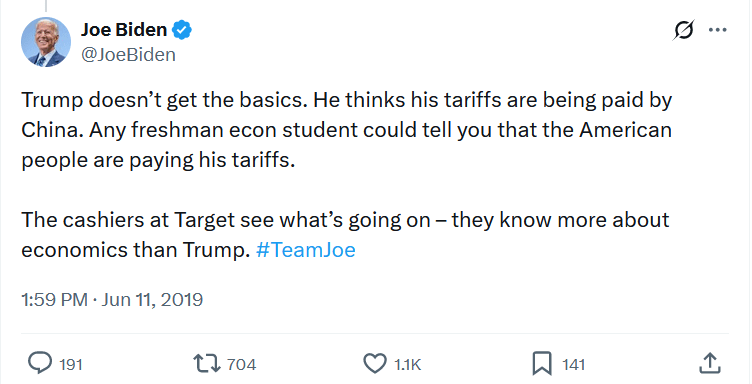
Amazon will not be part of the “Resistance”

I wanted to write this half a year ago, but with Trump’s tariffs back in the news, I figured I’d give it another go.

When Trump first enacted his so-called “Liberation Day” tariffs, many experts (mostly partisan experts though) predicted the apocalypse. It was bad enough that many news sources started educated their readers on the Smoot-Hawley tariffs, which anyone who watched Ferris Bueler’s Day Off will know were the tariffs enacted during the Great Depression. These tariffs have been blamed for contributing to the depth and intensity of the Great Depression, and naturally partisans wanted voters to make that connection to Trump’s Tariffs.

I myself also started watching out. I live in a major city with a major train hub, and as I commute past it I like to look out and check how many boxcars are being loaded and unloaded by trains. Earlier this year it seemed the tariffs might have actually been apocalyptic, the train yard was empty on some days. But despite partisans stoking fears of COVID-level shortages, tariffs have seemed to have a marginal effect on the US economy. Growth has remained strong in 2025, with the US well ahead of pretty much every advanced economy on earth in terms of growth rate. The EU may be a massive free trade area, and the USA may have become an increasingly protectionist autarky throughout the Trump-Biden years, but that hasn’t been enough to make the EU more competitive or the US less.

It’s likely because the tariffs are indeed marginal. Tariffs are a tax on imports, but like any other tax they can be avoided and mitigated by changing behaviors. Companies have shifted to sourcing their products from areas with lower tariffs, changing their production line to build more things in America, or in some cases are simply accepting lower profits and not passing the cost of the tariffs onto consumers because they need to maintain market share. In other cases the tariffs *are* leading to a rise in prices, but consumers still have the chance to substitute tariffed goods for other goods or just stop buying alltogether.

The tariffs have likely contributed to inflation remaining well-above target, and have likely made certain consumers much poorer without realizing it (as they purchase tariffed products and can’t find substitutes), but the tariffs have not had nearly the destructive effects that I and many others believed they would.

But the biggest problem for Trump’s detractors is highlighting the adverse effects of Trump’s tariffs. Remember that the American people seem to broadly like tariffs: Biden expanded Trump’s tariffs, Bernie surged in the Democratic Party by denouncing Clinton’s pro-corporate policies (which were usually also pro-trade policies) and Trump has completely remade the GOP into a protectionist party. America’s two parties are dominated by protectionists, and many free-trade Democrats have been furious that 2028 hopefuls have mostly denounced Trump’s tariffs as being “too high, too broad,” rather than hitting out that “tariffs are just plain bad and shouldn’t be used.”

It seems that Americans really do like tariffs, so trying to attack Trump for his tariff policy doesn’t hit as well as it “should.” This is a big problem for free-trade Democrats because to them it’s patently obvious that Trump’s tariffs have led to higher inflation and lower growth, but Americans aren’t necessarily buying it.

Enter Amazon. As the foremost distributor of direct-to-consumer goods, Amazon is acutely sensitive to trade policy. Any raise in tariffs will cause a raise in prices for imported goods, causing consumers to purchase less and that hurts Amazon’s bottom line. Amazon has every reason to lobby as strongly as possible *against* tariffs, and as a consumer-facing company that everyone knows, free-trade Democrats thought they’d found their edge.

The idea went like this: what if Amazon *shows consumers* how much higher their prices are because of tariffs? What if every time a consumer buys a 100$ imported product, Amazon shows its base cost but then hits them with a “+15$ because of tariffs” fee at the checkout? Consumers would be furious at these hidden costs, but their fury would be directed at Trump and his tariffs. The tariffs would become unpopular, Trump would become unpopular, the free-trade Democrats and Amazon would be the big winners in 2026 and 2028 when (hopefully) less protectionist Democrats would be swept into power on a wave of consumer backlash.

It all seemed so perfect, leaked reports even claimed that Amazon was openly considering this idea.

But then Amazon made an official statement that they would not under any condition display tariff prices. Their statement said that while such a move was considered, it was never approved, which isn’t unusual as companies are constantly considering many thousands of moves that are never approved. Furthermore Amazon spokesmen pointed out that the company had never shown consumers the cost of tariffs during the Biden administration, even though Biden had hiked tariffs to their highest point since Jimmy Carter.

Amazon felt the move would damage its own brand, worsen its political position, and bring basically no benefit. If Amazon was an arm of the Democratic party, then maybe it would make sense. But as a profit-maximizing entity, pissing off your customers with hidden fees *and* wading into the political arena with a nakedly partisan endorsement of the opposition (by blaming the current administration for high prices) just doesn’t make sense.

So Amazon will *not* be part of the Anti-Trump Resistance. As Michael Jordan once said, Republicans buy sneakers too, and most profit-maximizing companies find it best to *not* piss off half the country by taking overtly partisan stances. They may try to take political stances, but they will always present themselves as non-partisan to consumers, because they don’t want to lose business from angry voters. And directly blaming Trump’s Tariffs for high Amazon prices, after 4 years of never doing such for Biden’s Tariffs would indeed be an overtly partisan act, because it’s an attempt to blame Republicans for high prices and push consumers towards supporting the Democrats.

This then made Amazon a target of April’s 2-minute-hate in the eyes of free-trade democrats. These Democrats don’t see “showing the cost of tariffs” as partisan at all (because people always believe their own beliefs are just “the obvious truth,” and not a partisan stance). Rather, when Amazon *refused* to show the cost of tariffs, it was blamed for kowtowing to a “fascist” government, comparisons to 1930s German companies were ever-present, and Bezos himself was derided as a coward and a collaborator, rather than the profit-maximizing businessman that he is.

The simple fact is that obviously no multinational company is going to want to lose half its customers, so no multinational company is going to make their storefront an advertisement for the Democrats and against the Republicans. I’m sure Amazon is lobbying the administration on reducing tariffs, it was widely reported that tech giants did this exact same lobbying last time Trump was in power. But just because Amazon doesn’t like tariffs doesn’t mean they want to torch their credibility with Republican consumers. Because Republican consumers might angrily ask why Amazon is sourcing products from overseas (and showing people a tariff) rather than sourcing *American* products like Trump (and Joe Biden, and Bernie Sanders) would prefer they be doing.

Anyway I’ve found a dozen ways to restate this one point: Amazon is not going to become part of the Resistance, it will not show consumers what the price of Trump’s tariffs are in part because that would be a partisan move that would invite blowback and boycotts from Republicans: “why isn’t Amazon buying American instead, and why didn’t Amazon do this stunt during the Biden administration?”

But I wanted to note one additional reason Amazon won’t be showing consumers the price of tariffs, and it’s isn’t because of what Amazon wants, it’s because of what their suppliers want.

The relationship between Amazon and its legion of medium-sized suppliers is a tricky one. On the one hand some random clothing store like Shoes&Shirts LLC (fake name) probably likes that Amazon gives them a massive amount of customers to sell to. Amazon’s global consumer base makes it easier to scale up by just having a single contract with Amazon, rather than having to negotiate multiple deals with brick-and-mortar stores in every single country.

On the other hand, Amazon’s dominance of the market gives them a lot of power over their suppliers, they can negotiate a large cut of the proceeds, demand suppliers abide by Amazons rules and regulations, and overall an agreement with Amazon can be like a pair of golden handcuffs. If you’ve seen how indie developers complain about Steam, you’ll understand how small and medium suppliers complain about Amazon.

The situation can be even worse, since Amazon competes directly with its own suppliers. Say Shirts&Shoes LLC has a new style of Comfy Sweater that is flying off the digital shelves. Amazon can see this, and see that another company makes a nearly identical sweater for a fraction of the cost. Amazon can then source their own Comfy Sweater from this other company and try to undercut Shirts&Shoes LLC on price, fulfilling the orders themselves and taking Shirts&Shoes’s business out from under them.

Amazon suppliers are therefore very very cautious with what information they give to Amazon. They do *not* want to tell Amazon the price it costs them to make something, they only want to reveal the price they’re selling it for. Giving away the price to make something makes it even easier for Amazon to undercut them.

If Shirts&Shoes’s sweater is selling for 100$, and you can source it for 60$, you still don’t know for sure if you can undercut them. Maybe Amazon lists their own sweater for 75$, but Shirts&Shoes responds by cutting the price down to 50$ because they can actually make it for even less than that. Amazon would be putting a lot of money into a failed attempt at capturing new market share, Shirts&Shoes would be furious at the attempted betrayal, AND both would now be making less money because the shirt is selling for less so both sides get less of a cut. The only winners would be the consumers.

So Amazon’s suppliers DO NOT want to give Amazon any information more than they need to. And that by the way includes the price of tariffs.

When Shirts&Shoes brings a shirt into America, customs charges them a tariff based on the declared value of the shirt. Shirts&Shoes then has to set the sale price at a level high enough to cover not only the cost of the shirt, but also the cost of the tariff. If the value of the shirt is 20$ and there’s a 100% tariff, then they can’t sell the shirt for less than 40$ without taking a lose.

But they may be selling the shirt for 100$ anyway and taking 60$ of profit. Now, the shirt’s price may have gone up because there used to be no tariff and now there’s a 100% tariff. So the free-trade Democrats would love if the shirt was listed on Amazon for a price of 80$, but had an extra 20$ “tariff tax” at the checkout that would be directly blamed on Donald Trump.

But Shirts&Shoes doesn’t want to reveal that the base cost of their shirt is 20$ with a 20$ tariff on top. Because at that point if Amazon can source the same shirt for 35$, then they can undercut Shirts&Shoes and steal their business, and both sides know it. Instead, Shirts&Shoes would like the costs going into the shirt to be as obfuscated as possible.

They’d probably like their customers to think that it costs them 90$ to make a shirt and they’re selling it for 100$, because that way they don’t seem to be making “too” much profit. If customers knew Shirts&Shoes had such a high mark-up, customers might think they were getting ripped off, and would make nasty posts on the internet to complain about Shirts&Shoes’s prices. This could harm Shirts&Shoes’s brand.

And they’d probably like Amazon to think that it costs them 5$ to make a shirt and they’re selling it for 100$. Because they don’t want Amazon to attempt to undercut them and either steal their business or initiate a price war which harms their profit margins.

So ambiguity is entirely in Shirts&Shoes’s interests, and so they don’t want to reveal any tariff information to Amazon. That in turn means that even if Amazon wanted to, it wouldn’t be able to reveal tariff information on any third party products, only on products it sources itself. That could backfire if Amazon even decided to reveal tariff prices, as *only Amazon’s own goods would show the tariff as a hidden cost*. Buy a good sourced by Shirts&Shoes? What You See Is What You Get. Buy a good sourced by Amazon? You have no idea WHAT the real price will be.

To summarize, Amazon (and other profit-seeking companies) will NOT be part of the resistance, as they do not want to damage their brand in the eyes of partisans. Likewise, it’s not even a simple thing for Amazon to JOIN the resistance and reveal to customers the true price of tariffs. They’d be pissing off their own customers by making customers feel like the price is a bait-and-switch, they’d be demanding information from their suppliers that the suppliers don’t want to reveal, and if the suppliers DON’T reveal that information, then only Amazon-sourced products would show a tariff anyway, meaning Amazon gets all of the blowback for “high prices” while their suppliers can claim “Same Low Prices As Ever,” even if prices everywhere are actually rising.

Partisans think everyone should join their fight, and that the only reason not to is base cowardice. They’re usually wrong.

Protectionism wears the skin of health and safety

Regulations wrapped in red tape

Trump is an unusual figure among the world’s politicians. It is not that he is a nativist and a protectionist, but that he is open and direct about his nativist and protectionist beliefs. Trump says that foreign companies are harming American companies by undercutting on price, and that foreigners are stealing American jobs by working in America.

There are many reasons to attack these beliefs and to tell Trump he’s wrong. Here are some reasons give on the left or the right, maybe you agree with one of them:

  • If foreign companies sell for cheaper, than that means blocking foreign goods raises prices. And raising prices (aka inflation) directly harms all American consumers way worse than foreign goods harm a single American company
  • “Oh your company can’t compete? Sounds like a skill issue. Your company deserves to go bankrupt, free market in action.”
  • Foreigners do jobs Americans don’t want to do
  • It’s unethical to prevent foreigners from moving to America to look for a better life
  • “Oh you can’t compete against foreign workers? Sounds like a skill issue. You deserve to go bankrupt, free market in action.”
  • Trade barriers will wreck the economy by driving up prices, and any claims of fairness are necessarily secondary to this single overriding truth: trade barriers are bad for the economy

Politicians in and out of America have made each of these arguments in turn as they argue against Trumps new tariffs. But the single-minded opposition to tariffs hides something deeper: almost every politician globally throws up trade barriers just like Trump, but they have different excuses.

  • “Those goods contain chemicals that harm our health”
  • “Those goods contain chemicals that harm our environment”
  • “For national security or data privacy, we cannot allow foreigners to hold our market or buy our data”
  • And the old reliable: “those goods and services don’t comply with our regulations.”

This last one is pernicious because of how vapid and all-encompassing it is. It only works because people have a knee-jerk reaction against deregulation, but as I have pointed out, there’s a lot of anti-consumer regulation out there raising our prices and harming our economies. Regulation doesn’t actually mean “good,” but enough people believe it does that politicians can hide all their protectionist bullshit behind an aegis of “regulations.”

I say all this because I’m bashing the EU again today. A former EU minister of parliament put out a post which demonstrates a lot of this BS EU protectionism. I had already known that the EU uses “regulation” to protect its market from foreign goods, what is commonly termed “protectionism.” What I did not know is how much EU countries use this to protect their national markets from the single market itself.

The whole idea of the single market is free trade and free movement. If a company is allowed to sell goods in one country, it should be allowed to sell goods in all of them. If a person is allowed to work in one country, they should be allowed to work in all of them. This reduces barriers, brings countries closer together, and is much more efficient economically than a world of barriers and tariffs. It should bring everyone prosperity.

But the countries of the single market still want to “protect” their national markets and their national workers, just like Trump does. But unlike Trump, EU countries are legally forbidden from erecting tariffs. So they use health, safety, and regulation instead to do their dirty work. Here’s some examples from the article:

  • Denmark claiming that adding vitamins and nutrients to breakfast cereal “could be toxic,” with absolutely no justification whatsoever. The cereals are consumed EU-wide, and one would think the burden of proof would be on the accuser in that case. But no, a baseless “could be toxic” claim is enough to ban a product in Denmark unless the company making it is willing to go through a long court battle against a national government.
  • Spain and Italy trying to force foreign chocolate (consumed in every EU state, legally chocolate by EU law) to be explicitly marketed as “not true chocolate” even though every law says its chocolate.
  • France forcing Dutch biodiesel to comply with expensive testing that is waived for French biodiesel.
  • Germany forcing foreign professionals to undergo expensive “equivalence checks” before allowing them to work in the country. This is just more BS occupational licensing by the way, a horse-groomer shouldn’t need a license to begin with let alone an “equivalence check” to make sure their Italian license is valid in Germany.
  • Adding new national regulation that must be complied with *on top* of any EU regulation. This is the most pernicious, because most EU regulations explicitly mention that they are there to “harmonize” the market, make goods acceptable in every country. But EU regulations in the past decade have not decrease trade barriers, because countries have learned to add a new national regulation on top of every EU one, forcing foreign companies to increase their compliance cost if they want to break into a national market.

For years and years, Europe was indeed a continent of decreasing trade barriers. While they continued to be strongly protectionist against the outside world (erecting anti-GMO laws primarily as protectionism for EU farms), they were at least reducing barriers within the block. But Europe is not immune to the anti-globalization sentiment that has swept across Britain and America since 2016. It’s just that much like Biden, European politicians are caught between maintaining their appearance as internationalists while still wanting to be protectionists and nativists.

So rather than erect tariffs, the EU countries have recently relied on “soft” barriers, barriers which don’t *technically* forbid entry of foreign goods, but which do place onerous costs on anyone who wants to enter the market. And a supposed internationalist has to justify their protectionism somehow, they don’t have Trump’s luxury of just honestly stating their beliefs. So they rely on their old faithful excuses: health and safety.

Biden claimed that foreign goods were a national security issue. China was the security threat that we were supposedly countering, but we countered China in part by banning Vietnamese solar panels, Mexican cars, and Canadian lumber.

And for the EU countries health, environmentalism, and data privacy are paramount. They’re part of what separates Europe from America after all. So who cares that added calcium isn’t unhealthy, or that Dutch companies are making biodiesel the same way French companies do, if it’s foreign we can claim it’s unhealthy and unsafe by default. And then we ban it until they comply with our expensive tests, or until they start making the product in our country, or until they stop being foreign and sell themselves to locals.

This is exactly what Biden and Trump wanted: American goods instead of foreign goods. But the EU countries use regulation to achieve this goal since they can’t tariff the single market.

And this is one of the main reasons I push back against regulation. I’ve said over and over, regulation is not intrinsically good or bad. Good regulation is good, bad regulation is bad. But I’ve seen over and over how politicians hide their protectionism behind a coat of regulation. And I’ve seen how most people have an intrinsic distrust of deregulation, meaning whenever I point this protectionism out I’m accused of wanting to destroy health and safety.

“Foreign cereal is unhealthy,” “foreign biodiesel is bad for the environment,” “foreign Tech companies will steal our data,” it’s very easy to just claim this without evidence and get people on board with you. And it’s *surprisingly* easy to do when “foreign” just means another country in the EU, wasn’t Europe supposed to have solidarity?

And it’s impossible to prove a negative, so proving that the cereal is no less unhealthy, the biodiesel is no different, the foreign Tech has the same policies as the native Tech, this is a losing proposition and expensive to boot. So protectionism goes on unabated, and then people wonder why the EU is still falling behind economically. Well Mario Draghi told you why, it’s because even before Trump the EU was putting tariffs on itself.

I write this in part out of frustration and in part as an attempt at education. People are negatively polarized against Trump, and so even people who never heard or cared about tariffs are deciding that tariffs are bad and we shouldn’t do them. Some neoliberal Democrats are hoping that this lets them finally remake the coalition, and kick out the protectionists like Biden and Sanders in favor of rebuilding the Clinton-Bush-Obama consensus of free trade.

But even if this happens, I’ve seen way too much evidence that this will not be a radical remaking of ideology. Protectionism will, as it has in the EU, simply become the purvey of health and safety. Even the neoliberals of the party have trouble arguing against health and safety, especially when Democrats as a whole are so negatively polarized against deregulation.

So that’s what I really wanted to say: regulations are not always good. They are not always bad, but they are not always good. Don’t assume that just because the government banned something, it was right to do so. Be open to the possibility that they’re protecting their markets just like Trump is.

If I Ruled Britannia: economic reforms

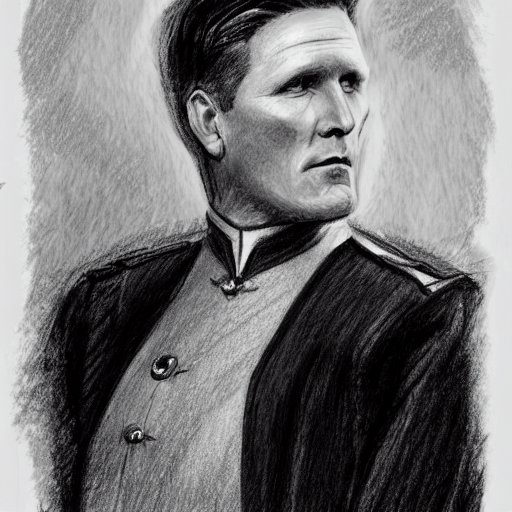
Sir Keir Starmer, the newly elected King of England, 2024 pencil sketch

Last time on Streams of Consciousness, I was talking about the economy of Great Britain and what they needed to change to improve things. They’ve tried raising taxes, they’ve tried cutting spending, but their fiscal deficit is only rising and new loans to cover the deficit are getting ever more expensive. My previous recommendation was spicy and probably unpopular, so I quarantined it in its own post and am putting the rest of my recommendations here.

But first: what should Great Britain *not* do? Well first of all I agree with Tony Blair: they shouldn’t put retaliatory tariffs on America. And this isn’t because I’m biased and don’t want them to hurt America, it’s because *I want what’s best for Britain and don’t want them to hurt themselves*.

It may sting to allow Donald Trump a “win.” He’s jacked up tariffs and demanded that no one else retaliates with their own. If you do what he’s asking, aren’t you letting him win? Well if you think retaliatory tariffs are a smart move, you must think that because you believe they will hurt America with only a modest affect on your own country. But that’s wrong, tariffs are a huge blow to your own country, with only a modest affect on the one you’re tariffing. Doing what Donald Trump wants just means letting him win the foot-shooting competition.

Tariffs are inflation in action: everything gets more expensive for absolutely no reason. Because everything is more expensive, everyone is poorer (since their money doesn’t go as far). And tariffs don’t “protect” domestic industries, they destroy them. They destroy competitiveness because there is no market force pushing companies to improve their products. With tariffs, it’s always more viable to increase your profits by rent seeking (demanding the tariffs rise yet further) rather than by self-improvement. Thus the companies stagnate and rust out. Less goods are produced at a much higher cost, everyone is poorer.

This is true even when your tariffs are “targeted.” It’s just that “targeted” tariffs destroy only a few industries instead of all of them. Donald Trump tariffed you, but if you retaliate with tariffs on on American fuel and aircraft (major American exports), you’ll harm your own airline industry by raising their costs. Needless to say your airlines will have to raise their own costs, harming your tourism/travel industries, and thereby harming your citizens who can no longer afford airfares. America will feel some harm, yes, but not as much as your own people.

“We’ll substitute American goods by buying goods from Europe!” Trump wants to substitute foreign goods with American goods, do you think that will work for him? It won’t work for you either.

Tariffs also destroy industries by raising the cost of all their inputs, since again tariffs are just inflation. The steel company can raise its prices since it’s no longer competing with Chinese steel, and has no incentive to innovate because it plans to ask for more tariffs next year. So if you’re a manufacturing company making anything with steel, all your steel just got very expensive and will only get more expensive from here. Might as well cut wages, it’s the only cost you can control.

Many manufacturers will go bankrupt, they can’t afford the higher prices. A few dozen steel jobs will be “saved” at the cost of thousands of higher-paying manfacturing jobs. Those steel workers will then be laid off because with all the manufacturers going bankrupt, no one needs so much steel. And besides, the cost of iron has gone up with the tariffs on iron (and the iron mine is soon to go bankrupt as they can’t afford the machines needed to keep mining).

Think of it this way: if you think retaliatory tariffs are a good idea, then you think Trump’s tariffs in general are a good idea. You agree with him that the tariffs hurt the target countries more than they hurt the country placing them. You think Trump is doing smart economic policy, and are just mad that he’s doing it to *you*.

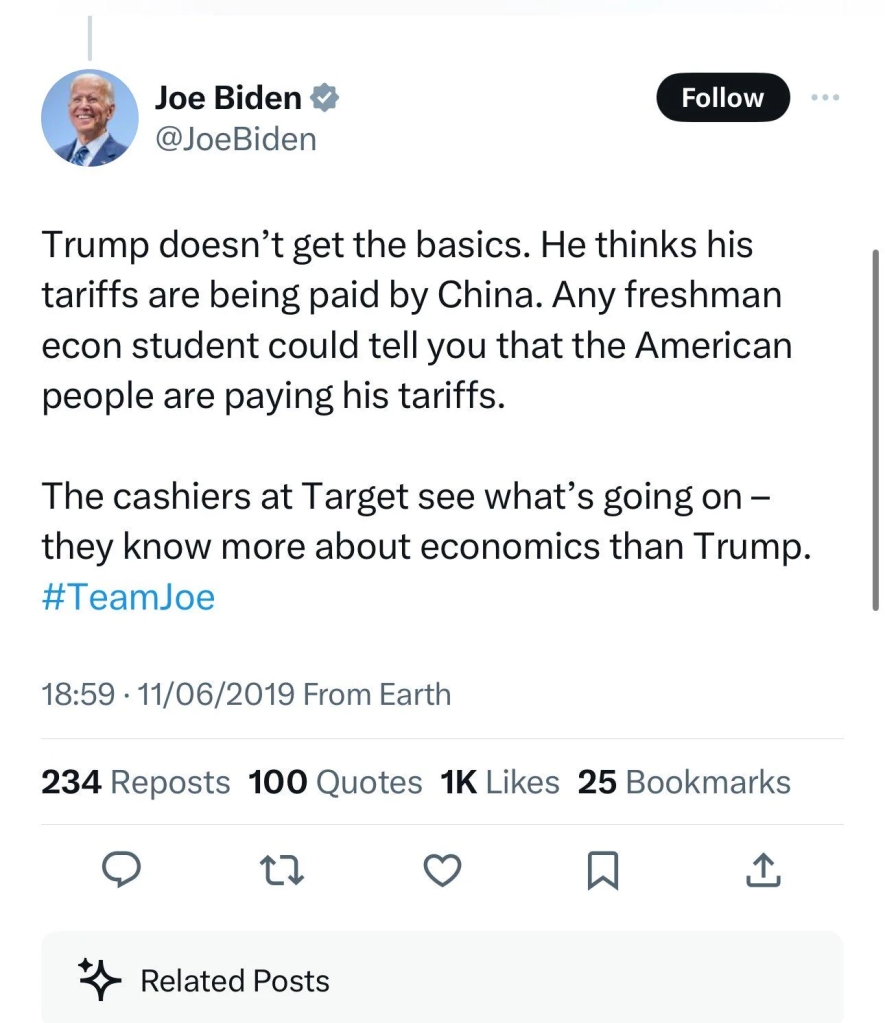
So again, don’t complain about giving Trump a *win*, reject the cognitive dissonance on tariffs and accept the one and only truth: tariffs are bad for growth, bad for prices, and bad for workers. Biden knew this in 2019, but I fear the cognitive decline hit him fast since he forgot it by 2021. (example, example, example)

Anyway that’s what Britain *shouldn’t* do, so what *should* it do?

How about reducing the need for occupational licensing? “Licensing” sounds good in theory, the Government is going to step in and demand minimum qualifications for certain professions. But everything sounds good when you ignore the costs and handwave the benefits.

Licensing sounds nice because you immediately think of doctors and nurses. But many many jobs have mandatory licenses that simply do not need them. Does a horse trainer really need a license? A piano tuner? A wig-maker? Adding a license does nothing except make it harder for people to get jobs. It’s part of what’s killed “entry-level” positions, there is no such thing as “entry-level” in an industry where any work at all requires a specific license.

20% of UK jobs need a specific license, which ossifies the labor marker and prevents workers from job-hopping to find better wages. You may have veterinary training, a fondness for horses, and see well-paying jobs opening up in the horse-racing industry. But without a long and arduous licensing process, you’re cut out from that part of the labor market, forced to keep working at Tesco for almost nothing.

You may ask “but without a license, how can we ensure these workers are competent?” You interview them, you look at their CV, you contact prior employers. An incompetent employee can do damage yes, for instance an incompetent Tesco stocker can leave heavy merchandise off-balance to crush unwary shoppers, so do shelf stockers need a license? Be honest, exactly how much is saved by having entry-level jobs be licensed? Quantify all the harms, both physical and monetary, then weigh them up against the costs.

Because licensing *does* have a cost. It lowers social mobility since the lower class can’t afford to spend years getting licensed before getting their first job. It hampers growth by preventing industries from growing to meet demand. And it drastically raises costs for licensed labor, without really raising wages.

How can that be? Aren’t licensed jobs paid more than unlicensed? Yes but look at the cost of getting that license, with its years of training and bureaucracy. Look at the cost of *keeping* that license, with mandatory retraining, continuing education, and the like. Time is money, and all the time it takes getting and keeping a license usually drains any additional pay that the license brings.

And look at how that license locks you into a single career, unable to switch things up to chase a higher wage. I’m sorry, you’re a *horse* trainer, *dog* training is a different license.

And study after study shows that very few licenses improve outcomes. Doctor, nurse, these require years of training and understudy, a license here may be warranted. But this kind of thinking is needlessly applied to far too many jobs, most of which show no difference in quality between licensed professionals (in countries where a license is needed), and unlicensed professionals (in countries where it isn’t). License medical and legal practitioners, let everyone else be.

So that’s occupational licensing. My next suggestion for Keir: end planning permission and build housing on the green belt. I wrote about the Green Belt before, but for those of you who missed it: the Green Belt isn’t green, and Britain should build on it.

“The Green belt” of is a bunch of land surrounding many of Britain’s largest cities. The name conjures to mind beautiful forests and fields, untouched by Man since the days of yore. But it’s actually car parks and monoculture farms, forbidden from being built on so that landowners can prevent their neighbor’s property from being bought up by the urban bourgeoisie. It’s a NIMBY version of feudalism.

And the Green Belt does have houses by the way. NIMBY houses for people who don’t want anyone to live near them, but also don’t want to pay for that privilege. Instead of buying the land surrounding their house (and thus paying tax on it), they simply demand no one *else* be allowed to build anything there.

So build on the Green Belt, put apartments on the car parks. Housing is unaffordable in Britain, build more houses and prices will come down. Build more apartments and rent will come down. And with housing and rent getting cheaper, people can afford to spend more on buying goods and services, pumping more money into the economy and creating more jobs.

Importantly, *the Government does not need to do this building*. Too many people think that if the Government is not actively building things, either with its own taxpayer-funded corporation or through special subsidies, then things just won’t get built. But that is not at all true. A plethora of private companies would love to build and sell houses, but Government laws prevent them. So just repeal the laws and the companies will build, no special subsidies or taxpayer-funded company necessary.

And while we’re at it, do away with local planning permission. People complain about developers “banking” land, holding it without building for years. That’s only done because it takes on average a *decade* to get permission to build anything. If someone wants to build and sell houses, buying the land is step 1, steps 2-90 are all planning permission. Cut out those steps and the houses will be built faster and cheaper.

Local councils hold far too much power to block housing, get rid of that power. Instead of a situation where council have to give “permission,” create a national “by-right” system of planning. Developers submit a proposal to build a dwelling at a location, a national organization makes sure it’s up to code, and once they OK it development starts. No more veto-ocracy by local NIMBYs.

Great Britain is no longer a feudal society, you shouldn’t require the permission of the local landlords to build on your own land. Local landlords don’t want you to build a nice apartment that competes with their crack house? Tough. End local planning permission and kick the landlords to the curb.

And now here’s my final suggestion for Keir Starmer, get rid of bank ring-fencing.

Actually that’s not my suggestion, but it was raised as a possibility by British politicians. And the suggestion isn’t that outlandish, Germany ended its ring-fencing over a decade ago

But wait, what is/was ring-fencing? In 2008, the Financial Crisis/Great Recession happened when banks made risky loans, those loans defaulted, and the banks went bust. This cause a knock-on effect throughout the economy.

The risky loans often came from the “investment” side of the banking business, but when the bank went bust even the the “core” side (which held consumer’s money) was hit. Ring-fencing meant keeping investment banking separate from consumer banking, so any bad investment bets would have no effect on consumer savings.

But banks are banks, and economies of scale mean one bank doing two things is usually more efficient than two separate banks. That’s why some want to get rid of ring-fencing and let banks make more money. Germany already did so, why shouldn’t Great Britain? Let the good times roll again.

I don’t know if ending ring-fencing is good or not because honestly I don’t actually know much about its effect. What efficiency is gained by combining consumer banking and investment banking? What is lost by ring-fencing? But I don’t reflexively hate this idea the way I probably would have hated it 10 years ago, less than a decade after the Financial Crisis. I don’t know, I’ll need to do more reading.

So anyway those are my proposals the economy of Great Britain. Keir, if you’re reading: work on this for me, would you?

Deregulation is a dirty word on the left mostly because it’s a clean word on the right. But this reflexive partisanship isn’t helpful, regulations are not always good. Removing bad ones is necessary for an economy to grow. And if Labour wants growth, if they want to stop having to come out with more taxes and less spending every six months, then they need deregulation.

Post Script: Talking about the banking deregulation, I was reminded of Thatcher’s “Financial Big Bang.” No time to discuss it today, but I hope I remember to do so soon, because it’s a fascinating topic that explains a lot about today’s Great Britain.

China is getting the trade war it deserves

And the US is getting the inflation it clearly wants.

Contrary to the title, this post will only be about America, because I don’t have any real insight into the CCP that hasn’t been covered elsewhere. But I read this article running cover for Biden’s disastrous policy of protectionism, and wanted to post my thoughts.

The central premise of the article is that cutting off trade with China is good because they’re a fascist and expansionist foreign adversary. Now, that’s also a great reason to cut off trade with Saudi Arabia, but America’s trade policy isn’t actually about foreign policy, as you’ll soon find out.

Even more importantly, tariffs don’t hurt the country you’re tariffing, or at least they hurt them *less* than they hurt your *own country*. Even Biden knows that, just ask the Biden of 2019

Tariffs are a great way to push up your own country’s inflation by taxing supply without reducing demand. Furthermore, even if you don’t buy Chinese products you will be paying for this inflation because of substitution effects: someone who is no longer able to buy a Chinese EV may instead purchase an American car, increasing demand for American cars and therefore driving up their price.

There’s two great ways to understand how terrible tariffs are. First, think of the oil shock in the 1970s: middle east nations cut off America’s access to oil and gas from their countries, causing spiraling prices and runaway inflation. By blocking America’s access to energy, they were able to put an economic squeeze that defined the decade.

China is being tariffed on solar power, wind power, and green industries of all kinds, and China makes up more of our imports than the middle east ever did. Spiraling prices are yet again on the menu.

Furthermore, think of Britain’s strategy against Germany during both World Wars. Britain used its powerful navy to prevent Germany from importing goods. This caused shortages and spiraling inflation, leading to riots that overthrew the government in the First World War and overwhelming shortages during the Second.

Tariffs are a way for us to do to ourselves what our enemies would do to us in war: restrict the import of needed goods.

Finally, consider Biden’s empty words about the “existential threat” posed by Climate Change. If Climate Change is dire, then why is Biden raising tariffs on solar power, wind power, and EVs, rather than Chinese oil and Chinese airplanes? Biden is essentially setting up an “anti-carbon tax,” in which polluting industries are exempt from a tax being paid by green industries.

The truth is that none of this is about national security, anymore than the Japan Scare of the 1980s was about national security. Just look at how Japan’s peaceful economic expansion was seen back then:

“The Danger from Japan.” Mr. White warned that the Japanese were seeking to create another “East Asia Co‐prosperity Sphere”-this time by their “martial” trade policies, and that they would do well to “remember the course that ran from Pearl Harbor to the deck of the USS Missouri in Tokyo Bay.

Biden is a 1980s style politician, with the (failed) economic outlook of that time. When he sees foreigners being successful it makes him scared, so he raises tariffs to “protect” American industries. But far from protecting industries, tariffs only harm them.

Industries rely on consumers to sustain them, but tariffs are a tax on consumers, sucking up consumer surplus and leaving less money for consumers to spend on domestic industries. Politicians think that domestic industries can magically appear to replace all the foreign ones, but simply put: no man is an island and nor is any country. Autarky is the failed economic policy of fascism, not an economic model for democracies.

Just look at a country like Brazil. Heavy tariffs were supposed to promote domestic industries and help consumers. Instead, consumers pay exorbitant prices for things like video games, while Brazil’s gaming industry remains anemic relative to the nation’s size and wealth. Brazilian cars, Brazilian microchips, and Brazilian steel are not the envy of the world.

And it isn’t because Brazilians are bad at industry, its because their government is doing everything it can to stop them. The high tariffs on everything from steel to cars to microchips are supposed to spur domestic industry, but who’s going to open up a factory when you have to pay those high tariffs just to import the machines and inputs needed to make your products?

Biden is a protectionist because he’s a protectionist. Not because China or Canada are scary or because he needs to fight climate change. But to be fair, Trump is just as protectionist as Biden if not more-so. It’s clear that the current crop of American politicians supports higher inflation and poorer consumers. And that bodes ill if you want to see America succeed and its enemies fail.