Digger, so bad it’s hard to write about it

I sat in the theatre for Digger with about 4 other people, one of whom was the friend I came in with. This movie is clearly for someone, I heard the guy in the back laugh out loud at some of the slapstick moments, but it isn’t for me and by audience reviews and the empty theatre I watched it in, it isn’t for most people either.

Things started bad when out villain protagonist wakes up with his cat. As a cat lover myself, this should have been a moment to pull me into the movie, to show cute humor and tug on my heartstring. But as a cat owner, or even just someone who’s seen a cat in person, all I could think was that the cat looked incredibly uncanny valley. I guess a real cat would have been too hard to train, or wouldn’t have worked live on set. But whatever puppetry/CGI they used just kicked me out of the movie before the plot even began. My mind went “oh right, this is a movie,” I wasn’t immersed in it at all.

Things stayed pretty boring in the first act as the titular character Digger dealt with the central conflict that would define this movie. I couldn’t help but notice how all the villain protagonists of Digger had southern accents while the slightly more heroic figures (the climate scientists etc) had either northern or western American accents. The movie completely kicked me out of it however after the first act ended though.

Warning, here be spoilers.

Digger meets the president and cabinet to discuss how a massive ice shelf has broken off of Greenland and is headed straight for Europe. The ice shelf is the size of a large city, and with so much volume it won’t just crash into a seaside town, it will bring with it a tsunami when it hits the shore. Noticeably the president and his cabinet are all old white men. It fits the vague Hollywood stereotype that bad things are done by white men and good things are done by women and minorities, but it was an incongruity with reality that actually brought me out of the movie.

If this evil Republican president and his cabinet are some ersatz of the Bush administration, then where are Bush’s black and female advisors, like Colin Powell and Condy Rice. If this is the Trump admin, then where are all the young women advisors that political reporters are implying Trump is sleeping with, as these reporters do their best to turn once respected news orgs into TMZ.

This all white administration isn’t a black mirror pointed at our own world, it’s a bad joke from a 90s SNL sketch, or the Daily Show if it had zero self awareness. The movie wants its audience to be well read enough that they’re worried about climate change, but not well read enough to know anything about modern American politics.

And if this cabinet isn’t an ersatz Bush or Trump, it still makes no sense for a Republican cabinet to not include a few women and minorities. This kind of thing is noticeable to anyone who has watched the news, you could only believe this is an accurate pastiche of reality if you get all your politics from Tumblr.

Digger as a movie was described to me as a modern Dr Strangelove, but Dr Strangelove was clearly holding a mirror up to modern society it was set in, 1960s America. If the good Dr Strangelove had been a southern accented woman instead of a Nazi German scientist, it wouldn’t have landed as a parody of the American missile program and Werner Von Braun in particular.

After Digger’s terribly unfunny cabinet scene, we get to the scene that kicked me completely out of the movie. This movie isn’t even pretending to be real, it’s a play being put on. The main actor playing Digger goes back to his dressing room and his wife and daughter have their own boring subplot. The drama of a massive iceberg and tsunami crashing into Europe is brushed aside because none of this is real.

I think the writer or director of Digger had seen a lot of Mel Brooks movies, because this feels like a Mel Brooks moment. Robinhood reading the script, “why are you moving camera right” in the Producers, that kind of joke. But Robinhood Men in Tights wasn’t trying to moralize about climate change. Again, going back to Dr Strangelove, the themes of MAD being a self destructive policy would have been severely undercut if the movie had broken the fourth wall every now and then to show Peter Sellers practicing his lines.

After a bit more back and forth we come to the scene that made me tap out and leave the theatre to get a meal. Digger and the cabinet set up a conference room to watch the iceberg and tsunami destroy the Netherlands. Again, the director thought they were being extremely clever here; we don’t actually see any of the destruction porn that you’d usually find in a Roland Emmerich film. Instead, we watch the reactions from the cabinet as they watch the destruction.

This is clever, but it’s also boring. The reactions from the cabinet aren’t funny. Roland Emmerich films have a large if niche following because no matter how campy or badly written they are, they’re always a visual treat. This isn’t a visual treat, and it’s campy and badly written.

Let me finish with a thought I’ve had for a while: if I were a comedian, what do I think the easiest gig in the world would be? The Democratic National Convention. Or the Republican National Convention but I probably wouldn’t get invited to that one.

The DNC is the easiest gig in the world because the audience is already primed to clap for the things they agree with. They are also all members of a political party, so they are self-selected to all agree about the same things, and those are things you the comedian already know about, because you know you were booked for the DNC and not the RNC.

The point I’m making is that this would be a very easy gig as an entertainer. Say some biting comments about Trump and the GOP, with the kind of sarcasm and crassness you’d see in a reddit comment or a twitter tweet. Insert plenty of profanity because you’re a comedian, not a politician, and then bask in the applause.

The applause mind you, not the laughter. Applause is easy, just prime the audience to clap and then tell them what they already believe. Plenty of shows have made an industry out of this, finding that preaching is easier to joking, see for example the recent output from Steven Colbert.

This movie feels like it belongs at the DNC, not in a theatre. It feels like something that wants applause, not laughter. It’s telling you what you already believe, but with enough profanity and crassness that it technically qualifies as a comedy, but without any good jokes to make you actually laugh.

But I still want to laugh when I go to a comedy, not applaud. So I didn’t care for Digger.

I walked our soon after the scene where the fat cabinet member talks to the people of Europe, saying that America will stand with them. I walked out because I wasn’t having fun and thought writing a blog post would be more enjoyable. This movie is less fun than writing. Watch at your own risk.

7/10
Why did India have so many blackouts in the first half of 2026?

India is no longer a poor country. With a record-setting services industry and a very large production industry, India can afford to have its cake and eat it just like a rich country.

Yet in 2026, I read reports of rolling blackouts across the whole country, especially difficulty to deal with as temps both day and night can remain above 40 degrees Celsius (104 Fahrenheit).

Most reports (like this one) brush past causes. At best they try to blame the blackouts on surging demand. But rising demand can be predicted, and creates an incentive to increase supply. So we should expect that power companies, if they wanted to make money, could have easily built out their production sector to meet the growing demand.

That is exactly what has happened in America, where power demand continues to grow, but blackouts remain uncommon. And unlike America, India still uses cheap coal for the majority of its energy needs, so what gives?

Well it seems India’s power problems came from a toxic mix of rising energy costs and government incompetence. One or the other would be manageable, but the two together dealt a 1-2 punch to India’s power sector that left customers sweating in the heat of summer. Let’s dig in, shall we?

The first thing to realize is that not all coal is created equal. India still maintains the world’s second largest coal mining operations, after China. So in theory their power plants should never run out of coal, right? Except India’s coal is notorious for being made of almost 50% unburnable rocks, what the industry calls “ash content.” This high ash content means boilers that burn Indian coal need to be larger and have more scrubbers in order to deal with all that ash, making them more expensive.

For this reason, coal power plants on India’s coast have actually transitioned to using foreign coal rather than Indian coal. Australian coal in particular is very low ash, as little as 10%, and so a much smaller boiler and many fewer scrubbers can be used to produce the same amount of power. Some plants will also use a specific mix of Indian and foreign coal, to create an intermediate ash content of perhaps 25%-40%. This lets them save some space compared to using only Indian coal, while also not having to import quite so much expensive foreign coal.

But the Iran war threw all of this for a loop. When the war shut down oil and natural gas flow through the Strait of Hormuz, many poorer nations in Southeast Asia switched on their coal power plants to replace their unusable oil and natural gas power plants. It was that or have no power at all, since there was such a shortage of oil and natural gas. This drove the price of coal skyward.

Now, India itself still produces plenty of coal, no problem there. But the cost of high quality *imported* coal was a problem. All these power plants that relied on buying foreign coal suddenly found themselves with skyrocketing import costs. That would usually be no problem, they would raise prices on consumers to compensate. No one likes expensive power, but expensive power is way the hell better than *no power at all*. But this is where the governments of India’s many states stepped in.

No politician wants to lose election, and so no government wants to be responsible for rising prices. But the money must still be paid for that imported coal, so did the government step in to subsidize the power stations? Did they bollocks. No politician wants to be responsible for skyrocketing public debt either, *nor* increasing public taxes. The governments forbade the power plants from raising prices, but also didn’t give them money to compensate.

So could the power companies take out loans? Again no, India’s state-owned power companies have been oceans of bad debt for years as local governments didn’t want to fund them and so have demanded local banks give them roll-over loans for years. Modi finally stepped in and forbade new loans going to any power company that isn’t somewhat solvent. And that rules out any power plant that is selling power for less than the price of imported coal (as demanded by the politicians).

India’s solar buildout has only worsened this problem, as there are no batteries to store the solar power. See, solar power plants are only responsible for providing power during the day, and when it’s sunny. But they get the gain of still being able to demand full price in competition with the *coal* power plants, which are responsible for power both day and night, sunny or cloudy. Solar plants have all the profit, but none of the responsibility that baseload coal plants have.

This means that when solar power cuts off during the evening, or during a cloudy spell, the coal plants must quickly ramp their power supply up to compensate. An expensive process which would be mitigated if those plants just provided all the power during both day and night. India would normally use natural gas “peakers” for ramping power, but remember that natural gas was expensive and the state governments wouldn’t raise prices to compensate.

So what is a power plant to do, when it cannot afford to import more coal because the state governments won’t let it raise prices to compensate AND it cannot take out loans to bridge the gap? It goes down for “maintenance” or declares “load-shedding.” The former is often used an excuse for “we literally cannot supply power at this time,” and the latter is just a euphemism for a blackout.

Loadshedding increased in India severely during 2026, but is falling back down as energy prices now return to normal.

If governments allowed coal companies to raise prices to compensate, this crisis would not have happened. If solar plants were required to compensate coal plants for taking on all the nighttime/cloud-time sectoral risk, this would not have happened. And of course, if the energy crisis had not happened, this would not have happened.

But it did happen, and the Indian state governments cannot control the world, they can only control themselves and their laws. And their obstinance in the face of high prices meant their states suffered greatly due to a complete *lack* of power, when they could instead have had *expensive* power. Economists agree that the GDP hit is vastly greater in the former case than the latter, and I’m sure anyone sweltering or *dying* in a non-air conditioned room would think so too. A shame the politicians couldn’t see it.

Small post: I’ve been scooped

I don’t know if I’ve said this before, but I live near a railroad. Since early 2025, when Trump first announced his tariffs, I’ve taken to observing the railroad traffic with a far keener interest than I used to. I, like many other, expected the tariffs to cause a tradepocolyse. Foreign trade might grind to a halt, America would enter a recession, and I’d get a front row seat to all of that as the trains I had come to expect (and their horns that keep property values down) would stop passing me by.

I was wrong. The tradepocolypse never came, America has continued growing (faster than any other country in the G7), and the train comes right on schedule, loaded with goods that I thought would have been too expensive with the new tariffs.

I’d intended to make a post for *over a year* asking this question: why didn’t Trump’s tariffs harm US trade or even the US economy? But I was lazy and never made the post.

Well my laziness has been rewarded, I’ve been scooped. I had hoped to do a deep dive into this question, but Brookings has answered it better than I ever could. Give them a watch

Why Starmer won’t Rule Britannia, he didn’t take my advice

About a year ago I gave Kier Starmer some unsolicited advice about how he should improve the British economy. This year it seems Kier will lose his premiership, in part because he ignored me.

Now to be fair, Kier Starmer is still Prime Minister. He isn’t (politically) dead *yet*. But most of the British press is writing his political obituary so I might as well get in on the fun myself.

To be clear: the proximal cause of Starmer’s downfall is not the economy directly. His inability to handle the political issue of immigration (leading to the Reform party winning big at the local elections) alongside his bad judgement in the Mandelson scandal are probably the most notable reasons for his current quagmire.

But I sincerely believe that his inability to grow Britain’s economy is behind both of these issues: if wages were rising then immigration alone would not have let Reform win big. And likewise his recent scandal could have been water under the bridge if he was more popular (which would be easier if wages in Britain were rising).

And I believe the reasons he hasn’t been able to grow Britain’s economy is because he didn’t do any of the things I suggested. He hasn’t reformed Britain’s labor market or property market in any pro-growth ways. In fact most of his signature policies of late seem to be tax rises, stealth tax rises, and reforms that make it *harder* for Britain to grow, not easier.

Even Starmer himself admitted during the 2024 election that the property market needed significant reform. He claimed he would fix Britain’s broken planning system, a system designed to stymie anyone who wants to build anything anywhere, not a great system for a country that needs to build more houses and more power plants since they have the some of the worst housing shortages and energy prices in Europe!

But despite constant promises, constant claims that it would *eventually* be done, Starmer has taken 2 years and the 3rd largest majority in Labour’s history and turned it into *nothing at all* on the planning front. In fact, house-building has *gone down* since Starmer has taken office, and energy costs have *gone up* even faster than the rest of Europe.

Starmer can stand next to all the wind farms in the world, plenty of them will still get built even *with* a broken planning system. But the stark truth is that *way less stuff is getting built in Britain* than was being built under his Tory predecessor. And *way way less stuff is getting built* than would be built if he just *reformed the planning system like he promised*.

He just seems to have no mindset for growth. His other big 2024 promise was to not to raise taxes on working people. So as soon as he came into office he raised taxes on *any business that wanted to employ a working person*, which is a stealth tax on working people even if people don’t “see” it. Just because someone doesn’t see an extra few thousand pounds get taken from their paycheque doesn’t mean the tax is really “free.” Companies notice when it costs an extra few thousand pounds to employ any worker, and they respond by lowering their hiring and freezing raises to recouperate.

OK that’s not *actually* how it works. If we want to get technical (and I guess we should) what ACTUALLY happens is marginal, like this:

  • With every worker costing an extra few thousand pounds to employ (because of Starmer’s new tax), some companies will no longer think they can increase their profits by hiring more workers, the costs are just too high.
  • This isn’t every company mind, it’s only a few, it’s only those on the margin between profit and loss
  • But these few companies will pull out of the hiring market because they just don’t think a new worker is worth the cost. Now there’s *the same number of workers chasing fewer jobs*
  • What happens when the same number of dollars chase fewer goods? Dollars are worth less than they were. What happens when the same number of workers chase fewer jobs? Workers are worth less than before.
  • The same number of workers chasing fewer jobs means companies can suddenly be a lot more picky. They won’t need to raise wages to fill positions, or raise wages to ensure retention, and so they just won’t raise those wages since they don’t have to.
  • The companies aren’t making bank off of this mind, the money they save by not raising wages is the money going straight to Starmer through his stealth tax (which is supposed to not harm working people, mind you).
  • The result is the same: some companies stop hiring, many companies freeze wages, workers are harmed even if they don’t get to see the money coming out of their paycheque and going to the government.

Anyway, Starmer isn’t pro-growth enough. He hasn’t reformed any of the awful red tape that has kept Britain from growing, and he’s even added some of his own plus plenty of new taxes to boot. The results are unsurprising: Britain’s growth has flatlined and the voters aren’t happy with the poor economy. This makes more of them willing to listen to other parties (like Reform) and also primes them to already hate Starmer himself, such that a scandal which a more popular PM could weather (the Mandelson Scandal) has become deadly for Sir Kier.

And besides all that, the Mandelson scandal was entirely of Starmer’s own making, and it is a stupid scandal to boot.

Starmer’s brand was predicated on an end to sleaze: no more dirty deals or giving favours to friends. Starmer wasn’t like that (he said), he was upright and by the book.

But then once Starmer was in office, he took a well-known sleazeball (Peter Mandelson) who is ALSO a known affiliate of Epstein, and hands this man an ambassador position for which he is thoroughly unqualified. Britain’s foreign service is *supposed* to be more professional than America’s, political allies don’t just get handed ambassadorships as a thank you for their service. But Starmer did just that.

Mandelson had never worked in the consulates and embassies before, unlike the ambassador he replaced. And his lack of experience made it completely clear that he only got his position simply because Starmer wanted to reward him, as he was one of the (many) Grandees who had helped Starmer’s rise to power.

The whole saga then descended into a he-said she-said about the fact that a sleazeball like Mandelson *obviously* didn’t pass the rigorous vetting an ambassador needs to pass, but Starmer’s people made it clear that they wanted Mandy so he was appointed to the ambassadorship anyway. Starmer has tried to say *he himself* didn’t do anything wrong, but seriously: even a decade before anyone cared about the Epstein scandal, *Mandelson was already a known and tainted player*. Over 20 years ago I remember a comedian joked “who the hell made Mandelson a *lord*? The Sith?” He’s not a clean figure and he never has been. Even if you personally didn’t write a message saying “ignore the vetting red flags, I want Mandy,” no one could possibly say that they thought Sith Lord Mandelson was a clean and appropriate candidate for ambassador.

Anyway that’s my obituary on Kier Starmer. He never had a plan for growth, and he thought taxes were consequence free if people didn’t see them in a paycheque. He rose to power not by his skill at getting things done, but by his skill at convincing people he was a safe pair of hands. Safe indeed, he’ll never drive the car off a cliff, but only because he’s too scared to turn it on in the first place.

NIMBYs in the Farmhouse

Short addendum to my previous tirades on NIMBYs blocking data centers: I mostly focus on these being blocked in the cities because, well, I live in a city and I hear what city-folk say about why they are NIMBY about data centers, houses, etc.

But to be true, NIMBYism is universal. I was visiting my aunt a little while ago on the farm she owns with her daughter. Being bored, I picked up the newspaper on her table. Now, the fact that there was a physical newspaper on the table should let you know just how old, and old-fashioned, my aunt is. But the cover story was interesting to me: a proposal to build a large new solar power plant in the area, one that could power much of the nearby city and beyond.

A new solar power plant is no bad thing: it means jobs for construction, jobs for maintenance, and it lowers power costs making everyone’s lives cheaper. Cheap power also tends to attract other power-intensive jobs, bringing even more jobs and wages to a traditional farming area that has been very stagnant for 50 years.

But the locals were not having it. They didn’t like the glare that the panels might give off, they said microplastics and metals would run off during the rain and pollute their aquifer. They said it would take up too much space and be an eyesore, and that it wouldn’t even help them anyway. In short, they were NIMBYs.

Because that’s the NIMBY playbook on everything from houses, to data centers, to power plants:

  • This thing competes with me for amenities and raises their prices.
    • Houses bring residents who use up space in doctor’s offices, schools, and parks, potentially overcrowding them for current residents.
    • Houses and data centers use water and electricity, competing with local residents.
    • All three of these use up space, which locals may wish to use for other things
  • This thing isn’t something I want
    • If you don’t like the new house, you don’t have to live there. But someone else might want it, why not give them a chance?
    • If you don’t like data centers, well just don’t build one then. This one isn’t being built with your money, so let it be built.
    • If you don’t like solar power, well tough cookie. America needs more power, and you use power, so you’ve no right to complain in my eyes.
  • This thing is ugly
    • This complaint is pernicious because anything looks ugly when you already don’t like it for other reasons. There is no amount of facading or art deco that would make some people accept a data center or a solar farm as “beautiful.”
  • This thing will reduce my quality of life
    • The residents of a new apartment block will likely be noisier than the residents of the surrounding houses. They will stay up late, have parties, and invite over their friends. Those friends will then park on the street, reducing the street parking that current residents have come to enjoy. In fact, noise complaints seem to be *the most common complaint* I see over new developments when I listen in to my local planning meetings.
    • The recent buzz is that data centers also create noise. Whoopdidoo.
    • And of course solar panels are indeed made of plastics and some metals. But while there is no evidence that they leach out and contaminate the aquifers, there is no amount of evidence *against this* that would convince the NIMBYs of my aunt’s local town.

I don’t know if that solar power plant will ever get built. The local farmers seemed firmly against it, although the state and municipality were for it so they could well over-ride local demands. Still, I wanted to just point out that this is a textbook case of NIMBYism, and in my eyes these NIMBYs are all the same.

Marginal effects are why your economic analysis is wrong

Rent control is like burning money AND apartments

This is going to be disjointed and streamsofconscious-y as usual, but here goes

The economic concept of the “marginal” is a bit difficult to explain in part because our word “margin” already has a number of definitions that people are more familiar with. I’m not an economist, and the dictionary definition doesn’t get across everything I want to say about this, but I want to give you an intuitive reason for why there are so many domino effects with any economic policy change.

Let me start with rent control. It is a truism, even most of the internet knows it, that rent control is Bad. While good “in theory” for helping current tenants make their rent payments, it is bad in theory (and practice) for the housing market as it depressed the supply of new housing leading to higher prices in non-controlled apartments. It’s also bad for non-current tenants (such as teens who need to move out of their parents houses soon) because they have to pay the much higher starting price for an apartment, not the reduced rate their parents pay thanks to decades of rent control.

But socialists still want to make rent control work, and still want to defend it saying that rent control isn’t the problem, greedy landlords are. Nevermind that landlords don’t build the buildings, they rent them out, let’s see why rent control makes builders less likely to build.

Some people have suggested that even in a rent-controlled apartment, the landlord is making a profit, just not “as much” as he could be. Thus rent control isn’t making his business unprofitable, and since it isn’t unprofitable there’s no reason for rent control to be decreasing the supply of housing this way. But let’s look at this:

  • So the landlord is making less profit, that means he has less money to buy a *new* apartment with, and also other investors looking to be landlords know they’ll make less profit and will be less willing to spend their own money on new apartments. This decreases the sale price for new apartment buildings.
  • This also decreases the likelihood of an empty-nester deciding to fix up their nest, rent it out, and move elsewhere, as their rent income is capped. Again this decreases supply, increases cost.
    • But let’s focus on apartment towers for simplicity.
  • So the price of new apartment buildings is down, that means builders know they can’t make as much money as they want.

Now here’s where a socialist might get heated: the builders *can still make a profit building a new apartment complex*, the landlord *can still make a profit buying that complex and renting it out*. They just make *less* profit thanks to rent control, but if they *choose not to make that profit*, they’re just being spiteful and greedy. Rent control isn’t the problem here because apartments are still profitable!

But here’s the thing: nothing ever happens in a vacuum.

  • So the price of an apartment building is down because of rent control, but the price of an office building is unchanged, because no rent control.
  • The builders don’t have infinite money to build with, each building project has to make the choice to build one or the other.
  • More builders will shift towards office buildings instead of apartment buildings because we’ve reduced the price of apartment buildings through rent control.
  • Less apartment buildings means less supply of apartments, meaning higher rent if demand stay the same.

So while rent control kept apartments profitable, it still depressed the building of them. On the margin, every builder is making a choice between building an apartment or an office complex (or a supermarket, or a warehouse, or whatever). And reducing the profit you can make off an apartment building reduces the marginal investment into apartments. You don’t have to make renting *unprofitable* to decrease investment, making it *less profitable* is enough.

Rent control increases the cost of housing for everyone except current tenants who never, ever move. This is true even if it doesn’t reduce profitability to zero.

Let’s talk about another, even more controversial application of margins: taxes. Wealth taxes on the rich, raising income taxes on the rich, these have become popular policy proposals for populist parties preaching the perishment of deficits (I really strained on that alliteration and still couldn’t stick the landing). Populists argue that rising taxes *doesn’t* drive off the wealthy at all, because no one would pack up their whole life and move just because of a measly 2% of their income or wealth. This is especially true when the district raising the tax (such as California or New York City) already has such a phenomenal pull on top-dollar jobs. Silicon Valley and Wall Street aren’t just going to move to Austin or Atlanta, are you crazy!?!

But again, we need to think of the *margins*. Think not about the 20-year Silicon Valley veteran, with 2 kids in middle school and a 30-year mortgage, grumbling about an extra 2% of their paycheck every fortnight. Think instead about the fresh grad juggling jobs offers and trying to find the best one. Silicon Valley pays a lot more than Austin, but this grad plugs the incomes into a tax-and-cost-of-living-calculator (plenty of free online) and finds that the extra 2% bumps Silicon Valley down below Austin in after-tax disposable income. The fresh grad takes the Austin job and California loses a high-income resident to tax.

Or think about the Silicon Valley empty-nester with less ties to the city. Their friends may still be here, but their children and families may be in other states. They may be juggling competitive job offers and wondering about where they’d like to retire too. They may want to live in Austin so they can be near their aging parents, and an extra 2% tax on their income might be enough to push them to make the jump and take the job offer in Texas. Again, California loses a high income resident.

How often do these types of anecdotes happen? How much do these anecdotes outweigh the people who are faced with an extra 2% tax, but still move to California or New York anyway? Well, that’s the whole reason we should be looking at the *data* on these things. The data suggests that rising income taxes really do result in marginally less high earners moving or staying in. Whether that outweighs the benefits is another conversation, but there *is still* an effect. And the data is *clear* that wealth taxes cause the wealthy to move *out*. Europe is littered with nations that instituted and the revoked their wealth taxes due to exactly this, in fact wealth taxes often *reduce* total taxation as so many high earners flee for foreign shores.

But again, the argument online ignores data and builds its own anecdotes. It’s often argued that *no one will ever leave California or New York, Wall Street and Silicon Valley have too much pull, no one would pack up their whole life and move out just for a measly 2% tax*. These arguments completely ignore the marginal tax-payer who is already pulled in two directions, that tax-payer may very well move out.

The final example I want to discuss is the most controversial of all: the marginal voter.

I’ll try to keep this generic: when a politician comes out with a policy that is popular in their party but very unpopular in the country at large, partisans often have an excuse up their sleeve:

“No one is going to change their vote over this, anyone who says they will is a liar was already voting for the other party to begin with.”

The partisans make another crucial mistake, they assume every voter is a strict partisan and aren’t taking the marginal voter into account. The marginal voter does exist, even if the strict partisan is too small-minded to comprehend such a person. There are people in this country who, for their own reasons, are torn each election between voting democrat and voting republican. Or voting for democrat and not voting at all. Or voting republican and not voting at all. Or voting third party vs voting for a main party, or writing in Mickey Mouse vs casting an actual vote.

A partisan may not understand these voters, or worse they may actively refuse to understand and simply throw up their hands saying “these people are all just stupid.” But our own small-mindedness does not change the reality of this world.

Many many voters cast their vote while wishing they had other options. And for many of those voters a controversial policy announcement, one beloved by the partisans but hated by most non-partisan voters, could be enough to make them switch sides or not vote at all. They could decide that that’s the last straw, the final thing they just won’t accept. They already didn’t like the candidate for many of the reasons the partisan loved the candidate, but were willing to vote for them anyway for whatever reason. But one more unpopular policy could just be a bridge too far.

So yes, voters *will* change their vote over this. Marginal voters. People the partisan doesn’t want to believe exist because partisans prefer to group the world into “righteous” and “evil” people, with elections being a game of turning out the righteous and discouraging the evil. Or worse, the partisan believes in a tripartide division of “righteous,” “evil,” and “stupid,” with the “stupid” not worth thinking or talking about, except as targets for advertisement demanding they choose “righteous” over “evil.”

But if you look at the data unemotionally, you will see that many many voters are already marginal, and your favorite policy proposal, if sufficiently unpopular, can turn off a hell of a lot of them and turn a winnable race into a lost one. It’s very hard to be objective about politics since it controls every aspect of our lives. But it was hard for our ancestors to be objective about say World War 2, since its outcome would also decide the lives of millions. Yet objective analysis was still required to defeat emotional flailing, so keep that in mind the next time you try to say that politics is too important to let analysts give their input.

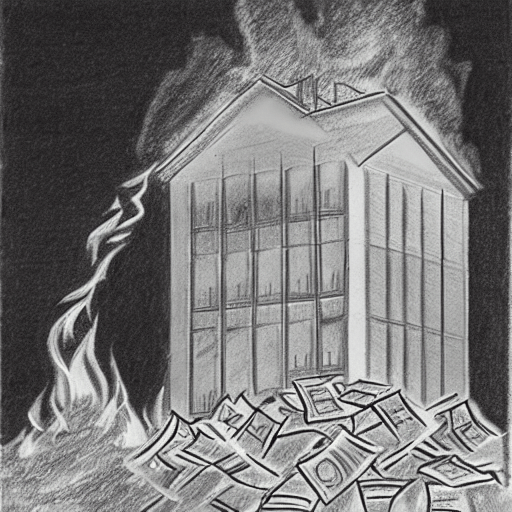
Above: pencil-sketch version of the Downfall meme

Revealed Preference, Revealed Belief

Revealed preference is a very important economic concept because quite simply: talk is cheap. You cannot poll people on what they economically most want, because humans are want to lie about ourselves so that we appear more noble, more virtuous, and so on. You cannot poll people, instead you have to look at what people *do*.

To explain revealed preference in simple terms: actions speak louder than words. People like to claim that they eat healthily, that they care about what they’re putting into their bodies. But many of those very same people fill their shopping cart with junk food at the expense of all else. So while they claim to eat healthily, they are revealed to eat junk food. Their revealed preference is that they prefer the taste of junk food over the benefits of healthy food, but you wouldn’t know it by talking to them.

At a societal level, revealed preference also shows up whenever popular causes force people to put their money where their mouth is. Reducing plastic waste polls really well, and large segments of society claim that they would happily pay more for a biodegradable option rather than pay less for a plastic option. But the data from supermarkets doesn’t bear this out, with nearly all consumers continuing to prefer a cheaper plastic option when available compared to a more expensive biodegradable option.

So when economists try to understand what drives people’s economic activity, whether it’s what they buy, where they work, or how they commute, one cannot rely on what people *say* they do, you must instead find out what they *actually* do. Because the gap between words and actions is massive and we all want to appear more noble than we truly are.

With revealed preference comes the tantalizing, but tricky prospect of studying *revealed belief*. Revealed *preference* is just showing what *actions* people take that are contrary to their statements. But revealed *belief* would be about showing *the reasoning behind those actions*.

To give an example, lets dissect the junk food vs healthy food choice. You might find people who adamantly claim that they eat healthy food *not just* for their health. They may claim that healthy food tastes better, is more convenient, and is even cheaper than junk food. But if that same person is revealed to mostly eat junk food, we can surmise that their stated beliefs about healthy food vs junk food (that it tastes better, is more convenient, and even cheaper) are also wrong.

Such a person who claims to eat healthy food but only eats junk food clearly has significant cognitive dissonance, or is just *lying* in order to seem healthier. It isn’t just that their actions belie their beliefs, rather their *revealed beliefs* are contradictory to their *stated beliefs*. They probably don’t actually believe healthy food is tastier and cheaper, they just say that to try to further the lie that they eat only healthy food. Their real belief is that junk food is tastier and cheaper, that’s why they buy it and eat it.

This *revealed beliefs* thing is tricky though because there could be several confounding factors. Say someone *only states* that they believe healthy food is tastier than junk food. If they are then revealed later to be buying junk food, is it because they actually don’t think healthy food is tastier? Or is it because the cheapness of junk food and the expensiveness of healthy food outweighs taste considerations? There can always be some other reason that people take their actions, outside of their stated reasons.

But with recent events, I do think I’ve seen a mass example of revealed beliefs. And it’s with tariffs.

When Trump was coming on the scene, first in 2016 and again in 2024, economists and political commentators from both sides of the Atlantic argued passionately against his tariffs on every conceivable level. Trump’s tariffs weren’t just a good idea taken too far, rather *any tariffs at all* would harm consumers and depress the American economy to unimaginable levels. Even tariffs against geopolitical foes like China should be avoided, as such tariffs harmed America a lot more than they harmed China, and so ultimately would be counterproductive.

Yet today in 2026 I see *many of those exact same people*, primarily from the European and Canadian parts of the Atlantic, argue passionately that the EU and other nations *must respond in kind* to Trump’s tariffs. That Europe and Canada should raise massive counter-tariffs against Trump, equal or greater in value to whatever he is levying against them, and specifically targeted at America’s major industries. When Trump’s team met EU officials and agreed to a “deal” whereby the US would raise tariffs and the EU would not respond in kind, this was seen as a disaster, a surrender, and a damning indictment.

It seems clear that there is a revealed belief going on here. These transatlantic thinkers claim that tariffs hurt America more than they hurt the tariffed countries, but if that were the case, then counter-tariffs would hurt the EU and Canada more than they’d hurt America. The “solution” to Trump’s trade war would then be to do nothing at all. LET Trump tariff every nation to high heaven, he’s primarily hurting America after all, and don’t respond in kind under any circumstances. Don’t tariff American products, don’t go after American businesses, don’t do anything differently than you’d normally do, because any such anti-trade measure would harm your own countries more than it harms America.

But the revealed belief here is that Trump’s tariffs *do* harm other countries more than they harm America, because counter-tariffs and other trade barriers are being called upon, on the assumption that they will harm America more than they’ll harm other nations. It seems that many transatlantic thinkers are revealing that all the rhetoric around tariffs was a Noble Lie. All the claims about how tariffs are ineffective and self-destructive were lies meant to dissuade the public from supporting tariffs in the first place. But now that the tariffs are out of the bag, the Noble Lie has no more use, and the Awful Truth about tariffs, that they are harmful to one’s own nation, but are effective at countering trade imbalances, has come to the fore.

Noble Lies such as this beclown the person saying the lie. They reveal the liar to be a hypocrite and untrustworthy. If you found that the person who goes on and on about healthy food was actually eating nothing but junk food, you’d probably never again trust their recommendations to you about healthy eating. And likewise, a lot of poli/econ commentators have lost a lot of credibility in my eyes by going back on their pre-Trump claims about tariffs. By revealing that they never believed those things in the first place, they reveal (to me at least) that I should never trust them again going forward.

Ten Episodes in China’s Diplomacy: the uncanny resemblance between communist countries and monarchies

I’m reading Ten Episodes in China’s Diplomacy, a written account by former Chinese Diplomat Qian Qichen of ten episodes when China made a name for itself on the world stage. What strikes me though is how much of communist diplomacy in the 1980s revolved around funerals.

I don’t know how true this is, but I was told that funerals were important parts of diplomacy for European monarchs and states. The funeral of a sovereign is a time when even old enemies can be temporarily reconciled in a shared expression of mourning. The Christian funeral service allows the separate nations to find familiarity in their shared religious observances, and the priest may even give a sermon reminding us that every death is a new beginning: a time to bury the hatchet and forge bonds anew.

The event of a ruler dying in office, and of their neighbors coming together under the banner of their shared religion, gives a chance for old enemies to make amends. If the sovereign themselves had enemies, those enemies might take the opportunity to make nice with the sovereign’s successor. Or if his neighbors were enemies with each other but friends with him, they can at least exchange pleasantries at the Christian funeral and perhaps promise to meet again and bury the hatchet.

All this to say: this kind of funeral diplomacy was a key part of Chinese diplomacy in the 1980s. China was severely isolated in the 1980s, they had almost no relations with Russia, they had fought a war with Vietnam, their main ally was the economic basket case North Korea, and the West hated them only marginally less than their fellow communists.

But under Deng Xiaoping, China wanted to reset its foreign relations and normalize its borders in both the North and the South. But while Deng was ready, his fellow communists were non-committal. In fact Qian Qichen’s book makes clear how little China spoke to the other communist countries, and how little those countries listened to China.

But several moments came together to allow China to approach its neighbors in a more friendly manner. Several leaders of both the USSR and Vietnam died in rapid succession, and each funeral was a chance for the communist world to come together to mourn the leaders’ passing and forge new ties of friendship. China rapidly sent an emissary to Leonid Brezhnev’s funeral to make clear that they wanted to reset Sino-Soviet relations. And the death of Le Duan in Vietnam allowed the Chinese and Soviet ambassadors a chance to speak privately, even if they avoided each other in public.

The parallels between this communist “funeral diplomacy” and the Christian “funeral diplomacy” I outlined above are quite striking. And it does put into perspective how many communist countries acted like monarchies. Unlike in a Democracy, monarchies assume the ruler will reign until death, and reign undisputed. There are very few opportunities in a monarchy for policy change because the guy in charge probably believes the same things he believed 20 years ago. So the death of a monarch is a rare opportunity to bring about a policy change.

And like in the old Christian tradition, these communist monarchs could come together under a shared banner of mourning. They may denounce each other in public, but once a communist leader dies his fellow communists can usually agree that at least he was a Marxist instead of a capitalist. That alone creates a shared ideology which can underpin the “let’s bury the hatchet” feeling during the funerary events. Just as a priest may remind the attendants of their shared Christianity, so too may a communist orator remind the attendants of their shared communism.

Qian Qichen naturally asserts that it was China’s skillful policy and diplomacy that brought about the positive resolution to these 10 events, but many of the early events were mostly matters of circumstance. Leonid Brezhnev was a hardliner, so of course he wouldn’t accept resolving the Sino-Soviet border dispute in China’s favor, nor would he or Le Duan accept resolving Cambodia in China’s favor. But Gorbachev was a reformer (or a lightweight if you believe his critics) who was happy to make deals in China’s favor in order to reduce the political and military pressure on the Soviet Union while he tried to reform it economically.

In the end it’s likely all of these events would have been resolved one way or another as China industrialized and became a real player on the world’s stage. But communist funeral diplomacy allowed Deng Xiaoping to resolve most of these disputes in the 80s when China was still a mostly agricultural nation that still had to import food to survive.

It’s something to think about.

How much of Canadian-bound immigrants wish to eventually immigrate to America?

This will be a post long on musing and short on evidence. But I have two anecdotes about Canadians, or at least Canadian-bound immigrants.

In grad school I met a Chinese woman who moved to Canada for her undergrad, but her express purpose was to eventually find her way into an American graduate school (which she did). She knew that not only would a Canadian undergraduate degree look good to an American Grad school, but she also knew that she could get her American visa while living as a student in Canada, and that it would be easier to do that than to get a visa while living in China. Most people don’t realize, but even if you’re accepted to a University, you aren’t guaranteed a student visa. The American state department can reject your visa if they think you’ll overstay, and the staff are very strict when issuing visas in China and India, but much more lax when issuing visas in Canada.

Now why didn’t she do her undergraduate degree in America? I don’t know, I never asked. Maybe it was too expensive, maybe she couldn’t get in. But she was open an honest that she though an American degree was better than a Canadian one, and much better than a Chinese one, and so getting an American degree was crucial for her career.

And a researcher I know at my current job has Canadian citizenship, but he and his family immigrated there with the intention of eventually reaching America. I don’t know how, but he said it’s a lot easier to get permanent residency and citizenship in Canada as opposed to America, and it’s a lot quicker. And once you’re a Canadian citizen, you have a much higher chance of getting a visa into America compared to an Indian citizen.

Like in China, the state department considers Indian citizens to be at a very high risk of overstaying their visas, and so are reluctant to give visas to them. But Canadian citizens are low risk. If you eventually want to move to America for work, moving to Canada and becoming a Canadian citizen can be a long-term strategy.

So how common is this overall? I have absolutely no idea, but I’d like to know. I know that recently both Canada and America had very high spikes of immigration. Canada under Trudeau defended its immigration policy on economic grounds as bringing in more workers to grow the economy, America under Biden instead used humanitarian grounds, as America being a beacon for the tired, poor, and huddled masses. But during this spike, there were still stories of people coming to Canada and then trying to use that to move to America.

So how true is this, and what are the implications? A troubling implication would be if Canada was seen as a “secondary” destination for many migrants, who would only go there if they thought or knew they wouldn’t be able to go to America. That would mean the international opinion of Canada’s economy is rather low, and also that it probably wasn’t receiving the best and brightest compared to America (because the best and brightest are more likely to be accepted into America).

This could also have ramifications to how Canada is affected by American policy. America is endorsing a highly restrictive immigration policy. Will this cause more immigrants to seek Canada, as they cannot reach America? Or will it cause *less* immigrants to seek Canada, as many of them *only went to Canada in order to reach America, which they now cannot do*?

Canada is also changing its policy at the same time, so teasing apart a single cause is difficult, maybe impossible. But it does make me think.

I was once talking to an econ guy at a conference, and he said that if every country on earth adopted open borders, most countries would see their immigration plummet as almost all immigrants they would have received would instead go to the United States. I don’t know if this is true, and he was an American of a certain political persuasion, so he may have had emotional reasons to believe this is true. But if anyone else out there has evidence of this, I’d love to see it.

Klein 4: What Ezra Klein’s abundance agenda doesn’t contend with

The answer is trade-offs, Ezra Klein doesn’t contend with trade-offs. But I also wrote the title of this post to reference an old song I heard by a group called “The Klein Four,” check it out, it’s a good song if you like jokes about math and love.

I’ve discussed a lot about Ezra Klein’s abundance agenda before. To remind us, Ezra Klein says the reasons for America’s economic malaise is that we have made it impossible to build the houses, jobs, and infrastructure that we need to bring down costs and bring up wages. Housing costs will go down if we build more houses, so the government should write laws to ensure we can build more houses.

This agenda can seem very “ivory tower,” but has come into sharp focus with the creation of the bipartisan Abundance Caucus, as well as the likely next mayor of New York City coming out in support of the abundance agenda.

But the question that I want to raise is: what political group will be thrown under the bus in pursuit of abundance?

I mean this question honestly. This is not a gotcha, this is not an attack. This is my assertion that abundance *will* require trade-offs, and certain political groups *will oppose* those trade-offs no matter what. In order to enact Abundance then, you will have to choose your trade-offs, and therefore choose who goes under the bus.

Klein is not a politician, and he and his co-author have tried to assert that there really aren’t any trade-offs with abundance. We can keep *all the good things* that he and his co-partisans support without any negative side affects. And likewise the new laws we write to ensure that housing, factories, and infrastructure get built faster and more efficiently will not harm his co-partisan’s priorities whatsoever.

But I think Klein does this because he makes the classic mistake of thinking everyone has the same priorities as he does, they just don’t have the knowledge he does to realize he’s right.

So to start: will Abundance throw unions under the bus, or will it continue to allow them to have veto power over housing projects they don’t like? Josh Barro wrote about this extensively. He points out that unions in blue cities have consistently held up building projects in order to increase their own power. Unions make demands that increase the cost and time-line of a project, and if they don’t get it they use every possible veto point (such as the need to get community approval or the need to do environmental review) to prevent a project from happening.

This creates a trade-off, unions vs abundance. Klein side-steps this and tries to claim that no, there really isn’t a trade-off, and he actually wants to make it radically easier to form a union. But that isn’t important. It’s quite easy to form a union in America, it’s very difficult to exercise union power. Unions are exercising what little power they have when they hold up projects, and they do so in order to ensure the project enriches their members and not non-unionized laborers. Established unions don’t care about forming unions, they’re already established. They care about enriching their members.

So there *is* a trade-off between unions and abundance. Klein tries to handwave that somehow we remove the union veto and give them some other power and that they would accept this as a fair trade. But they simple would not. So if you remove the unions’ ability to veto infrastructure projects, then you throw the unions under the bus. If you don’t remove their veto, you walk back the abundance agenda, because you are failing to make it easier to build housing, infrastructure and jobs.

Or what about environmentalism? Energy is expensive, and it’s a huge barrier to economic growth and the abundance agenda. Right now America pays a lot less for energy than much of Europe because we allow our oil companies to frack oil out of the rocks to release it. But this is an environmental double-whammy, all that fracking harms the environment and burning all that oil accelerates global warming.

Klein’s environmental co-partisans will want to ban fracking and restrict oil, while abundance for consumers may require continued fracking so Americans can use their cars and so America’s economy can continue to use that energy. Germany and the EU have shrinking or stagnating economies in part because the price of energy there is so high.

Again Klein handwaves this by saying that we can make solar panels and solar power so cheap that energy will be cheaper that way. But this ignores present reality. Texas currently is the American leader in energy abundance, with an incredibly permissive permitting regime. It indeed leads America in the installation of solar panels. It also leads America in the fracking of oil.

If solar power were such a sure bet, then Texas energy barons would stop investing in oil and move all their money into solar panels. No company would ever willingly leave money on the table like that. But solar power *is not* a sure bet, and it still has massive difficulties that make oil viable. Battery technology is not sufficient to make solar+batteries cheaper than oil or gas for night-time power. And electric cars still aren’t cheap enough to make American switch over their ICE cars.

You can’t just “abundance” your way into ignoring economics, if you make it easy to permit *any* energy, then you will permit a lot of fossil fuel-based energy solution and piss off environmentalists. If you restrict fossil fuels, you undermine abundance by raising America’s energy prices and making it harder for Americans to drive and making it harder for American companies to operate.

I wanted to write more but I’m a bit tired and this post is very late, it should have been finished two weeks ago. But let me finish with this, every single group that supports abundance has their own group policy that they see as sacrosanct. They will support the removal of *other groups’ policies* but not their own. Abundance will therefore require finding which group is weakest, and removing their policies, or finding some compromise that pleases no one but at least gets things done.

The unions will happily undermine environmentalism and local democracy, but will never support a reduction in union power. Environmentalists will not allow environmental laws to be degraded, but may allow for a reduction in union power and local democracy. And you know what local groups think.

So when you want to build new housing or a new train line through a city, each group will block it until you make the expensive concessions necessary for their support. Abundance is all about removing those expensive concessions so it’s cheaper and easier for America to build. So the question is then clear: which group will be thrown under the bus. Until the Abundance Agenda has an answer, it will largely remain a performative slogan more than a real ideology.