-
Why does Civ VI AI feel so incompetent? Part 1: Examining the AI in its natural habitat.
I’ve talked before about Civ IV and Civ VI, two great entries in the much-beloved Civilization series of video games. I’ve talked before about how the Civ IV AIs feel like they’re a lot “better” at playing Civ IV than the Civ VI AIs are at playing Civ VI.
Civ IV AIs aren’t smart, they make dumb mistakes, but they are competent and threatening both to the player and each other. Civ VI AIs are incompetent and unthreatening, they simply don’t know *how to win* even if they are OK at surviving and acting as a speed bump.
Let me get deeper into how the AIs could “threaten” you in Civ IV. I don’t know if “threaten” is the right word, but we’ll go with that.
The most obvious way an AI can threaten your empire is they could go to war with you. A warlike leader like Alexander the Great could just build military units nonstop and attack you.
But that’s not the only thing AI leaders could do, they could also build wonders that you wanted to build. In Civilization, there are these unique buildings called “Wonders” which can only be built once in the entire world. Think of the Pyramids, the Great Wall of China, or the Statue of Liberty. Every Civ in the game gets a chance to build these wonders, but whoever built it *first* gets the wonder and all the benefits of that wonder, while everyone else gets a crummy consolation prize.
These wonders gave powerful benefits, The Great Wall for instance would completely stop barbarians from entering your territory. You might really want that wonder to protect yourself. So let’s say you start building the Great Wall, but another Civ across the map finishes their own Great Wall mere moments before you were about to finish yours. They get the Great Wall with all its benefits, you get no Great Wall and a crummy consolation prize, AND you invested a lot of production into that wonder that you could have spent on something else.
An industrious leader like Rameses had the perfect traits to outbuild you in wonders. So if he was on your map, you had to really plan and strategize how you were going to beat him to get those wonders for yourself.
AI leaders could also threaten you culturally. Civ IV had an elegant way of using culture, in that culture decided what parts of the map your empire controlled, and thus what parts you could extract resources from.
Consider two AI leaders, Julius Caesar of Rome and Louis XIV of France. They settled their cities right next to each other, and between the Roman and French cities lies a gold resource. Gold is incredibly valuable, not only does it give you money in Civ IV, but it also counts as a luxury resource that makes every city in your empire happier. Controlling that gold is key to building a wealthy and powerful nation.
Caesar is a warlike leader though, he’ll be building non-stop military units in his city. Louis is a more cultural leader, he’ll build libraries, theatres, that kind of stuff. These cultural buildings put cultural pressure on the people living between the two Empires, those people will start to adopt more and more French fashion, language, taste, and more and more of them will call themselves French and not Roman. Because they call themselves French, they’ll work for the French Civ and not the Roman Civ, thereby giving France control over the gold.
So through the power of culture, France will control the gold and Caesar won’t. And since Caesar never builds anything but military, he won’t put out the cultural pressure needed to counteract the French culture pressure. Eventually, French culture might be so strong that the people Rome might get converted into being French, they’ll want to join the French Civ rather than remain Roman because French culture is so dominant. It will take a lot of military police for Caesar to keep the his people in line, and even then they may revolt out from under him.
Which is why Caesar usually declares war on cultural Civs that settle next to him.
But anyway, this cultural pressure is *yet another way* for Civ IV AIs to threaten you. It’s not enough that you settled powerful cities in good spots, you also have to keep your citizens happy and build then some cultural buildings. If you don’t, an AI like Louis can settle on your border and convert them all out from under you.
All these three things: wonders, culture, military, are ways that the AI in Civ IV could affect and threaten you. You weren’t just playing a game all on your own, Civ IV had AIs on the board who would mess up your every plan at the slightest opportunity, with their military, their wonder-building, and their culture.
Military, wonder-building, and culture all still exist in Civ VI, but the AI can’t really use them to affect a human player.
Let’s go back to our war example with Alexander. In Civ IV, Alexander’s main mode was to declare war by marching a force across his enemy’s border that was twice as large as their entire army. All of these military units could move and attack together, so 20 units could move right next to an enemy city and attack the single archer that was guarding it. With such a large force, Alexander was basically guaranteed to conquer several cities in his path before his enemies could mount a counter-attack.
In Civ VI, Alexander is still a warlike AI who likes building units. But Civ VI has 1-unit-per-tile (abbreviated 1UPT), so all those 20 units are spread out across a very wide area, and they get in each other’s way when they try to move. If the unit at the front is attacking a city, every unit behind it is blocked from moving forward, and they have to all awkwardly shuffle around to find their own vectors of attack.
Rather than overwhelming his enemies 20-to-1 like Civ IV Alexander, Civ VI Alexander has his units attacking piecemeal, one-at-a-time, because he can’t get them all into the same place at the same time. You’d think his 20-to-1 advantage would still ensure he eventually wins, but Civ VI has so many defender advantages, and so many ways to heal units, that his attacks end up petering out in most cases.
Civ IV Alexander would conquer Civ after Civ until he faced someone with enough of a technology edge to counter his numerical edge. Civ VI Alexander rarely even takes border cities, and almost never conquers entire Civs.
How about that wonder example from earlier? In Civ IV, wonders require a certain technology in order to unlock them, and can be built faster if you have a special resource like Marble or Stone.
Rameses’s MO was therefore to bee-line for technologies that let him build wonders, try to grab any Marble or Stone he could find, and build his wonders in whatever city he had the most production in. That was usually enough to net him most of the wonders, and you’d have to bee-line those technologies yourself and outpace him in raw production if you wanted to get any.
In Civ VI, Rameses is still in the game, still obsessed with building wonders, but he is now MUCH worse at it. The thing is that wonders now have a lot of specific requirements in order to build them. You can’t just build the Colosseum in whatever city you choose, you can ONLY build it on FLAT land NEXT TO an entertainment district that ALSO has an Arena in it.
AIs are really bad at building districts, they always seem to have way fewer than they should and often those districts are placed nonsensically. The AI also doesn’t plan ahead with their districts, they will happily place their entertainment district in a spot surrounded by hills and mountains so that they have no flat land to build the Colosseum. And even if the AI builds an entertainment district next to flat land, there’s no guarantee they’ll eventually build the Arena in that district that is required to build the Colosseum.
Many of the wonders in the game have strict requirements like this, so aside from the few wonders with very loose requirements, Civ VI Rameses is just structurally incapable of building wonders. The Colosseum unlocks in the classical age, and it is a very powerful building, you’d think Rameses would want to build it. But I can still lazily pick it up in the industrial age *centuries later* because AIs like Rameses will simply *never satisfy the requirements to build it*.
In Civ VI I don’t need to bee-line technologies, or have super high production. I just need to be mindful of the wonder’s requirements, and I can build almost any of them at my leisure.
Finally let’s talk about Culture. Louis XIV isn’t in Civ VI, but Eleanor of Aquitaine is. When Eleanor leads France, they should be a cultural powerhouse just like under Louis, right? Not really.
See, there’s no cultural struggle in Civ VI like there was in Civ IV. France can’t settle next to you and steal your gold tile away with culture. Instead Civ VI works on a first-come-first-served basis, if you get the gold tile first, it’s yours forever barring some unbelievably rare circumstances.
And in fact, the map is so open in Civ VI that you’ll rarely see a Civ next to you at all. Civ IV was a mad dash to settle the map before anyone else. If you were slow, all the good resources (like the gold) would already be taken before you could get to them, leaving you with no resources of your own. At that point, the only way to get your resources in Civ IV would be either war (like Alexander) or culture (like Louis).
But Civ VI has more resources than it knows what to do with, I often stop settling cities not because there’s no more room but because I no longer want to have another city to manage. If someone does take a gold resource, well that sucks, but I can probably find another gold resource somewhere close by.
So my cities very rarely are right on the border with another Civ’s, meaning that even if she wanted to, Eleanor couldn’t steal my tiles like Louis could.
And besides, the AI can’t build culture any more than it can build wonders. As I said, the AI doesn’t build enough districts, and they certainly don’t produce enough culture from those districts to matter. You can’t culture flip tiles, but you can still culture-flip cities, and Eleanor’s special ability in Civ VI is supposed to let her better at this than anyone else. She’s so good, Civs can’t even use their military to keep cities in check the way Caesar could in the Civ IV example.
But when I’ve played against AI Eleanor, she never has any success with culture-flipping. She doesn’t produce enough culture districts, she doesn’t produce enough culture, and her cities are usually so far away from mine that her culture-flipping couldn’t happen even if I ignored culture entirely and went for a pure military victory.
I wanted to make this point about how the AIs in Civ VI don’t seem to play their game as well as in Civ IV. I’ve harped on this point a lot over the years, but I wanted to bring in some specifics because in my next post, I’d like to tackle the *why*. I don’t know for sure, but I think that a very important change in the Civ series made coding AIs for it a MUCH bigger headache, and that has led to stupider AIs overall.
Stay tuned…
-
The Great Disruption Part 2: A laundry list of failed predictions
I wrote earlier about The Great Disruption by Paul Gilding, a book which claimed to be an unerringly scientific prediction of the future of our climate’s future, but was in reality a pseudo-religious call to action in favor of degrowth ideology, with every counter-argument ignored without even a retort. I’ve meant to write for a while but all I have is a laundry list of grievances against the book. This is the streams of my consciousness, so let’s go.
The author understands a tiny bit of economics, and understands that technology does not destroy jobs but rather lowers costs. The powered loom didn’t destroy jobs in the clothing industry, more people work in this industry today than before it’s invention. Rather the powered loom lowered the price of clothes such that all of us can afford many more pairs of clothes than could our ancestors. Lower prices, more efficiency, more consumption.
But he considered our human drive for technology to be a “pathology” because “it doesn’t work” (in what way?). He seems to claim that our lives are not tangibly better than our predecessors, we just have “more stuff.” I strongly disagree, I live a life of much more comfort an ease than did my parents on the 20th century, and I can even point towards tangible benefits since he wrote his book in 2008. The ability to call my family no matter where either of us are has greatly eased my mind when my family are taking a long cross-country trip. I no longer worry that they may be stuck or stranded without help, or that they’ve taken a wrong turn and gotten lost. Both of those are impossible as long as smart phones exist.
Furthermore, Paul believes that we reached the limits of resource extraction in *2005*, and that the 2008 crash was proof of this. This is again laughable, US oil production has nearly tripled since 2005, China has increased its demand for coal and iron, even food production has continued to increase. There is no way in hell to defend the idea that 2005 was the point where we reached maximum resource extraction, we’ve easily breached that mark every year since 2010. In 2008 when he wrote his book, the global economy was in a recession, and his thesis may have been believable. But with 20 years of growth since then, his claim is clearly bunk.
He claims that he predicted the 2008 crash by looking at resource constraints and ecological changes. Desertification, bleaching of corals, global warming, these were all signs that humanity was reaching the limits of growth and our economy would eventually crash.
But since 2020 our economy has boomed, even if the bottom 99% haven’t felt it. So question for Paul: have those ecological changes stopped? Because if desertification, coral bleaching, and global warming all predict an economic crash, then the only way to account for our economy *not* crashing is to say that those things are no longer happening. Or perhaps Paul’s prediction was bunk and ecological changes *do not* predict economic ones.
Paul also falls into what I call the Paradox of the Evil Billionaire. On the one hand, Paul claims that we all know how billionaires don’t have a shred of patriotism in their bodies, and would gladly sell out their own countrymen to make a quick buck. On the other hand, Paul and others claim that Foreign Billionaires will buy up American farms and send all the food back to their home countries, even though they’d make much more money by continuing to sell that food in America. Note that American food prices are *much much much higher* than in places like China or India, food is worth a lot more here than it is there.
So why are these Evil Billionaires, who *only* care about making more money and *definitely* will sell out their own countrymen for a buck, suddenly being secret patriots by taking a loss in order to send American food back to their home countries instead of selling it for a profit in America?
It’s because Paul (and others) believe in conspiracies more than facts, and the conspiracy that “foreigners are out to get us” is a much more powerful one than “all rich folks are amoral bastards.”
So Paul has this fantasy that in the future, countries will be forced to enact harsh laws on who can own farmland, because there won’t be enough food to go around and people will be sending food to their homelands instead of selling it for the highest price. In reality, farm production has continued to increase and food is still affordable for most Americans. Egg prices for one have crashed in 2025, making them much more affordable than last year.
Paul brashly contends that “2008 was the year that growth stopped.” LOL. LMAO even.
Paul contends that 2008 was only the beginning of a sustained economic downturn and global emergency which would last decades. Here’s some of his predictions, and the results of the past 20 years:
- Food demand will increase but agricultural output will decrease, causing skyrocketing food prices. Hasn’t happened
- Fresh water, fisheries, and arable land will run out leading to sky-high prices for food and water. Nope, hasn’t happened.
- “Sustained and rapid increases in oil prices as peak oil is breached.” LMAO, no.
- He does claim that “there could be” a global pandemic which shuts down air travel, so he weasels his way into one correct prediction. Still, the pandemic is over and air travel is back, so it didn’t lead to any lasting effects like he claimed.
- He also puts the global pandemic right alongside “terrorists attacks wiping out a major city,” so I think clearly he was just making shit up that sounded scary. Again no, terrorists haven’t wiped out any major cities.
- He claims there will be a “dramatic drop in global [stock] markets and a tightening of capital supply.” Again, no.
So basically all of his predictions are bad. He’s a degrowther, after all.
He essentially predicted a mass global crisis because we’d run out of oil and coal. He wasn’t really an environmentalist either, he didn’t think renewables could ever bridge the gap. Rather he just wanted the economy to be *smaller*, and so he created a bunch of fanciful predictions that proved it would become smaller in the future. He was wrong of course, the global economy has never been larger.
Here are also some of the changes he thinks society must make, and WILL make, to stave off the catastrophe, along with my commentary:
- He thinks the societies that will best cope with the catastrophe will be the ones that start to “ration electricity.” In reality, rationing electricity is a sign that your society is *failing*, not succeeding, at coping with the present.
- He wants to “erect a wind turbine and solar plant in every town.” This is just stupid on top of everything else. Not every town is suitable for wind or solar power, and besides power generation is done best using *economies of scale*, where lots of power is generated all in one place and then distributed to the markets far away. His idea would be inefficient and bad, so of course it hasn’t happened.
- He wants to “ration the use of ICE cars,” “ground 1/2 of all aircraft,” “shop less, live more.” No, no, and no. And what does he mean by “live more?” People buy things they want because they think it will improve their lives. When he says “live more” he just comes across as a boomer complaining that society is too fast-paced for his old back to handle, and that he doesn’t like how women wear so much makeup these days. Most of his complaints come across as cultural rather than economic, and these are severely *conservative* cultural complaints at that.
- He thinks we must (and therefore WILL) stop using fossil fuels by 2024. Hasn’t happened.
- He thinks that as of 2008 there is “no significant future for coal or oil, short of some surprising breakthrough technology.” Was fracking really all that surprising?
- “The market hasn’t priced in that all coal and oil companies will be worthless.” LMAO, nope. I’m sure he’s moved the goal-posts by now, but these companies have continued chugging along regardless.
Paul also says “I talk to people all the time who understand this *common sense*, they know that despite so-called “experts” saying their lives are improved these past few decades, they don’t feel any better off.” He has just discovered nostalgia, and thinks he’s the only one who understands. Again, he is fundamentally a cultural conservative, things were better in the “good old days.”
Anyway these are just my thoughts on Paul’s book. It really is not worth a read as anything other than blog fodder. It is badly written, badly argued, and hasn’t stood the test of time. I’m glad I didn’t pay for it, I got it at the library instead. But they should really discard it and put something better on their shelves.
EDIT: one final aside: when I posted this post, WordPress suggested I add additional tags to increase it’s reach. They suggested “faith” and “Jesus” as appropriate tags. Why?
-
Sad but true, Mike Israetel is a sham
I watched this video doing a breakdown of Mike’s PhD thesis. His thesis is riddled with failures across every page. His research was shoddily done, with worthless statistics, and with technical errors littering every single paragraph that he wrote. The thesis proves that he cannot do research, cannot write research, and probably cannot *read* research either, since he misunderstands many of the papers and articles he actually cites.
This is sad to me, because as long-time readers know, I followed Israetel and took his advice seriously.
Why it matters: You may say that a thesis is just some bs he did in college, and has no bearing on his current position. But Mike Israetel’s entire brand is based around his PhD, that he is a sport *scientist* and not just a jacked dude. He mentions his PhD in his every ad and video, and so he wants viewers and customers to believe that he’s giving them *scientific advice*, which would be based on *research and testing* and not just vibes.
Yet Mike’s thesis is proof that not only can he not do research, nor write a research paper, he can’t even *read* a research paper as he misunderstands and misrepresents the papers he cites. He tells his readers that the science that *other people do* is saying something completely different than what it actually says, and that’s a big problem.
So Mike’s advice and supplements and apps aren’t actually based on science, they’re based on vibes just like every other gym bro on youtube.
Why else it matters: Some have said that Mike’s PhD program wasn’t like a “normal” program, and shouldn’t be held to the same standards. His program works closely with a lot of US olympic athletes, and it wasn’t focused on research that will help the broader public, but on learning the specific techniques to help the specific elite athletes that Mike worked with.
But if that’s the case then Mike has no business claiming that his PhD gives his knowledge applicable to anyone in his general audience. He isn’t giving advice that you, the listener should actually take, his supplements and programs won’t help you, specifically, instead they are tailored toward the special subset of people who are genuine olympic athletes, and who require a very different program to succeed than what an average 9-5er needs
Likewise, if Mike’s program wasn’t held to the standards of a “normal” PhD, then it should not have *awarded* him a PhD and he shouldn’t call himself doctor. The standards of a PhD, the reason it confers upon you the title of “Doctor” is supposed to be because it proves you have met the highest standards for science and scientific communication. That you are not only knowledgeable, but able to use and communicate your knowledge effectively to help the scientific community and educate the non-scientific community at large. But Mike’s thesis proves he just can’t do that.
He has not met the highest standards for science, and he has not even met a *high school level* standard for scientific communication. And yet he still trades on his title of “PhD,” using it as a crutch to gain legitimacy, and as a shield to deflect criticism. It matters that his thesis is worthless and that his PhD was substandard, because is means his crutch should be kicked out from under him, and his shield should be broken like the trash it is.
Finally some have said that many of these criticisms are “nitpicks.” But it matters because a PhD-level of research is supposed to be held to the highest standard of quality. You aren’t supposed to publish something without feeling certain that you can defend its integrity and its conclusions, and yet it is clear Mike’s thesis was written without any thought whatsoever. If he had even re-read his thesis once, he would not have typos and data-fails across whole swaths of it.
I have had many typos in my own blog, but these are streams-of-consciousness posts that I usually type up and publish without a second read, I’m not acting like these are high quality research publications. Mike *is* claiming that his thesis is high quality, that’s the whole reason he got a PhD for it, so it being as shoddily researched, as shoddily written, and as completely absent of a point as it is really proves that he should never have been given a PhD in the first place.
So is that the end for my following of Mike Israetel? Will I stop doing weight workouts and go back to running, since everything he says about “how to lose weight” is clearly wrong?
No.
Mike’s research is crap, and it always did skeeve me out that he leaned so hard on his “Dr” label. I’ve never bought his app or his supplements, but that doesn’t mean I can’t take his advice. Most of what he says is the same as what my *real* doctor has told me with regards to losing weight. And while his PhD is bogus it’s clear he’s taken a few undergraduate level science classes and is more knowledgeable than most of the gym bros with a youtube channel.
Ultimately his advice is probably fine on the whole. The low-level advice he gives is mostly the same as what you’ll hear from non-cranks, and the high-level advice he gives is mostly his personal opinions like any other influencer. He’s probably correct in the broad strokes that weight-lifting and caloric deficits are the best way to lose weight. And he’s probably correct that you should focus on exercises that improve your “strength” and ignore exercises that improve your “balance” unless you have an inherent balancing issue you need to improve on. He’s probably also right that the hysteria around Ozempic and other GLP-1 drugs is overblown, and that if they help you lose weight you should go ahead and use them. As he says: it’s ok to save your willpower for other parts of your life.
But I have no reason to believe his specific advice around high level concepts like training to failure, periodization, muscle group activation, etc. If you don’t know what those are, then it’s a good idea to ignore what he says about them and just focus on lifting and (if you’re overweight), cutting calories.
I don’t think Mike is a complete idiot who should be ignored entirely. I think he’s a hustler like any other influencer and if the things he says work for you, then do them. But he’s not backed by science like he claims he is, so ignore any of his ramblings if they don’t work for you. Talk to your doctor instead, or an *actual* exercise scientist, although if Mike’s PhD thesis is “the norm” for that discipline, then most exercise scientists aren’t really scientists at all.
I’ve long lamented that the fitness and sports landscape is overrun by bro-science and dude-logic. It’s ruled by the kinds of shoddy science and appeals to tradition that we would normally call “old wives’ tales.” But when a jacked dude says something crazy, like “you should lie upside down to regain your breath so that your blood rushes to your lungs,” a lot of people might say “well he’s jacked, he must know *something*.”
I had thought Mike Isratel was an escape from the wider landscape, and that he was perhaps a trendsetter for actual science to creep into this mess. But it seems he’s just another grifter trying to get rich. Ah well, such is life.
-
Templar Battleforce: X-Com meets Dawn of War in a very disappointing way
I don’t have time to edit again today, but I wanted to post that Templar Battleforce is a game that’s really less than the sum of its parts. It’s currently available for 10$ and that’s probably an appropriate price point, because it’s not a hidden gem or an indie classic but rather a muddled homage to X-Com and Dawn of War.
But some of you might not know what I’m comparing it to, so let me explain.
X-Com was one of the earliest and most highly regarded squad-based tactics games on the PC. I’ve seen both the original game (made in 1993) and the modern remake (made in 2012) top lists of the 100 best games of all time. X-Com puts you in command of a squad of soldiers trying to defeat and alien invasion, and despite your rookies have the life expectancy of a WW1 soldier at higher difficulties, players became instantly attached to their digital avatars thanks to the fun mechanics, varied enemies, and interesting scenarios they could be thrown into. Naming all your soldiers after pop stars, then telling your friends how Taylor Swift hit an amazing shot to blow up a cyberdisk and save Freddie Mercury was exactly the kind of fun that X-Com was made of.
Dawn of War meanwhile was a series of tactical RTS games based on the Warhammer 40k franchise. The Dawn of War series put you in the shoes of a bunch of Space Marines fighting enemies from without and within, with a lot of the enjoyment coming from the over-the-top, dare I say “cool” scenarios you could be faced with.
See, Warhammer 40k (and the Space Marines in particular) are extremely over-the-top in every way. So having your guys drop from orbit onto a burning planet to fight an awakening God with their chainsaw-swords is exactly the kind of “cool” you want to lean in on, and the Dawn of War games delivered. Whether it was endless legions of Tyranids, nigh-unkillable Necrons, or Orks who just love to fight and talk like football hooligans, Dawn of War tried to make each battle feel like an extravagant power fantasy against impossible odds.
So Templar Battleforce is an indie game that tries to make exactly the game I wanted as a kid: an X-Com style game with Warhammer 40k lore. And it just doesn’t work.
The first problem is that the lore is kinda boring. I find myself skipping most of the dialogue and story because it just isn’t interesting. This game gets around the Warhammer 40k trademark by having these “Templars” be slightly different than the Space Marines of Dawn of War, but the game is definitely leaning towards these guys being zany impossible badasses in their own right. And it just doesn’t land, in part I think because the game doesn’t have enough fidelity to *show* cool stuff and relies on *telling* us instead.
We very rarely get a nice comparison point between our Templars and the normal humans who they’re so superior to. And we don’t really get any instances of crazy scenarios that make our Templars seem cool, like the God-chainsaw fight above. You can tell me all you want about how these enemies are so strong they’d tear through any normal human, but with no comparative or stand-out moments of their own, the Templars *feel* like normal humans. They aren’t cool, and to be honest I don’t know how to fix it.
The second problem is that the gameplay isn’t as fun as X-Com, or even as some of the Dawn of Wars like Dawn of War 2. These other squad-based games were fun because of the cool tactics you could do, the cool abilities that you could use, and how the fights encouraged experimentation and rewarded you for your ingenuity. I had moments in the original X-Com of blowing up the side of a building to flank aliens who were covering the doors, and I loved it. And later games gave your soldiers special powers that were integral to victory but also really cool to use, like snipers parkouring up an impossible ledge to get a better vantage point, or heavies using a special shredding rocket that made enemies take double damage from everyone else once they were hit by it.
Templar Battleforce doesn’t really have that. I shoot and I stab my enemies, but I don’t feel like many of my tactics are cool or interesting. I feel like I’m learning the loadouts and correctly reading the maps to find the optimal way to victory.
Part of this may be the design choice that unlike X-Com, Templar Battleforce makes it very hard to dodge shots and stabs. In X-Com a 50% chance to hit was expected, and the game was all about optimizing and improving that chance through your numerous powers and abilities. In Templar Battleforce, missing an enemy is very rare, and there isn’t much you can do to optimize and improve your damage numbers. So instead, it’s mostly a game of calculating how to use your limited movement points to fire as many shots as possible, with the assumption that each shot will do an expected range of damage.
It’s not that there’s *no* special abilities, just that they’re rare and not encouraged by the game mechanics. I like how the Hydra (flamethrower guy) can set down a wall of flame that persists for the rest of the battle. I like that the Engineer can set up turrets. But most of the abilities are just giving you small bonuses and buffs that you don’t usually need because as I said misses are rare. The game doesn’t do enough to make these bonuses and buffs feel impactful at all.
Finally the online community helpfully *discourages* you from investing into the other soldier that might be cooler like the Berzerker or the Neptune, because the game doesn’t give you enough points to spread your investments wide. Instead, the recommended playstyle is to invest heavily into the bog-standard soldier and scout classes, the least interesting classes by far.
The thing is, the soldier and scout *don’t even need to be uninteresting*. To bring it back to Dawn of War 2, that game did a lot to make every class interesting in its own unique way. Now it was real-time instead of turn based, but regardless the units in that game had heavy differentiation in their jobs and abilities. There was huge variety in the range of your weapons, the effects of your weapons, and each unit had a very unique upgrade tree that made you really think about your choices while upgrading.
My Dawn of War scout could go invisible and spam explosive mines at anyone he wanted, my Dawn of War heavy could lock down huge amounts of the map by himself, making enemies duck and move slowly, my Dawn of War soldier could ignore this ability when enemies tried to do it to us, and he could taunt enemies so they’d target him instead of my squishy scout.
These kinds of abilities made me really think about what I was doing with these units and where I was positioning them, and the maps did a lot to encourage this thinking whereas the Templar Battleforce maps just don’t do these things well.
Even better was how Dawn of War rewarded you for experimenting and playing against type. The soldier is by default a ranged-weapon guy, but you could give him his own chainsaw-sword and have him join the melee fight instead. He had a whole upgrade path that made this really effective even, taking less damage from both melee and ranged while locking down his enemies.
The Dawn of War commander could also play this game, he was by default a close-combat specialist, but you could hand him a heavy weapon if you wanted him to stay back instead. By the end of the game he could get an upgrade where he was guaranteed to 1-shot most low level enemies when he did so.
I tried playing against type in Templar Battleforce and it was severely underwelming. A melee-focused soldier is lame and ineffective, and they’ll always carry their ranged weapon just to taunt you for picking the wrong upgrades. A ranged-focused commander also feels underwelming, I can only equip pistols with paltry range and damage, no rifles or heavy weapons for the commander, not even dual-wielding pistols for rule-of-cool.
Finally, Templar Battleforce includes Relics, special items like in Dawn of War that are supposed to be of immense power and cost a lot to use. But unlike Dawn of War there’s no blurb on them to make them interesting, no tales of impossible odds or epic last stands to go along with your hand-me-down, just a name and a bonus that’s 25% bigger than the bonuses on all your other equipment.
Nor do these relic ever change your tactics like they could in Dawn of War. There’s no sword that damages you when you use it but deals massive damage to the enemies. No pistol with the range of a sniper rifle. No armor that is worse than your default armor but doubles your movement in exchange. There’s nothing here that would make you sit up and say “hey that might be cool to use.” Relics just have the same bog-standard bonuses as every other item only now the numbers are bigger.
Let me finish up with this: I don’t hate Templar Battleforce. I think 10$ is a great price and I encourage you to try it. But I’ve now tried 3 times to finish this game and I’ve always stopped short. The engaging build-a-soldier menus aren’t interesting if there’s no interesting choices like in Dawn of War, the maps aren’t fun if there’s no cool tactics and abilities like in X-Com. “X-Com meets Dawn of War” is exactly the type of game I would have made if I knew how to make games, but as Templar Battleforce proves, making great games is a lot harder than making games, and an interesting premise just isn’t enough.
-
The Great Disruption: A Degrowth Apocalypse

In 1972, a report on “the limits to growth” was published laying out a detailed argument that there simply weren’t enough resources in the world for economies to continue growing. In 2008, the fruits of that 1972 paper came to pass, as every grifter who’d read it published a book saying that the financial crisis was proof that economic growth was now at an end. Richard Heinberg said this in 2010, and in 2011 Paul Gilding did the same.
In a blurb, “The Great Disruption” by Paul Gilding is just like “The End of Growth” By Richard Heinberg, which I reviewed previously. The two books both claim that resources, *especially fossil fuels* are running out (or rather, ran out back in 2010-2011 when these books were published). Both books claim that the 2008 financial crisis was caused by this resource constraint (and *not* by the sub-prime mortgage crisis which actually caused it). And both claim that since we’ve reached the limits of growth (back in 2010…) we now have to live in a world where no more growth is possible. We instead need to adopt Degrowth, where we eliminate fossil fuels entirely and shrink out economies and our livelihoods in order to continue living on this earth.
But unlike “The End of Growth,” this book is much more than a thesis, it’s a sermon. In my opinion, “The Great Disruption” is Paul Gilding’s stab at writing a Degrowther Book of Daniel.
For those of you who aren’t faithful, the Book of Daniel is one of the primary “apocalypse” books of the old testament. An apocalypse doesn’t really mean the “end of the world,” rather it literally means “revealing,” and an apocalypse book is when the truth of the future is revealed to a prophet and he writes that truth down for all to read.
In the Book of Daniel, Daniel foresees the rise and fall of several earthly empires, culminating in the rejuvenation of Israel and the eternal reign of God. It doesn’t matter, says Daniel, that the current world is ruled by tyrants and that the situation seems hopeless. God will destroy the evil and restore the righteous, and it *will* happen just as Daniel says it will.
In “The Great Disruption,” Paul Gilding foresees the inevitable fall of capitalism and the liberal world order, culminating in a degrowther paradise where we all agree to consume at little resources as possible to maintain the world’s stability. It doesn’t matter, says Gilding, that the current world is ruled by capitalism and the situation seems impossible. “We have no other choice” he says, and so everything he says *will* happen, just as he says it will.
This comparison to scripture isn’t an idle one. The whole time I read “The Great Disruption” I kept noting how it felt like a sermon, not a argument. Paul Gilding doesn’t really try to persuade the reader that his plan for a degrowth future is the best one, instead he repeatedly asserts that “we have no other choice” and that everyone *will eventually accept* that “we have no other choice.” And so, once Government, Corporations, and People eventually accept that we “we have no other choice,” they will all begin acting exactly as he thinks they should act, by cutting off fossil fuels, travel, and all consumer goods in order to degrow the economy.
He tries to persuade the reader of some things, yes. He works to persuade us that climate change needs to be addressed, that there are limits to growth, and that the 2008 financial crisis was the moment when Growth Finally Stopped for all time.
But he doesn’t ever try to persuade the readers that his degrowth future is possible, feasible, or better than the other options. He doesn’t even try to persuade us that it will actually happen. He keeps writing anecdotes about people questioning the possibility and feasibility of his plans and predictions, and he keeps responding the same way: “we have no other choice.”
This is the hallmark of a sermon, or an apocalypse. In such works as these, The Truth (capital Ts) isn’t something you argue or persuade, but something you announce and reveal, with no room for questioning or doubt. Any quibbles about the details are brushed aside because “it will happen, don’t question it.” Instead, the focus is on laying out this revealed future, what will it look like, who will be punished, and who will be rewarded.
I’ll try to write more on Paul Gilding’s book, but I can’t recommend it as anything other that a hoop to be dunked on. Paul’s predictions and prognostications are all wildly off-base, he doesn’t understand economics *or* energy, and everything he said Will Happen simply Hasn’t. He wanted to impart a moral imperative into the Degrowth movement, with a vision of the future that was as utopian as it was unquestioned. But his predictions for the future have all been disproven by our present, and he looks as mad as the Malthusians who believed we’d run out of food in the 19th century.
Overall this book is what I’ve come to expect from degrowthers. Every single prediction of theirs has been disproven, yet they keep pretending that history is on their side. I don’t know if they’ll ever learn. But their books give me something to dunk on.
-
Am I too emotional?
I’ve lived what is probably an average middle class life. I haven’t experienced too many genuine tragedies. Family members die, and I mourn them, but I’ve never experienced any kind of life-defining event that shapes my outlook and makes me brood or lament when I think of it.
Time comes for us all, but I do hope I will avoid such life-defining tragedies if possible.
Nevertheless, I can sometimes get emotional over books or stories. I’ve cried more than once reading certain stories, and even very short and simple ones can tug on my heartstrings. And I’ve wondered if this is common.
I feel like having a physical reaction to books isn’t exactly normal. I’ve never seen other people cry while reading, or pump their fist reading an action book, or have a terrified look on their face reading a horror or thriller book.
So is my reaction the abnormal one?
I remember reading “The Neverending Story” when I was 10, and there’s a sort-of 4th wall break in that book where the character reading the book starts being addressed by some characters in the book. I remember it making me tense enough that I had to turn on the lights in my room to keep reading it, I was worried the characters were addressing *me*.
I remember reading “Of Mice and Men” in 5th grade, and crying a lot when I got to the end.
I remember reading “House of Leaves” in college and being scared to go back to my studio apartment. I stayed abnormally late in the library because I didn’t want to go back to my apartment and fall asleep alone.
Like I said, I feel this pattern of reactions is uncommon, and I’ve wondered why. Why do I seem to react more strongly to books than other people I see?
The only answers I’ve come up with aren’t great ones. Like I said I haven’t experienced great tragedies, but I also haven’t experienced unbelievable joy. I’ve lived my life within very modest parameters of emotion: no extreme highs, no extreme lows.
And maybe that’s the reason. I’ve been lucky enough to not have much to cry over IRL, but also unfortunate enough to have not much to laugh and celebrate over. And maybe having lived a much less emotionally fulfilling life, the only output I have for high emotions is in books.
I don’t know. But I wonder if anyone else is like this
-
Amazon will not be part of the “Resistance”
I wanted to write this half a year ago, but with Trump’s tariffs back in the news, I figured I’d give it another go.
When Trump first enacted his so-called “Liberation Day” tariffs, many experts (mostly partisan experts though) predicted the apocalypse. It was bad enough that many news sources started educated their readers on the Smoot-Hawley tariffs, which anyone who watched Ferris Bueler’s Day Off will know were the tariffs enacted during the Great Depression. These tariffs have been blamed for contributing to the depth and intensity of the Great Depression, and naturally partisans wanted voters to make that connection to Trump’s Tariffs.
I myself also started watching out. I live in a major city with a major train hub, and as I commute past it I like to look out and check how many boxcars are being loaded and unloaded by trains. Earlier this year it seemed the tariffs might have actually been apocalyptic, the train yard was empty on some days. But despite partisans stoking fears of COVID-level shortages, tariffs have seemed to have a marginal effect on the US economy. Growth has remained strong in 2025, with the US well ahead of pretty much every advanced economy on earth in terms of growth rate. The EU may be a massive free trade area, and the USA may have become an increasingly protectionist autarky throughout the Trump-Biden years, but that hasn’t been enough to make the EU more competitive or the US less.
It’s likely because the tariffs are indeed marginal. Tariffs are a tax on imports, but like any other tax they can be avoided and mitigated by changing behaviors. Companies have shifted to sourcing their products from areas with lower tariffs, changing their production line to build more things in America, or in some cases are simply accepting lower profits and not passing the cost of the tariffs onto consumers because they need to maintain market share. In other cases the tariffs *are* leading to a rise in prices, but consumers still have the chance to substitute tariffed goods for other goods or just stop buying alltogether.
The tariffs have likely contributed to inflation remaining well-above target, and have likely made certain consumers much poorer without realizing it (as they purchase tariffed products and can’t find substitutes), but the tariffs have not had nearly the destructive effects that I and many others believed they would.
But the biggest problem for Trump’s detractors is highlighting the adverse effects of Trump’s tariffs. Remember that the American people seem to broadly like tariffs: Biden expanded Trump’s tariffs, Bernie surged in the Democratic Party by denouncing Clinton’s pro-corporate policies (which were usually also pro-trade policies) and Trump has completely remade the GOP into a protectionist party. America’s two parties are dominated by protectionists, and many free-trade Democrats have been furious that 2028 hopefuls have mostly denounced Trump’s tariffs as being “too high, too broad,” rather than hitting out that “tariffs are just plain bad and shouldn’t be used.”
It seems that Americans really do like tariffs, so trying to attack Trump for his tariff policy doesn’t hit as well as it “should.” This is a big problem for free-trade Democrats because to them it’s patently obvious that Trump’s tariffs have led to higher inflation and lower growth, but Americans aren’t necessarily buying it.
Enter Amazon. As the foremost distributor of direct-to-consumer goods, Amazon is acutely sensitive to trade policy. Any raise in tariffs will cause a raise in prices for imported goods, causing consumers to purchase less and that hurts Amazon’s bottom line. Amazon has every reason to lobby as strongly as possible *against* tariffs, and as a consumer-facing company that everyone knows, free-trade Democrats thought they’d found their edge.
The idea went like this: what if Amazon *shows consumers* how much higher their prices are because of tariffs? What if every time a consumer buys a 100$ imported product, Amazon shows its base cost but then hits them with a “+15$ because of tariffs” fee at the checkout? Consumers would be furious at these hidden costs, but their fury would be directed at Trump and his tariffs. The tariffs would become unpopular, Trump would become unpopular, the free-trade Democrats and Amazon would be the big winners in 2026 and 2028 when (hopefully) less protectionist Democrats would be swept into power on a wave of consumer backlash.
It all seemed so perfect, leaked reports even claimed that Amazon was openly considering this idea.
But then Amazon made an official statement that they would not under any condition display tariff prices. Their statement said that while such a move was considered, it was never approved, which isn’t unusual as companies are constantly considering many thousands of moves that are never approved. Furthermore Amazon spokesmen pointed out that the company had never shown consumers the cost of tariffs during the Biden administration, even though Biden had hiked tariffs to their highest point since Jimmy Carter.
Amazon felt the move would damage its own brand, worsen its political position, and bring basically no benefit. If Amazon was an arm of the Democratic party, then maybe it would make sense. But as a profit-maximizing entity, pissing off your customers with hidden fees *and* wading into the political arena with a nakedly partisan endorsement of the opposition (by blaming the current administration for high prices) just doesn’t make sense.
So Amazon will *not* be part of the Anti-Trump Resistance. As Michael Jordan once said, Republicans buy sneakers too, and most profit-maximizing companies find it best to *not* piss off half the country by taking overtly partisan stances. They may try to take political stances, but they will always present themselves as non-partisan to consumers, because they don’t want to lose business from angry voters. And directly blaming Trump’s Tariffs for high Amazon prices, after 4 years of never doing such for Biden’s Tariffs would indeed be an overtly partisan act, because it’s an attempt to blame Republicans for high prices and push consumers towards supporting the Democrats.
This then made Amazon a target of April’s 2-minute-hate in the eyes of free-trade democrats. These Democrats don’t see “showing the cost of tariffs” as partisan at all (because people always believe their own beliefs are just “the obvious truth,” and not a partisan stance). Rather, when Amazon *refused* to show the cost of tariffs, it was blamed for kowtowing to a “fascist” government, comparisons to 1930s German companies were ever-present, and Bezos himself was derided as a coward and a collaborator, rather than the profit-maximizing businessman that he is.
The simple fact is that obviously no multinational company is going to want to lose half its customers, so no multinational company is going to make their storefront an advertisement for the Democrats and against the Republicans. I’m sure Amazon is lobbying the administration on reducing tariffs, it was widely reported that tech giants did this exact same lobbying last time Trump was in power. But just because Amazon doesn’t like tariffs doesn’t mean they want to torch their credibility with Republican consumers. Because Republican consumers might angrily ask why Amazon is sourcing products from overseas (and showing people a tariff) rather than sourcing *American* products like Trump (and Joe Biden, and Bernie Sanders) would prefer they be doing.
Anyway I’ve found a dozen ways to restate this one point: Amazon is not going to become part of the Resistance, it will not show consumers what the price of Trump’s tariffs are in part because that would be a partisan move that would invite blowback and boycotts from Republicans: “why isn’t Amazon buying American instead, and why didn’t Amazon do this stunt during the Biden administration?”
But I wanted to note one additional reason Amazon won’t be showing consumers the price of tariffs, and it’s isn’t because of what Amazon wants, it’s because of what their suppliers want.
The relationship between Amazon and its legion of medium-sized suppliers is a tricky one. On the one hand some random clothing store like Shoes&Shirts LLC (fake name) probably likes that Amazon gives them a massive amount of customers to sell to. Amazon’s global consumer base makes it easier to scale up by just having a single contract with Amazon, rather than having to negotiate multiple deals with brick-and-mortar stores in every single country.
On the other hand, Amazon’s dominance of the market gives them a lot of power over their suppliers, they can negotiate a large cut of the proceeds, demand suppliers abide by Amazons rules and regulations, and overall an agreement with Amazon can be like a pair of golden handcuffs. If you’ve seen how indie developers complain about Steam, you’ll understand how small and medium suppliers complain about Amazon.
The situation can be even worse, since Amazon competes directly with its own suppliers. Say Shirts&Shoes LLC has a new style of Comfy Sweater that is flying off the digital shelves. Amazon can see this, and see that another company makes a nearly identical sweater for a fraction of the cost. Amazon can then source their own Comfy Sweater from this other company and try to undercut Shirts&Shoes LLC on price, fulfilling the orders themselves and taking Shirts&Shoes’s business out from under them.
Amazon suppliers are therefore very very cautious with what information they give to Amazon. They do *not* want to tell Amazon the price it costs them to make something, they only want to reveal the price they’re selling it for. Giving away the price to make something makes it even easier for Amazon to undercut them.
If Shirts&Shoes’s sweater is selling for 100$, and you can source it for 60$, you still don’t know for sure if you can undercut them. Maybe Amazon lists their own sweater for 75$, but Shirts&Shoes responds by cutting the price down to 50$ because they can actually make it for even less than that. Amazon would be putting a lot of money into a failed attempt at capturing new market share, Shirts&Shoes would be furious at the attempted betrayal, AND both would now be making less money because the shirt is selling for less so both sides get less of a cut. The only winners would be the consumers.
So Amazon’s suppliers DO NOT want to give Amazon any information more than they need to. And that by the way includes the price of tariffs.
When Shirts&Shoes brings a shirt into America, customs charges them a tariff based on the declared value of the shirt. Shirts&Shoes then has to set the sale price at a level high enough to cover not only the cost of the shirt, but also the cost of the tariff. If the value of the shirt is 20$ and there’s a 100% tariff, then they can’t sell the shirt for less than 40$ without taking a lose.
But they may be selling the shirt for 100$ anyway and taking 60$ of profit. Now, the shirt’s price may have gone up because there used to be no tariff and now there’s a 100% tariff. So the free-trade Democrats would love if the shirt was listed on Amazon for a price of 80$, but had an extra 20$ “tariff tax” at the checkout that would be directly blamed on Donald Trump.
But Shirts&Shoes doesn’t want to reveal that the base cost of their shirt is 20$ with a 20$ tariff on top. Because at that point if Amazon can source the same shirt for 35$, then they can undercut Shirts&Shoes and steal their business, and both sides know it. Instead, Shirts&Shoes would like the costs going into the shirt to be as obfuscated as possible.
They’d probably like their customers to think that it costs them 90$ to make a shirt and they’re selling it for 100$, because that way they don’t seem to be making “too” much profit. If customers knew Shirts&Shoes had such a high mark-up, customers might think they were getting ripped off, and would make nasty posts on the internet to complain about Shirts&Shoes’s prices. This could harm Shirts&Shoes’s brand.
And they’d probably like Amazon to think that it costs them 5$ to make a shirt and they’re selling it for 100$. Because they don’t want Amazon to attempt to undercut them and either steal their business or initiate a price war which harms their profit margins.
So ambiguity is entirely in Shirts&Shoes’s interests, and so they don’t want to reveal any tariff information to Amazon. That in turn means that even if Amazon wanted to, it wouldn’t be able to reveal tariff information on any third party products, only on products it sources itself. That could backfire if Amazon even decided to reveal tariff prices, as *only Amazon’s own goods would show the tariff as a hidden cost*. Buy a good sourced by Shirts&Shoes? What You See Is What You Get. Buy a good sourced by Amazon? You have no idea WHAT the real price will be.
To summarize, Amazon (and other profit-seeking companies) will NOT be part of the resistance, as they do not want to damage their brand in the eyes of partisans. Likewise, it’s not even a simple thing for Amazon to JOIN the resistance and reveal to customers the true price of tariffs. They’d be pissing off their own customers by making customers feel like the price is a bait-and-switch, they’d be demanding information from their suppliers that the suppliers don’t want to reveal, and if the suppliers DON’T reveal that information, then only Amazon-sourced products would show a tariff anyway, meaning Amazon gets all of the blowback for “high prices” while their suppliers can claim “Same Low Prices As Ever,” even if prices everywhere are actually rising.
Partisans think everyone should join their fight, and that the only reason not to is base cowardice. They’re usually wrong.
-
Civilization VI and the No City Challenge
Let me tell you a hilarious story, then later get technical about why it happens.
The Civilization series of games gives you control of a civilization and asks you to “win” history. You can win by conquering the world, or by having your civilization elected supreme leader, or my researching enough technology to escape the cradle of earth and go out to colonize the galaxy.
But fundamentally civilization is about cities. Cities are where everything happens, you build your military in cities, you get money from cities, you get research from them, your civilization is nothing without its cities, and when your last city is lost, you are defeated.
It makes sense then that you want to always have *more* cities so you can have *more* stuff. Two cities give you twice as much of everything as just one, a third city upgrades you 50% from two and so forth. The Civ games have tried to put limits on “infinite city spam,” but generally *more* cities is always better than *less*.
That’s why the One City Challenge is such a challenge. The One City Challenge is a longstanding challenge for Civilization veterans, demanding you win the game using *only one city*. This means staying unconquered long enough to either diplomacy yourself into the World King, or research your way into galactic colonization.
But the One City Challenge is nearly impossible when you’re up against AIs building as many cities as they can. I’ve never beaten the One City Challenge, and most who do beat it do so on the lowest difficulties. Beating the One City Challenge on Deity (the hardest difficulty in the game) is only for Civ Masters with a *lot* of luck on their side.
But Civ VI introduced something new, wonderful, and stupid. Civ VI introduced the No City Challenge, and it’s doable on Deity.
See in Civ VI, the Maori civilization starts with the ability to sail the oceans, and their starting settler and warrior both begin in the ocean. It’s easy enough to send the settler and warrior way down to the artic ice caps and hide in the ocean forever, never meeting or even interacting with any other Civs (because who would explore the desolate ice caps in this game?). Now you’re playing the “No City Challenge,” an attempt to win the game while hiding in the ice caps and never even settling a city.
But how on earth would you *win* this challenge? No city means no research, no money, no production. You could never settle the galaxy OR be elected world leader this way, could you?
Well galaxy no, world leader yes, because Civ VI also has a hilariously broken victory condition.
In previous Civilization games, Diplomatic Victory required a majority of the world’s population to vote for you as leader. This meant you needed to make very good friends with a good number of the other Civs, becoming allies and trade partners, and being such good friends with them that they’d be willing to elect you leader, even though it meant giving up their sovereignty to you.
Civ VI doesn’t do this though, instead Diplomatic Victory means collecting “diplomatic points” until you have 20 of them, and 20 points means you win.
But how do you get diplomatic points? Some ways still rely on production and money, for example you can help out after natural disasters and build wonders of the world to gain diplomatic points.
Clearly those ways are unavailable if we’re hiding out in the ice caps, so the No City Challenge instead relies on the World Congress, which is hilariously broken in its own right.
The Civ VI World Congress starts up once enough time has passed for the game to reach the medieval era. At that point, every Civ will gain the opportunity to vote for random “world congress resolutions.” These resolutions are chosen at random, you have no control over them. And they’re binding on you, even if you’ve never met half (or all!) of the other nations in the World Congress.
And these resolutions make no sense when you think about that. For example, our real world has done a lot of work banning Ivory hunting, even though Ivory was considered a luxury centuries ago. The Civ VI world congress can also ban Ivory, but it does so even if the people voting on the resolution have never met each other. So you can have a situation where people you’ve never met, on the other side of the world, are now enforcing an ivory ban on you even though your own ruthless Civ sees nothing wrong with Ivory hunting.
Anyway, any time you vote for the winning “side” of a resolution, you earn a diplomatic point. Even if the vote wasn’t close, *even if you only casted a single vote*. If the world votes to ban Ivory and you also voted Yes, you get a diplomatic point.
You get votes according to how many cities you have *but you also always get 1 vote no matter what*, and here’s where we come back to the No City Challenge. Our Maori Civ hiding in the arctic still gets to vote in the World Congress, even though they don’t have any cities. It’s also *very* easy to predict how the AIs will vote, and very easy to know which World Congress resolutions will pass or not. So if our Maori Civ can just cast their 1 vote for the winning resolution each time, they can rack up Diplomatic Points until they have 20 and they win.
Think about this, a Civ sitting in the arctic, never founding even a *single* city, has “won” because they voted for the winners in every election of the World Congress. The other Civs of the world have determined that the Maori (who they never knew existed until now, wait how did their votes even get cast?), the Maori who have zero cities mind, are truly the skilled diplomats the world needs to lead it to peace and prosperity. And these Civs (who again, *have never met the Maori*) will give up their spaceships and their weapons of war to let these Diplomats rule the world.
And this isn’t even a theoretical victory condition, it’s actually happened. Several times.
This insane “victory condition” comes about because the AIs in Civ VI are very bad at *winning* even if they’re pretty good at *not losing*. See, the World Congress is Weird and Broken, but even then, previous Civ games would never have seen this type of victory because an AI would have won some other victory before then. Previous AIs were pretty good about conquering each other, culturally dominating each other, or reaching Alpha Centauri alone, especially if the player wasn’t there to stop the strongest Civ from running away with the game. And that’s what the rest of this post is about, Civ VI AIs can’t easily *lose*, but they can never *win*
I recently got the Civ VI bug again and wanted to write about it. I made some posts long ago discussing how Civ VI is the only Civ game I’ve ever beaten on Deity (the hardest difficulty level). This isn’t really because I’m good at the game, it’s because the AI is bad at it.
See, there are really two sides to “winning” a game. One side has to lose, the other side has to win. This seems obvious, but let me be clear: the AI in Civ VI is *really really bad at winning*, so much so that if the player can even become *moderately good at not losing* then they are guaranteed to win eventually, even if they themselves are bad at winning.
Let me compare Civ VI to its predecessor, Civ V. I once played a very high-level game of Civ V with Polynesia. I settled islands, I built my navy, and since this was an “archipelago” map where there was lots of water everywhere, this made me undefeatable in war.
See Civ V made it so that land units traverse the water by just walking into it and conjuring up a boat for themselves (maybe they built their boat on the land). But these land units are completely powerless in water, they are instantly destroyed by any true naval unit. A roman trireme can attack a division of marines, and as long as the marines are on the water the trireme will win and take zero damage.
So in this Polynesia game, my main war strategy was to bait enemy land units into the water and slaughter them with my ancient, obsolete ships. I would repeatedly send triremes against marines and modern armies, and win with no casualties because the AI never build naval units to defend their sea-borne land units.
It was impossible for me to lose. But I was never going to win.
See although I had an impregnable military, my economy was in dire shape. High level AIs get obscene bonuses to production, research, and the economy. My enemies were in the Industrial Age while I languished in the Renaissance, and even if this didn’t matter militarily it would soon matter technologically.
Civ has always provided a number of ways to win, both through war *and* peace. You could conquer all your enemies, or you could build a spaceship to Alpha Centauri and say neener-neener as you colonize the galaxy, that also counts as winning. Well my enemies were clearly going to get to Alpha Centauri while I was still figuring out coal and oil. They were going to *win* even if it it didn’t feel like I would *lose*.
Militarily, I was unstoppable. Culturally, I was fine. Economically, I punched above my weight. But in the end, my enemies could always win through Technology, and win they did.
This story is meandering, but it proves an important point: winning isn’t just about *not losing*, it isn’t just about staying in the game and staying active. There are victory conditions that the AI can still meet, and they can use those to win even if they don’t knock you out of the game, even if it feels like you never “lose.”
Civ VI though, Civ VI AI’s don’t have this. Civ VI AIs are like me in that Polynesia game, they’re good at *not losing*, they’re terrible at *winning*. And in fact they’re so bad, that they are almost incapable of winning at all.
The Civ VI AIs are terrible at building a spaceship to go to Alpha Centauri. They are incapable of achieving cultural or religious domination. They will never conquer most of their neighbors. And with those being the main ways you can win, a player playing competently will *eventually* luck into one of those. So long as a player just *doesn’t lose* they can slowly crawl their way into *winning*, even though the AIs are strong enough that they *should have won long ago*.
-
What does it mean to think?
It may surprise you to know, but I was once a philosopher. To be more accurate, I was once a clueless college student who thought “philosophy” would be a good major. I eventually switched to a science major, but not before I took more philosophy classes than most folks ever intend to.
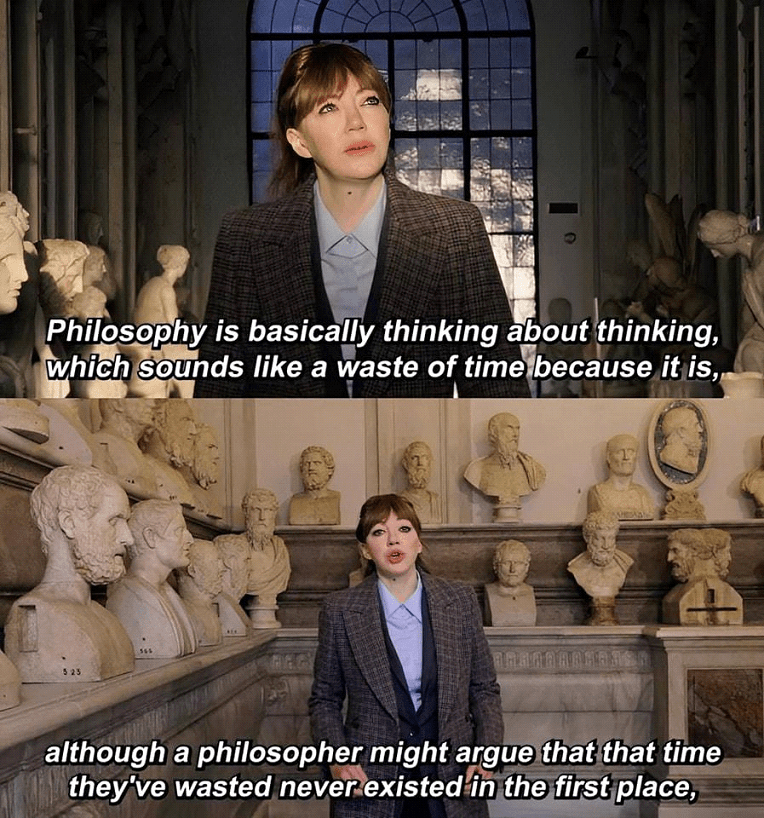
A concept that was boring back then, but relavent now, is that of the “Chinese Room.” John Searle devised this thought experiment to prove that machines cannot actually think, even if they pass Turing Tests. The idea goes something like this:
Say we produce a computer program which takes in Chinese Language inputs and returns Chinese Language outputs, outputs which any speaker of Chinese can read and understand. These outputs would be logical responses to whatever inputs are given, such that the answers would pass a Turing Test if given in Chinese. Through these inputs and outputs, this computer can hold a conversation entirely in Chinese, and we might describe it as being “fluent” in Chinese, or even say it can “think” in Chinese.
But a computer program is fundamentally a series of mathematical operations, “ones and zeros” as we say. The Chinese characters which are taken in will be converted to binary numbers, and mathamatical operations will be performed on those numbers to create an output in binary numbers, which more operations will then turn from binary numbers back into Chinese characters.
The math and conversions done by the computer must be finite in scope, because no program can be infinite. So in theory all that math and conversions can themselves be written down as rules and functions in several (very long) books, such that any person can follow along and perform the operations themselves. So a person could use the rules and function in these books to: 1.) take in a series of Chinese characters, 2.) convert the Chinese to binary, 3.) perform mathamatical operations to create a binary output, and 4.) convert that binary output back into Chinese.
Now comes the “Chinese Room” experiment. Take John Searle and place him in a room with all these books described above. John sits in this room and recieves prompts in Chinese. He follows the rules of the books and produces an output in Chinese. John doesn’t know Chinese himself, but he fools any speaker/reader into believing he does. The question is: is this truly a demenstration of “intelligence” in Chinese? John says no.
It should be restated that the original computer program could pass a Turing Test in Chinese, so it stands to reason that John can also pass such a test using the Chinese Room. But John himself doesn’t know Chinese, so it’s ridiculous to say (says John) that passing this Turing Test demonstrates “intelligence.”
One natural response is to say that “the room as a whole” knows Chinese, but John pushed back against this. The Chinese Room only has instructions in it, it cannot take action on its own, therefore it cannot be said to “know” anything. John doesn’t know Chinese, and only follows written instructions, the room doesn’t know Chinese, in fact it doesn’t “know” anything. Two things which don’t know Chinese cannot add up to one thing that does, right?
But here is where John and I differ, because while I’m certainly not the first one to argue so, I would say that the real answer to the Chinese Room problem is either that “yes, the room does know Chinese” or “it is impossible to define what “knowing” even is.”
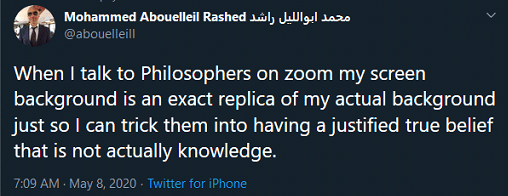
Let’s take John out of his Chinese Room and put him into a brain. Let’s shrink him down to the size of a neuron, and place him in a new room hooked up to many other neurons. John now receives chemical signals delivered from the neurons behind him. His new room has a new set of books which tell him what mathematical operations to perform based on those signals. And he uses that math to create new signals which he sends on to the neurons in front of him. In this way he can act like a neuron in the dense neural network that is the brain.
Now let’s say that our shrunken down John-neuron is actually in my brain, and he’s replaced one of my neurons. I actually do speak Chinese. And if John can process chemical signals as fast as a neuron can, I would be able to speak Chinese just as well as I can. Certainly we’d still say that John doesn’t speak Chinese, and it’s hard to argue that the room as a whole speaks Chinese (it’s just replacing a neuron after all). But I definitely speak Chinese, and I like to think I’m intelligent. So where then, does this intelligence come from?
In fact every single neuron in my brain could be replaced with a John-neuron, each one of which is now a room full of mathematical rules and functions, each one of which takes in a signal, does math, and gives an input to the neurons further down the line. And if al these John-neurons can act as fast as my neurons, they could all do the job of my brain, which contains all of my knowledge and intelligence, even though John himself (and his many rooms) know nothing about me.
Or instead each one of my neurons could be examined in detail and turned into a mathematical operation. “If you recieve these specific impulses, give this output.” A neuron can only take finitely many actions, and all the actions of a neuron can be defined purely mathematically (if we believe in realism).
Thus every single neuron of my brain could be represented mathematically, their actions forming a complete mathematical function, and yet again all these mathematical operations and functions could be written down on books to be placed in a room for John to sit in. Sitting in that room, John would be able to take in any input and respond to it just as I would, and that includes taking in Chinese inputs and responding in Chinese.
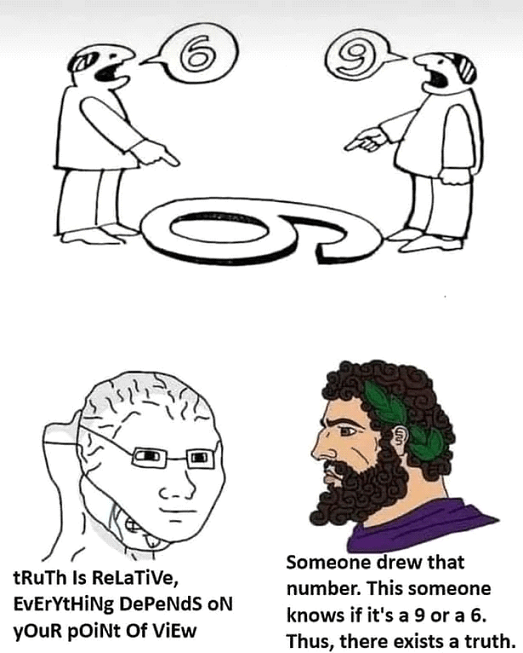
You may notice that I’m not really disproving John’s original premise of the Chinese Room, instead I’m just trying to point out an absurdity of it. It is difficult to even say where knowledge begins in the first place.
John asserts that the Chinese room is just books with instructions, it cannot be said to “know” anything. And so if John doesn’t know Chinese, and the Room doesn’t know Chinese, then you cannot say that John-plus-the-Room knows Chinese either, where does this knowledge come from?
But in the same sense none of my neurons “knows” anything, they are simply chemical instructions that respond to chemical inputs and create chemical outputs. Yet surely I can be said to “know” something? At the very least (as Decarte once said) can’t I Know that I Am?
And replacing any neuron with a little machine doing a neuron’s job doesn’t change anything, the neural net of my brain still works so long as the neuron (from the outside) is fundementally indistinguishable from a “real” neuron, just as John’s Chinese Room (from the outside) is fundementally indistinguishable from a “real” knower of Chinese.
So how do many things that don’t know anything sum up to something that does? John’s Chinese Room is really just asking this very question. John doesn’t have an answer to this question, and neither do I. But because John can’t answer the question, he decides that the answer is “it doesn’t,” and I don’t agree with that.
When I first heard about the Chinese room my answer was that “obviously John *can’t* fool people into thinking he knows Chinese, if he has to do all that math and calculations to produce an output, then any speaker will realize that he isn’t answering fast enough to actually be fluent.” My teacher responded that we should assume John can do the math and stuff arbitrarily fast. But that answer really just brings me back to my little idea about neurons from above, if John can do stuff arbitrarily fast, then he could also take on the job of any neuron using a set of rules just as he could take on the job of a Chinese-knower.
And so really the question just comes back to “where does knowledge begin.” It’s an interesting question to raise, but raising the question doesn’t provide an answer. John tries at a proof-by-contradiction by saying that the Room and John don’t know Chinese individually, so you cannot say that together they know Chinese. I respond by saying that none of my individual neurons know Chinese, yet taken together they (meaning “I”) do indeed know Chinese. I don’t agree that he’s created an actual contradiction here, so I don’t agree with his conclusion.

I don’t know where knowledge comes from, but I disagree with John that his Chinese Room thought experiment disproves the idea that “knowledge” underlies the Turing Test. Maybe John is right and the Turing Test isn’t useful, but he needs more than the Chinese Room to prove that.
Ultimately this post has been a huge waste of time, like any good philosophy. But I think wasting time is sometimes important and I hope you’d had as much fun reading this as I had writing it. Until next time.
-
Ten Episodes in China’s Diplomacy: the uncanny resemblance between communist countries and monarchies
I’m reading Ten Episodes in China’s Diplomacy, a written account by former Chinese Diplomat Qian Qichen of ten episodes when China made a name for itself on the world stage. What strikes me though is how much of communist diplomacy in the 1980s revolved around funerals.
I don’t know how true this is, but I was told that funerals were important parts of diplomacy for European monarchs and states. The funeral of a sovereign is a time when even old enemies can be temporarily reconciled in a shared expression of mourning. The Christian funeral service allows the separate nations to find familiarity in their shared religious observances, and the priest may even give a sermon reminding us that every death is a new beginning: a time to bury the hatchet and forge bonds anew.
The event of a ruler dying in office, and of their neighbors coming together under the banner of their shared religion, gives a chance for old enemies to make amends. If the sovereign themselves had enemies, those enemies might take the opportunity to make nice with the sovereign’s successor. Or if his neighbors were enemies with each other but friends with him, they can at least exchange pleasantries at the Christian funeral and perhaps promise to meet again and bury the hatchet.
All this to say: this kind of funeral diplomacy was a key part of Chinese diplomacy in the 1980s. China was severely isolated in the 1980s, they had almost no relations with Russia, they had fought a war with Vietnam, their main ally was the economic basket case North Korea, and the West hated them only marginally less than their fellow communists.
But under Deng Xiaoping, China wanted to reset its foreign relations and normalize its borders in both the North and the South. But while Deng was ready, his fellow communists were non-committal. In fact Qian Qichen’s book makes clear how little China spoke to the other communist countries, and how little those countries listened to China.
But several moments came together to allow China to approach its neighbors in a more friendly manner. Several leaders of both the USSR and Vietnam died in rapid succession, and each funeral was a chance for the communist world to come together to mourn the leaders’ passing and forge new ties of friendship. China rapidly sent an emissary to Leonid Brezhnev’s funeral to make clear that they wanted to reset Sino-Soviet relations. And the death of Le Duan in Vietnam allowed the Chinese and Soviet ambassadors a chance to speak privately, even if they avoided each other in public.
The parallels between this communist “funeral diplomacy” and the Christian “funeral diplomacy” I outlined above are quite striking. And it does put into perspective how many communist countries acted like monarchies. Unlike in a Democracy, monarchies assume the ruler will reign until death, and reign undisputed. There are very few opportunities in a monarchy for policy change because the guy in charge probably believes the same things he believed 20 years ago. So the death of a monarch is a rare opportunity to bring about a policy change.
And like in the old Christian tradition, these communist monarchs could come together under a shared banner of mourning. They may denounce each other in public, but once a communist leader dies his fellow communists can usually agree that at least he was a Marxist instead of a capitalist. That alone creates a shared ideology which can underpin the “let’s bury the hatchet” feeling during the funerary events. Just as a priest may remind the attendants of their shared Christianity, so too may a communist orator remind the attendants of their shared communism.
Qian Qichen naturally asserts that it was China’s skillful policy and diplomacy that brought about the positive resolution to these 10 events, but many of the early events were mostly matters of circumstance. Leonid Brezhnev was a hardliner, so of course he wouldn’t accept resolving the Sino-Soviet border dispute in China’s favor, nor would he or Le Duan accept resolving Cambodia in China’s favor. But Gorbachev was a reformer (or a lightweight if you believe his critics) who was happy to make deals in China’s favor in order to reduce the political and military pressure on the Soviet Union while he tried to reform it economically.
In the end it’s likely all of these events would have been resolved one way or another as China industrialized and became a real player on the world’s stage. But communist funeral diplomacy allowed Deng Xiaoping to resolve most of these disputes in the 80s when China was still a mostly agricultural nation that still had to import food to survive.
It’s something to think about.
-
Subscribe
Subscribed
Already have a WordPress.com account? Log in now.
 Streams of Consciousness