I’m starting a new job soon. As a scientist, I feel like you go into every job hoping you’ll accomplish something. Not just keep the lights on or stay out of trouble, but to actually create or discover something that’s never been seen before.
I had a lot of hopes when I joined my current job, and few to any of them have panned out. Maybe I was unrealistic or overoptimistic, or just plain unlucky and I shouldn’t feel bad, but I do feel bad and wish I could have done more.
As I go into my final days in this office, at this job, I look at all the data I have and the people I’m training to replace me, and I feel like maybe with a little bit more time, I could accomplish what I’d planned. I could create something publishable and really add to the field. But then after a few days of that feeling, I’ll run into a new unsolvable problem and be right back where I started, feeling certain that I’ll never accomplish what I wanted at this job.
I don’t know, I don’t want to get into too many specifics because the technical details would bore my readers, but the hopes I had when entering this job didn’t match the regrets I have leaving it. I wish I could have done more, but I don’t know how. And I’m worried that the work I *did* do will be forgotten and ignored by my coworkers who are still there, since I never got my work into a publishable state.
If I were in it for the money, I wouldn’t be in science. I just wish I could get the discoveries that I *am* in it for.
And the US is getting the inflation it clearly wants.
Contrary to the title, this post will only be about America, because I don’t have any real insight into the CCP that hasn’t been covered elsewhere. But I read this article running cover for Biden’s disastrous policy of protectionism, and wanted to post my thoughts.
The central premise of the article is that cutting off trade with China is good because they’re a fascist and expansionist foreign adversary. Now, that’s also a great reason to cut off trade with Saudi Arabia, but America’s trade policy isn’t actually about foreign policy, as you’ll soon find out.
Even more importantly, tariffs don’t hurt the country you’re tariffing, or at least they hurt them *less* than they hurt your *own country*. Even Biden knows that, just ask the Biden of 2019
Tariffs are a great way to push up your own country’s inflation by taxing supply without reducing demand. Furthermore, even if you don’t buy Chinese products you will be paying for this inflation because of substitution effects: someone who is no longer able to buy a Chinese EV may instead purchase an American car, increasing demand for American cars and therefore driving up their price.
There’s two great ways to understand how terrible tariffs are. First, think of the oil shock in the 1970s: middle east nations cut off America’s access to oil and gas from their countries, causing spiraling prices and runaway inflation. By blocking America’s access to energy, they were able to put an economic squeeze that defined the decade.
China is being tariffed on solar power, wind power, and green industries of all kinds, and China makes up more of our imports than the middle east ever did. Spiraling prices are yet again on the menu.
Furthermore, think of Britain’s strategy against Germany during both World Wars. Britain used its powerful navy to prevent Germany from importing goods. This caused shortages and spiraling inflation, leading to riots that overthrew the government in the First World War and overwhelming shortages during the Second.
Tariffs are a way for us to do to ourselves what our enemies would do to us in war: restrict the import of needed goods.
Finally, consider Biden’s empty words about the “existential threat” posed by Climate Change. If Climate Change is dire, then why is Biden raising tariffs on solar power, wind power, and EVs, rather than Chinese oil and Chinese airplanes? Biden is essentially setting up an “anti-carbon tax,” in which polluting industries are exempt from a tax being paid by green industries.
The truth is that none of this is about national security, anymore than the Japan Scare of the 1980s was about national security. Just look at how Japan’s peaceful economic expansion was seen back then:
“The Danger from Japan.” Mr. White warned that the Japanese were seeking to create another “East Asia Co‐prosperity Sphere”-this time by their “martial” trade policies, and that they would do well to “remember the course that ran from Pearl Harbor to the deck of the USS Missouri in Tokyo Bay.
Biden is a 1980s style politician, with the (failed) economic outlook of that time. When he sees foreigners being successful it makes him scared, so he raises tariffs to “protect” American industries. But far from protecting industries, tariffs only harm them.
Industries rely on consumers to sustain them, but tariffs are a tax on consumers, sucking up consumer surplus and leaving less money for consumers to spend on domestic industries. Politicians think that domestic industries can magically appear to replace all the foreign ones, but simply put: no man is an island and nor is any country. Autarky is the failed economic policy of fascism, not an economic model for democracies.
Just look at a country like Brazil. Heavy tariffs were supposed to promote domestic industries and help consumers. Instead, consumers pay exorbitant prices for things like video games, while Brazil’s gaming industry remains anemic relative to the nation’s size and wealth. Brazilian cars, Brazilian microchips, and Brazilian steel are not the envy of the world.
And it isn’t because Brazilians are bad at industry, its because their government is doing everything it can to stop them. The high tariffs on everything from steel to cars to microchips are supposed to spur domestic industry, but who’s going to open up a factory when you have to pay those high tariffs just to import the machines and inputs needed to make your products?
Biden is a protectionist because he’s a protectionist. Not because China or Canada are scary or because he needs to fight climate change. But to be fair, Trump is just as protectionist as Biden if not more-so. It’s clear that the current crop of American politicians supports higher inflation and poorer consumers. And that bodes ill if you want to see America succeed and its enemies fail.
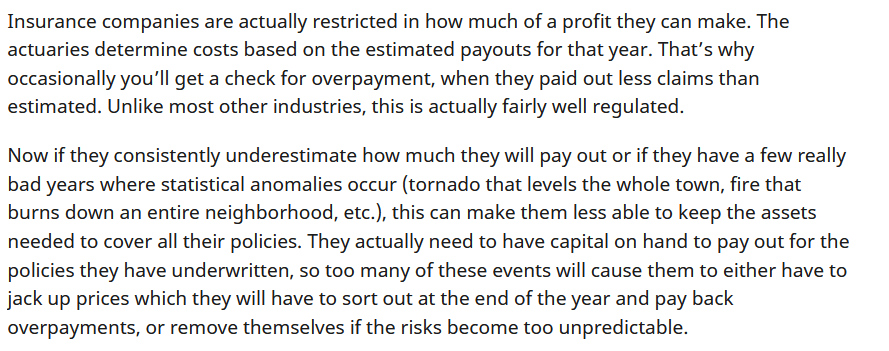
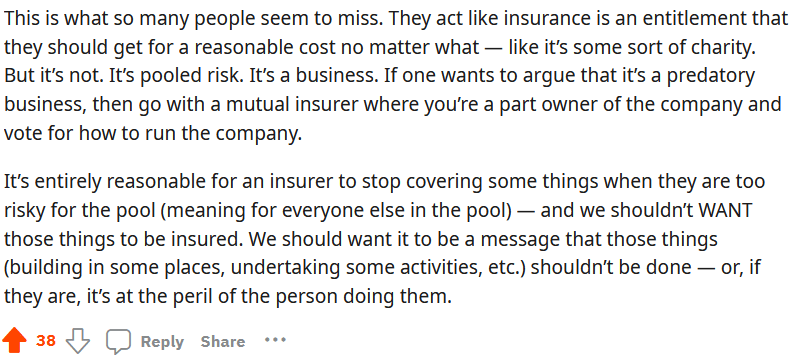
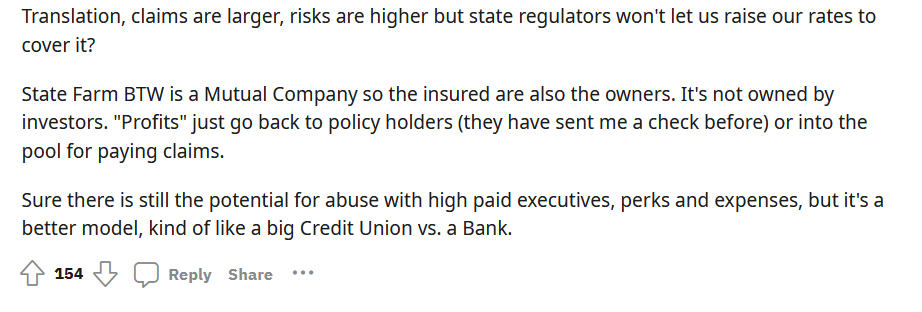
I’ve got a lot more posts I want to make. I have a half-written post about why insurance companies are leaving California. I have ideas about whether the Federal Reserve should target 2% or 3% as the inflation rate. And I even have more thoughts about Dominions 6, which I’m sure everyone is excited to read. But I haven’t been writing.
I don’t know why, but I often have trouble in the springtime. For whatever reason, my mood often becomes languid, I no longer want to work on things, and I start avoiding social contact even when it makes me happier to socialize. I sometimes sit for hours just watching videos or reading on my phone when I should be working or would rather be socializing, because I’m scared of facing the real world.
I don’t know why I do this, and I’m trying to stop. I’ve done more work to make concrete plans on what I need to get done at work so that I can actually get to doing it instead of avoiding it. And I’ve tried to push myself to actually call or text people when I want to make plans with them, rather than avoiding that because I feel bad that I haven’t spoken to them in a while.
That in and of itself is a difficult hole to dig out of. I feel depressed, so I don’t talk to my friends. Then when I want to talk to them, I feel bad that I haven’t talked to them in a while, so I avoid doing so out of embarrassment. I need to stop doing that, because it doesn’t get me anywhere.
I don’t know, this post is rambly. But this is the streams of my consciousness. I hope I can get those other posts about finance and video games written. And I hope the summer brings me more peace of mind than what I’ve had so far this year.
20 years ago during the end of Bush’s presidency, military intervention was anathema to most of the Democratic party. New interventions were treated with suspicion, and getting out of current wars was seen as paramount.
5 years ago, during Trump’s presidency, military intervention was again evil and bad. Trump’s assassination of an Iranian general was yet another reckless decision that would lead us to world war for little to no gain.
Yet today, the Democratic party is again making common cause with many of the foreign policy “hawks” that drove support for the wars in Iraq and Afghanistan. And somehow no one sees what’s wrong with this.
In 2023, the Houthis in Yemen began attacking ships transiting through the Red Sea on their way to the Suez Canal. The Red Sea and Suez Canal bring an enormous volume of trade to Europe, Africa and Asian. Shutting off this passage means ships have to take the long way around Africa, which greatly raises prices and increases shortages.
Then in January of 2024, Biden put the Houthis back on the Global Terrorism list (he’d removed them from the list as one of his first acts as president), and announced the USA would begin bombing Yemen to stop the Houthi attacks.
Social media lit up with stupid talking points about America’s military might, and how “the Houthis are going to learn why America doesn’t have free healthcare.” Social media is overwhelmingly populated by the young and left-leaning, so seeing the same demographic group that protested the Iraq War now beating their chests over a bombing campaign was jarring to say the least.
And what happened? After months of bombing, the Houthis are still attacking ships. Shipping companies are still avoiding the Red Sea. Transit through the Suez is still down and prices due to circumnavigating Africa are still up.
And America still doesn’t have free healthcare.
The bombing campaign has clearly failed at its goal of ensuring safe traffic through the Red Sea. So much so that Biden has now offered a ceasefire where he will again remove the Houthis from the global terror list if they will stop attacking ships. America’s military might could not silence the enemy guns or enforce America’s will, and so we are once again forced to negotiate with terrorists.
To be fair to Biden, this may be the right move. He openly stated that he was only placing them on the global terrorism list because of their attacks against ships, removing them from that list if they stop attacking ships is only natural. It is a low-cost concession to the Houthis, as removing them from the list makes it easier for them to access international markets, but doesn’t do much to harm America directly.
But it’s still obvious that this was a failed bombing campaign, and it raises the question of if we’re negotiating with terrorists now, why didn’t we *start* with negotiations *before* bombing them? The bombing does not seem to have done anything to reduce the frequency or intensity of Houthi attacks, if anything it has only given the Houthis greater credibility in Yemen as it has galvanized the populace to “rally ’round the flag.”
Hawks will complain that I’m being unfair: the bombing campaign was *not* a failure, America just wasn’t even trying to win. And it’s true, America has the capacity to conduct Dresden-level bomb campaigns and Desert Storm level ground campaigns nearly at-will. Neither of those happened, so America clearly wasn’t using its full might.
But was there any political will for carpet bombing or a ground invasion? Absolutely not, a tepid bombing campaign was all that would have been acceptable in an election year. And so if you take America as both a military and political entity, then yes this bombing campaign was about all America was capable of.
But none of the chickenhawks who beat their chest in January will ever admit that the campaign was a failure, ever admit that we are negotiating with terrorists, ever admit that there were other options or other solutions. Thousands of politicians and military aficionados went to their graves believing that the War in Vietnam could have, should have been won, and if we’d just stayed in a little longer (or nuked Hanoi), we could have won it. I have no doubt this campaign (much much smaller as it is) will also be remembered thus by many.
But the fact is that there are not always military solutions. It’s a classic slogan to say that “we don’t negotiate with terrorist,” but it’s just not true, we negotiate with terrorists all the time.
An FBI negotiator brings a suitcase full of cash to a terrorist who has hijacked a plane.
There are times when terrorists have leverage over you, and the problem with leverage is that it exists whether you want it to or not. Whether that leverage is hostages, military might, or geographic position, you can’t just wish it away and pretend it doesn’t exist. Nations also have constraints: budgetary, political, logistic, which can constrain their military response significantly.
So while it’s true that in an open field with no holding back the American military would destroy the Houthi military without a single casualty, that’s not the war that Biden fought. Trying to remove terrorists from their own country that supports them without a ground invasion or naval blockade will always be a challenge. And if a nation is politically, economically, or logistically incapable of doing that, then they need to look hard at what they are *actually trying to accomplish*.
I have seen precious few cases in my adult life of military intervention leading to a lasting improvement in the situation. The best example would be the bombing campaign in Yugoslavia from nearly 3 decades ago. The second best example would be the few years of near-normality that the American military gave to Afghanistan, prior to the Taliban returning.
But one success and one partial success is a terrible track record for the number of military campaigns we’ve been engaged in. And it seems the Houthi campaign will be yet another mark in the failure column, as it has done nothing to eliminate Red Sea attacks which will almost certainly be ended only by negotiations if they are even ended at all.
So the next time social media lights up with chest-thumping about how American military might should be directed at a problem, think for more than a few seconds about whether a military solution is even possible.
I don’t want to get too political, but it’s an election year (in several countries) and The Discourse is inevitable. But I want to quickly push back on something I’ve seen all too often on social media recently.
In America, the numbers for the economy look “good.” Unemployment is low, *really* low. Inflation is high, but wage growth is higher. And the stock market is up. So why are Americans’ perceptions of the economy so poor? Why is consumer confidence lower than it *should* be?
Some partisans and twitterati have decided that Trump Was Right and the problem is fake news. Legacy media and social media are both driving relentlessly negative press and this is brainwashing people into believing that the “good” economy is “bad.”
But instead I’d like to take take a step back and see if polls are telling us something that “the numbers” just aren’t. And I think I have good evidence that they are.
First, here’s a graph from the Federal Reserve Bank of Dallas. It shows that housing affordability is lower than at any time since the 80, lower even than during the housing bubble that precipitated the Great Recession. If you’re a millennial or a zoomer, *never in your life has housing been less affordable than it is today*.
And housing isn’t just a “nice-to-have,” it sits at the bottom of Mazlo’s Hierarchy of Needs for a reason. A stable housing situation is (for most people) a necessary ingredient before they feel confident starting a family, putting down roots, or just feeling like they “belong” to where they live.
Now, you *can* have a stable housing situation in an apartment, but it’s much harder. Rent increases can drive you out, and rent-controlled apartments are hard to come by. Apartments also aren’t always conducive to the types of living that people want in their life.
So the price of housing is driving a *real crisis* in millennial and zoomer living, as people with otherwise high earnings are unable to obtain what lower-earnings folks could get in the past, namely a house to live in.
The *median* millennial is doing worse than the median boomer was at this point in their life, in terms of net wealth, net assets, and housing. But the top 10% of millennials are doing way better than the boomers ever could, so taken together it seems like millennials are doing well overall. It’s like looking at a city where 1 person is a billionaire and 99 are destitute and saying that overall the city is very wealthy.
These kinds of mean/median differences are well-known to people in liberal circles, because they signal high inequality. But because a liberal is currently president, these differences are ignored by much of the twitterati.
I could say more about this topic, and I wish I had the energy to, but I’ve been so tired lately with my new medicine. Nevertheless, next time you see someone like Will Stancil screech that the kids are all morons and that everyone is rich, note that he is a member of that top 10%, not the median.
When people’s answers in polling are different than what “the fundamentals” suggest, it may be that the people are just stupid. But it’s far more likely that polling is capturing something that your data is ignoring. And right now that’s housing costs and growing inequality.
Sorry I haven’t posted in a while, I drove halfway across the continent to see the eclipse. And then after it was finished I immediately drove the other halfway back home. After more than 24 hours of driving, I was beat, and this week was kind of a wash for me after that.
But the eclipse itself was beautiful and I encourage everyone to look for images of it online. NASA had an entire party for the eclipse, I don’t know if they did that for 2017 but maybe with how popular the 2017 eclipse was, they felt they needed to.
There was also some real science being done during this eclipse. Telescopes trained on the sun to look at its corona in great detail as the moon passed in front. A longstanding humorous story in the scientific community comes from an eclipse observed not long after Albert Einstein published his theory of general relativity. The theory predicted that light should bend when passing by massive objects. So scientists used a solar eclipse to visualize stars that were hiding near the sun. As predicted by Einstein, their light appeared to be “bent” because it had passed so close to the sun to get to us.
The newspapers published this with a somewhat hilarious line:
Stars not where they seemed or were calculated to be, but nobody need worry.
New York Times
The “but nobody need worry” always gets to me.
Regardless, eclipses are fun both for scientists and non-scientists alike. I hope if you missed this one, you’ll get to see one soon!
It’s a little late, but since it’s still Easter season I was thinking about languages and in particular the language of Jesus. The gospels of course record different versions of what exactly Jesus said when he died on the cross. But Matthew and Mark record a version that sounds like it could be historical.
Matthew and Mark both record Jesus’s final sentence as “Eli, Eli, lema Sabachthani,” which means “My God, My God, why have you forsaken me?” Although they differ slightly in their spelling. Now, Jesus’s native language was Aramaic, but I’ve always been intrigued by how similar this phrase sounds to the Arabic I learned in school.
To start with “Eli” is almost identical to how you would say “My God” in modern Arabic, El = God and the noun ending -i makes it possessive for “my.” Sabach isn’t a verb I ever learned in Arabic, but if it does mean “to forsake,” then Sabachthani is also very close to how you would conjugate it in Arabic for this sentence.
But the part I’ve always been most interested in is “lema.” Now the Arabic word for “why” is “lematha,” but it’s made up of two pieces: “le” means “for” and “matha” means “what.” So “lematha” = “for what” = “why.” But there’s another word for “what” in Arabic, you can say “ma” instead of “matha” in many cases. So can you also say “lema” = “for what” = “why” in Arabic as well? I don’t know for sure, but it sounds like a likely etymology for the Aramaic word as well.
The bible gives us very few direct quotes in Aramaic, the native language of Jesus and many people in his day. It’s good to hear what we can from in their own tongue.
I am still enjoying writing about Dominions, especially since the 6th game was just got released. Last time, I talked about overwhelming your enemies in an underwater battlefield, this time I’ll talk about poisoning them in their sleep.
To recap, Dominions is a game series where gods and their armies fight climactic battles to become the one true Pantokrator, the almighty. In the early game, armies are small and tactics simple, but by the mid to late game, armies can be so ginormous that troops have difficulty even reaching each other through the mass of bodies. In these scenarios, “army wipe” spells, that is spells that do damage to an entire army all at once, are very powerful.
Let’s back up a second, the normal way magic works is just as it works in any RPG you’ve ever played. The wizard casts fireball, it travels to the enemy, and deals damage. That’s how most spells in the game work. Some spells however, are *battlefield wide* spells. The wizard casts them, and now the entire battlefield is effected.
Foul Vapors is one such battlefield wide spell. When the wizard casts it, toxic clouds start to cover the battlefield and all soldiers, friend or foe, begin taking poison damage.
Obviously, killing your own troops isn’t usually a recipe for success. But Foul Vapors can be paired with other nature spells such as “Serpent’s Blessing” which make all your troops resist poison, or can be paired with units who naturally resist poison. That way, even if your own troops die, they die much more slowly than the enemy’s.
In this way, Foul Vapors can make for an exceptional army killing spell. You don’t need the strongest troops or the most fireballs, you just need 1 mage and enough troops to keep the enemy busy. After a few rounds of Foul Vapors, you’ll have killed an entire army no matter how many of them came to the fight.
But Foul Vapors isn’t perfect, if the mage who casts it gets killed it turns off, much to the relief of the enemy troops. And it won’t take many rounds for the enemy to reach your mage if you took a truly paltry number of troops. That’s where option 2 comes into play: Rigor Mortis.
Rigor Mortis is another battlefield spell, but cast by a Death mage this time instead of a Nature/Water mage like Foul Vapors. What it does is deal *fatigue* damage to every living (ie not undead) unit on the battlefield. In Dominions, units die when they reach zero health, but they simply fall asleep when they reach 0 fatigue.
But Rigor Mortis paired with Foul Vapors is an *incredible* combination. Rigor Mortis puts all units to sleep, which in turn protects the Foul Vapors caster from ever being damaged. Then Foul Vapors works to kill the entire enemy army in their sleep without your own army even needing to work.
This is extra potent when your own army is made up of the undead. Undead units are immune to Rigor Mortis (they already passed that point), but are *also* highly resistant to poison. Rigor Mortis plus Foul Vapors backed up by an undead army will see the enemy put to sleep, then poisoned, and finally hacked apart by the undead horde.
Battlefield wide spells are some of the most powerful and fun spells in the game. I love watching a battle where I successfully baited the enemy into a trap and killed them with a few battlefield wide spells. These spells are powerful, expensive, and rare, but if you can pull them off you can win wars against almost infinite enemy forces.
Today’s tactic is somewhat unique to the underwater nations of the game, and it has to do with summoning so many creatures of the deep that your enemies will start to think Aquaman is OP.
Dominions has a lot of spells that summon new units, see my post on hordes of skeletons above. But skeletons are undead, and can be banished by a simple priest. The underwater war takes summoning to a whole new level.
First, there’s “school of sharks,” a simple water 2 spell that summons (what else) a school of 10 sharks to attack your enemies. 10 sharks may not tip the battle on their own, these are large underwater armies clashing together after all. But 10 mages summoning 10 sharks each? You’re going to need a bigger boat.
Next, there’s “Swarm.” Swarm is a Nature 2 spell that’s more well-known on land. There, it summons small bugs to harass the enemy. Underwater, it summons fish and shrimp.
Then there’s “Shark Attack.” Shark attack will summon a bloodthirsty shark every time an enemy or ally takes damage. These sharks will then *usually* attack the enemy lines. Sharks still aren’t necessarily as powerful as an armored underwater warrior, but the best part of Shark Attack is that they are *endless*. Sharks will continue to spawn as long as units are taking damage, a constant horde of teeth and jaws to harass and torment your enemies.
The final cherry on top is Water Elementals. Water elementals are summoned alone, and they cost gems to summon too. But unlike 10 sharks, 20 shrimp, or even infinite sharks, water elementals can regenerate underwater. This is huge in an ocean battle, having a unit that can take endless damage, regenerate it all and still pack a punch is a game changer, and before they nerfed Water Elementals heavily, they were the end-all and be-all of underwater combat. They’re still strong of course, just slightly less so.
With these 4 conjuration spells, underwater armies can send forth a tidal wave of bodies in ways land nations could only dream of. It gets better because many of these enemies get summoned behind the enemy’s lines, wrecking their weak support units and throwing their battle line into chaos.
These and other spells let water nations orchestrate a symphony of chaos against anyone they face. Land nations beware, the sea is deadly.
I have a project at work that really doesn’t matter. My boss wants me to make a tutorial for a process that no one but me has ever and will ever use. In the abstract it makes sense, we don’t want to lose knowledge if someone leaves. But these sorts of tutorials aren’t really an efficient transfer of knowledge compared to actually *teaching* someone. How easy is it to just learn something from a book vs being taught it in school?
So I’ll make a tutorial that likely no one will ever see. And even if they do see it, I won’t be there to clear things up for them so who knows if they’ll understand it. And even if they do understand it, I am working on a very esoteric process that I haven’t seen anyone else use, so who knows if they’d even use it.
Still, I’ve come around to the idea that I should work my hardest on this process, maybe not for others but for myself. Making a tutorial is actually a pretty involved process, there will be sound and video editing, some light script-writing, etc. I think I still want to do my best work possible because it will help me learn to use the tools and give me the experience necessary to do a really good job next time I have to do this *for a better purpose*.
So is this the most efficient use of my time from my boss’s perspective? I’m going to be paid to do work that likely won’t positively impact our organization, so no. But is it a good use of time from my perspective? I believe yes, and I’ll work hard to prove it so.