
When people talk about the British economy, one complaint floats to the top of the internet discourse: the Financial Sector. According to the Twitterati, the UK spent too much money “building up” a sector of the economy that has done nothing but push up inequality, force everyone into London, and doesn’t even do anything useful.
You’ll hear it said that while finances pay most of the taxes and provide most of the GDP of the UK, this was due to a stupid choice the Government made not a fact of nature. Britain should have been more like Germany, investing in industry so they could have more middle class jobs spread around the whole country. Instead they invested in Finance and got one single city filled with rich people and their servants while the entire rest of the country goes to waste.
This complaint is wrong in many ways, but the most direct falsehood is that successive Governments *did not* “invest in” or “build up” the Financial services industry, services succeeded so rapidly because the Government *kept out*. For a long time, British financial services were heavily regulated and weren’t much larger than than what was available on the continent. But then the Government stepped away from the sector, dropped its regulations, and the sector thrived. The Government didn’t put money and time *into* finances, instead the Government was taken *out* of finances.
Maybe the Government should have gotten out of more industries?
But I’m getting ahead of myself, the changes to Britain’s financial sector all happened in a “Big Bang,” named such because instead of piecemeal deregulation over many years, there was massive, sweeping deregulation all at once. The sudden drop of onerous requirements made the sector highly competitive, and drove massive investment into London/the UK at the expense of the rest of Europe.
But most people look askance at “deregulation.” They think there must be some “catch” to this story. What regulation was dropped, and how did this secretly allow Bankers to suck blood from the unions and the working class? Well here are a few regulations that were dropped:
Broker price fixing: before the big bang, if you wanted to buy a stock from a broker they were required to charge you a minimum price for the service of selling you the stock. This price was set by the Government, and it was illegal to offer lower prices. This is bad for consumers and bad for business, I mean should the Government set a *minimum price* for food? For rent? Hell no. So why a minimum price for stocks?
Ending the price fixing meant suddenly bankers had to compete on price. The price to trade a stock went lower and lower, and this had the effect of opening up the stock market to the common people as well. Suddenly there wasn’t some onerous price on top of any stock you wanted to buy, you could pay for just the stock plus a paltry service fee of a few pence. And in time, even this few pence fee went away, as brokers offered fee-less trading in an attempt to compete on volume.
Price ceilings are terrible, but leftist will still argue they are at least good for the consumer. Price *floors* are exactly as terrible, and I hope even leftist realize they aren’t good for the consumer.
Electronic trading: before the big bang, it was mandated that to buy or sell a stock, two people had to meet in person and agree to the sale. You put in your order to a broker, they wired the order to someone else, and eventually your order would make its way to two people standing on a crowded floor screaming at each other to haggle over the price of your stock. They weren’t screaming in anger, but just to be heard over everyone else on the floor, who was also screaming.
The big bang introduced electronic screens with prices and volumes, and allowed orders to be made totally electronically. This helped end the monopoly of overpaid men screaming at each other. It made ordering easier, allowed it to be done from anywhere, and by cutting out the middlemen it helped bring down the price for buying and selling stock. Once again, this helped democratize the stock market, few workers today would be able to invest for their retirement on the stock market if prices to buy and sell were still as high as the 70s.
Foreign ownership: the big bang allowed foreign companies and individuals to act as brokers. Much like electronic trading, this broke the monopoly on overpaid men screaming at each other, and lowered prices; are you seeing a pattern here? Anyway foreign banks and brokers could now bring outside investment and outside technology to the British stock market, where before they’d been banned.
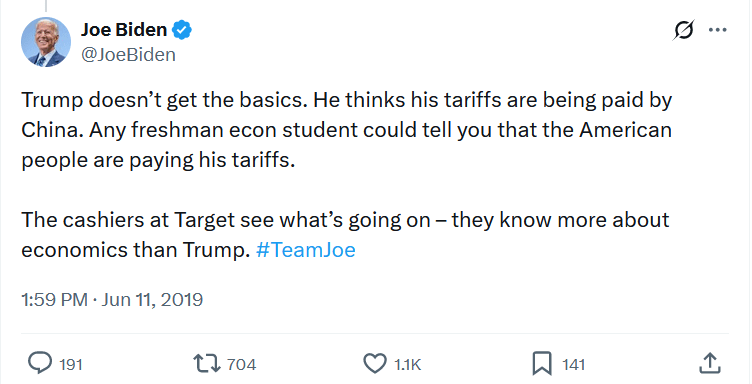
The ban on foreign brokers had been done solely to “protect” the profits of British banks and British brokers. But like tariffs, it did not help the British economy nor protect British wages. It was just another facet of a Government sanctioned oligarchy, which allowed only certain, connected individuals to profit from Britain’s stock market. Foreign investment created competition, and it also created a flood of incoming money, which boosted demand for workers and drove up British wages. These new brokers needed buildings, needed computers, needed employees etc. The flood of incoming money was a great boon for workers and builders in every sector of the British economy.
These are just a few of the deregulations brought on by Thatcher’s big bang, but they all had the same theme. They broke the monopoly of the overpaid bankers and brokers, and brought in competition that brought down prices and democratized the stock market. The financial industry grew like never before, eclipsing every other sector of the British economy. And it did so not through Government support, but because the Government *kept out*.
But let us turn now to Jimmy Carter.
Deregulation is too often seen as a boogieman of the right wing. The conservative party (whichever party it is in your country), wants to deregulate because they secretly want to destroy the environment and make workers their slaves. It is a too-common dogma on the left that any regulation is necessary and sacrosanct for the good of the economy, and that deregulation doesn’t even help GDP but merely lets well-connected CEOs impose a monopoly that makes everyone poorer.
So I thought I’d push against that view with a man no one could accuse of being a right-wing conservative: Jimmy Carter. Jimmy came to the presidency at a time of great difficulty. Inflation, oil crisis, stagflation even, the American economy was nuts in the 70s. There was even fear that the USSR would overtake America. Jimmy would fix that.
One of Carter’s signature policies was deregulating the airline industry. Once again, a modern leftist might see this as a betrayal: what did Carter’s deregulation do to break the unions, harm the workers, and price-gouge the people, and how much did the airlines pay him to do this? But nothing could be further from the truth. Prior to Carter’s deregulation, the airline industry worked like a Gilded Age trust, with strict rules that protected the big players at the expense of workers, people, and anyone trying to get a foot in the door.
First, to make a new airline route, companies had to submit their request to a centralized body. This body would then look to see if the new route created too much competition with any other airline’s route, and if it did, the route was forbidden. Imagine if Walmart could forbid anyone from opening a store within 5 miles of their own, that was basically what this law did.
The airline submitting the new route had to basically get a hospital-style “certificate of need” proving that there weren’t enough flights for the amount of passengers who *wanted* to travel. This was of course very difficult to prove, and the airlines already serving that route could try to maintain their monopoly by promising to increase flights, so usually the monopoly was protected.
In addition, a centralized agency set a price floor on airline tickets. Like we discussed earlier: price floors are bad. They only serve to enrich the big players by making it impossible for new companies with better tech to come in and compete on price.
In fact, even *starting a new airline company* was all but impossible, as any new company had to get permission to run airlines. Imagine if Walmart could forbid the creation of Costco solely on the basis of “we were here first.”
Airlines in America had a ton of overregulation that only served to protect the big players at the expense of everyone else. No one benefited from this, not the workers, not the fliers, not the American economy, no one except the big boys who lobbied hard to prevent deregulation from passing.
In the end, deregulation democratized flight in America the way same way it democratized the stock market in Britain. Adjusted for inflation, the average New York to LA flight was 1,200$ in 1970, today you can fly that route for under 300$. There is no question in my mind that the American people are better off without being price-gouged by airline lobbyist. And Carter made all that possible.
So my final thought is this: deregulation is a dirty word, but it shouldn’t be. Regulations are not necessarily good. They are not necessarily bad either, but don’t assume they are always good. Deregulation is likewise value neutral. It is good to remove bad regulations, it is bad to remove good regulations.
Britain has a lot of bad regulations holding it back, that’s why I suggested deregulation to Keir Starmer. Starmer has a once-in-a-generation opportunity to change Britain for the better. He’s got a big majority, there is wide agreement that his predecessors were bad for the economy, and he’s hemmed in by debt and deficits preventing any big spending. This is the perfect time for deregulation.
So I say cut the red tape, kick out the cartels, and trample all over the lobbyists who want to protect their corporate fiefdoms. If Britain is going to build, it needs change, the kind of change that Jimmy Carter understood. And even if Thatcher deregulated, that doesn’t mean deregulation is always bad. Would you like to pay 10 pounds every time you wanted to purchase a stock? Would you like to pay 4 times as much to fly to another city? Starmer should cut costs for the working folk, and deregulation can make that happen.



 Streams of Consciousness